


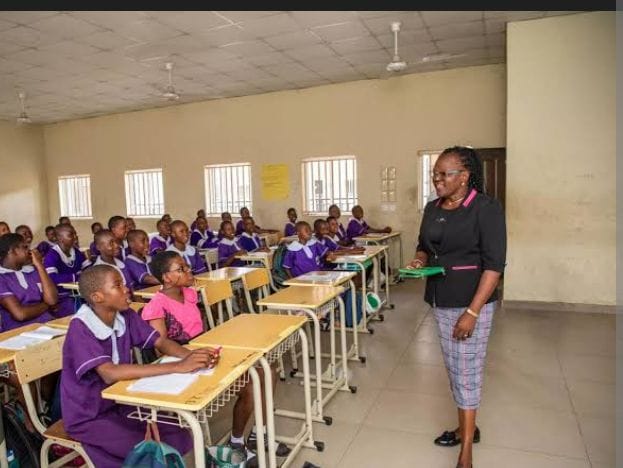
An academic says it will take effective implementation and time for the objectives of declaring English as the only medium of instruction in schools to be realized.
The Prinjciple of High Class International School, Mgbuoba Port Harcourt, Dr. Nnenna Ngwo who made this known in an interview with journalists stated that the goal of the policy would not be realized immediately unless other factors are considered.
Dr. Ngwo expressed mixed feelings about the policy pin pointing the setbacks which include lack of adequate resources.
“I’m concernd not really that English is not important or should not be made the medium of instruction in school, the concern is about the sudden reversal of this policy and how it will affect everything that has to do with education.
Language policy is not only a policy but also an issue. When there is a sudden shift in language, curriculum is affected, teachers readiness is not ruled out, learners are also affected for lessons will not be easy to understand that is where my own concern is.
Then the caution is the sudden reversal, the policy should not be immediate because the school stakeholders should have enough time to look at the gaps,” she noted.
She objected to the perception that the adoption of local languages in teaching is responsible for the mass failure of students in English language citing other reasons for the poor performance in external exams.
“Academic performance does not depend on one factor. If your English is poor it could hurt the performance we are not ruling it out but that is not the only factor that determines a child’s performance.
We look at the teaching itself, teachers, materials, and learning environment. So many factors are involved, language alone cannot automatically affect the child’s performance either negatively or positively, that is the truth,” she stressed.
Also see: Rivers Police Debunk Viral Claims of Fulani Herdsmen Attack as False
Dr Ngwo said students who speak more than one language comprehend more in class stating that if the new policy is not well managed it would have adverse effects on local languages.
“My opinion is, this policy would kill our local languages. This means that even at home English would be the medium of instruction.
When the students get home then go back to the local language but because they are instructed at school to speak English as the Federal Government has said. They go on to speak it, it kills our local language”, she concluded.
Dr. Ngwo noted that for the policy to succeed all stakeholders should be carried along.
Recently, federal government announced the adoption of English as the sole language for instruction in schools to enhance the performance of students in English language exams.
