


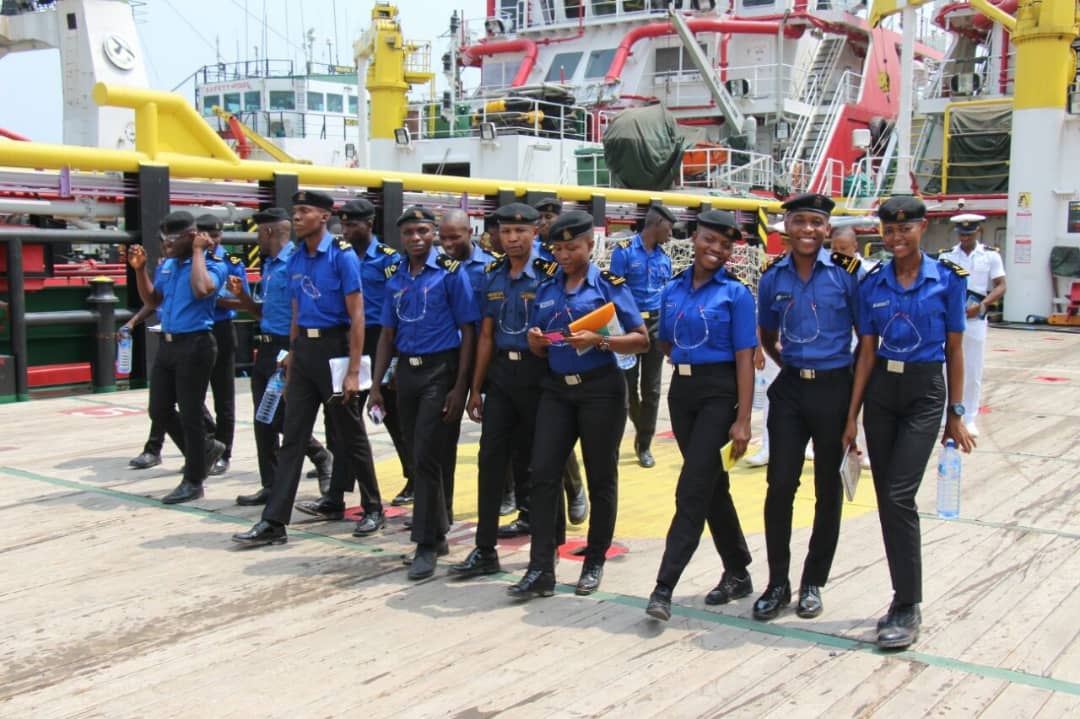
A Royal father and Head of Okere-Ukwu Compound, in Ngwuro Community of Egberu- Ndoki Kingdom, Oyigbo Local Government Area, Rivers State, Chief David Okere-Ukwu, has urged the Federal Government, maritime agencies, state government, and private sectors to make deliberate investments in marine engineering, describing it as the backbone of Nigeria’s blue economy.
In an interview with our Correspondent in Port-Harcourt, on the neglect of the maritime sector and other contemporary issues, Chief Okere-Ukwu stressed that without empowering marine engineers, Nigeria
risks losing billions annually to foreign shipyards, foreign-trained manpower, and capital flight.
He said: ” Every vessel that sails our waters needs our engineers. Every oil platform, every shipyard, every port facility requires their expertise. To neglect marine engineers is to neglect national development”.
Also Read: Rivers State Government Urges Residents to Prepare for Flood Risks
Chief David Okere-Ukwu, who is also a Marine Engineer, noted that Local marine engineers face underfunding, a lack of modern training facilities, and limited opportunities, unlike their foreign counterparts. He argued that with Nigeria’s 853 kilometers of coastline and over 3,000 kilometers of inland waterways, marine engineering should be a priority sector. The monarch enjoined the Federal Government to initiate a National Marine Engineering Development Plan, increase scholarships for cadets, establish shipbuilding clusters, and strengthen the Maritime Academy of Nigeria, Oron, in Akwa Ibom State, for greater efficiency and productivity.
Chief David Okere-Ukwu, formerly Chief Environmental Scientist with the National Oil Spill Detection and Response Agency( NOSDRA), maintained that Nigeria remains a maritime nation by both geography
and heritage. ” With over 850 kilometers of coastline and thousands of kilometers of Inland waterways, our land is blessed with natural corridors of trade and wealth.. Our forefathers navigated these rivers, fished in these waters, and built livelihoods around them. But today, we face a critical question: who will build and sustain the ships, oil platforms, and ports that anchor our national prosperity? They are the silent custodians of our blue economy, the unseen hands behind every vessel that sails, every rig that drills, and every port that functions. Sadly, these hands are not fully encouraged. Too many of our graduates from maritime schools and academies remain unemployed”.
“Too many of our vessels sail abroad for maintenance. Too much of our wealth leaks into foreign shipyards and expatriate pockets. This is a national paradox: a maritime nation outsourcing its maritime future.
We cannot continue like this. We cannot afford to neglect our marine engineers and expect to prosper. That is why I call upon the Federal Government, state authorities, maritime agencies, and private investors to take deliberate steps to empower marine engineers”.
Chief David Okere-Ukwu spoke further, “Firstly, we need a National Marine Engineering Development Plan that sets clear targets for training, certification, and employment. Secondly, we must expand scholarships and apprenticeships for the young marine industry. Thirdly, we must establish shipbuilding and repair clusters within industrial parks, where shipyards thrive, where engineers innovate, and where jobs are created. Fourthly, we need a Maritime Development Fund dedicated to financing indigenous shipbuilding, retrofitting, and innovation; and finally, we must align our training with global standards, so that Nigerian marine engineers can compete confidently on the world stage”.
On shared responsibility, Chief David Okere-Ukwu explained that the government cannot do this alone, stating that Industry must open its doors to apprenticeships and local contracts, and academic Institutions must strengthen their curricula with modern simulators and real-life practice.
“Nigerians must create an enabling environment by securing waterways, providing land for maritime facilities, and encouraging our youths to pursue maritime careers. We should learn from countries like the United States of America, South Korea, and Singapore, where we stand today. By investing in marine engineers, they transformed themselves into global shipping powers. Nigeria, with its youthful population and rich waters, has no excuse not to do the same,” Chief David Okere-Ukwu declared.
On the benefits of encouragement, Chief David Okere-Ukwu said that if marine engineers are proactively encouraged, thousands of jobs in shipyards, ports, and offshore installations will be created. He said that by doing so, the Nigerian government, under the Renewed Hope Agenda of President Bola Tinubu, will enhance national security, as more of the vessels are maintained at home, where trades and logistics will boost the nation’s economy, thereby reducing turnaround times and improving competitiveness. “We will inspire a generation of young Nigerians to see dignity and pride in maritime professions. Let us train, employ, and celebrate them. In doing so, we invest not only in ships and ports, but in the very future of Nigeria,” he said.
Concerning building Nigeria’s maritime future, Chief David Okere-Ukwu stressed that Nigeria’s future prosperity cannot rely solely on oil or agriculture, noting that the blue economy offers new frontiers, and
Marine engineers, who he said are its gatekeepers, need to be on the front burners of national development.
” Ignoring them would be a costly mistake; empowering them could be Nigeria’s golden ticket to economic diversification, job creation, and global maritime leadership”, Chief(Engr.) David Okere-Ukwu said.
