


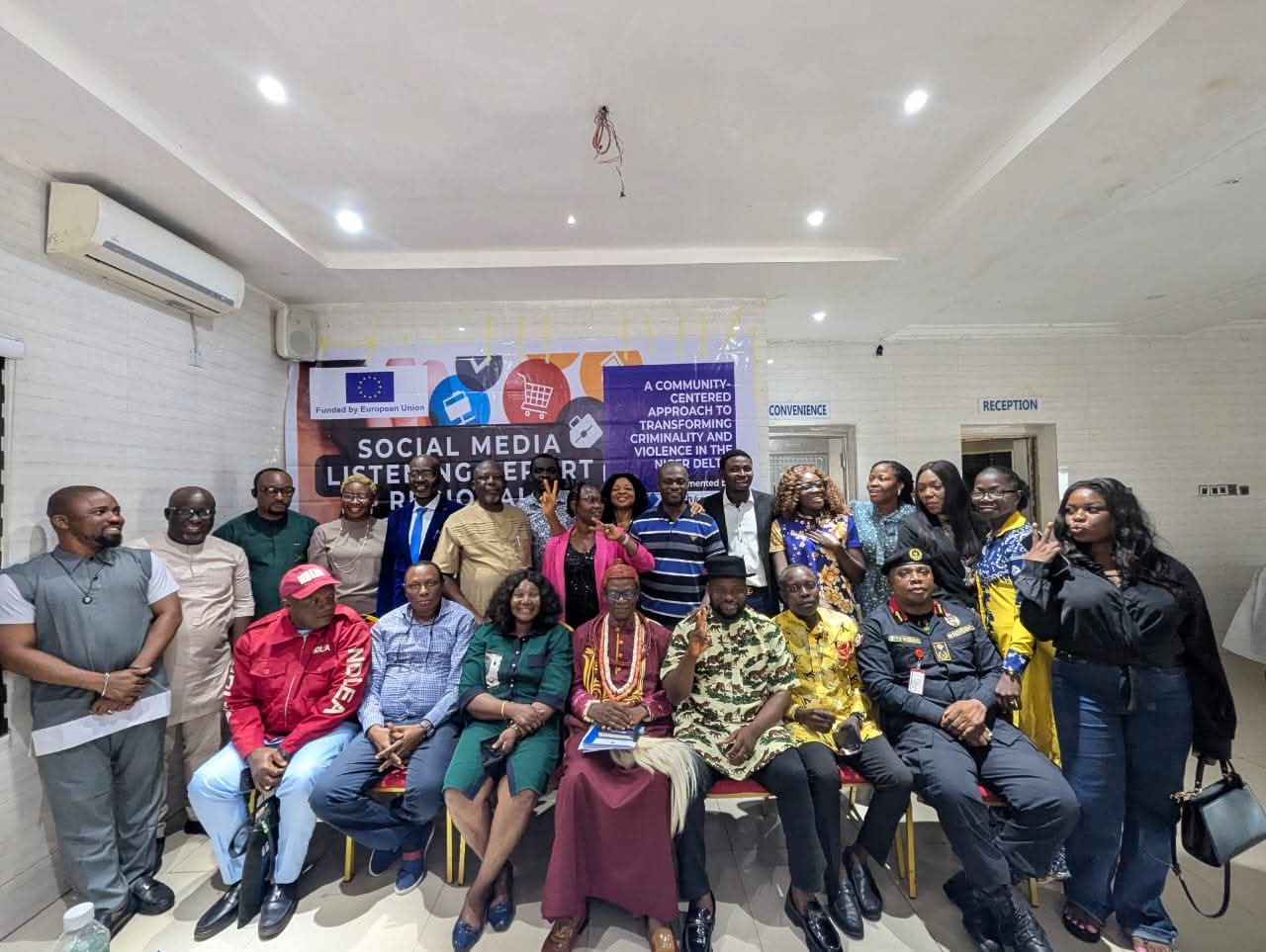
Over ten million persons have benefited from the Community Centred Approach to Transforming Criminality and Violence in three states of the Niger Delta region.
Mass Media and Information Management Coordinator of the peacebuilding organisation, Search for Common Ground, Nigeria, Mr Sunny Dada, made this known at a Regional Dissemination Meeting of a Social Media Listening Report.
Giving an overview of the success stories of the Project, Mr Dada said the community-centred intervention, which is funded by the European Union, has impacted the lives of locals positively in the last two years.
He said the Transforming Criminality and Violence {CRIN-VIN} Project has benefitted over 10 million persons directly and indirectly in 66 host communities across 33 Local Government Areas in 3 States of Bayelsa, Rivers and Delta through Economic Livelihood Initiatives, Capacity Building Scheme and Arts and Culture as part of peace building efforts in the Niger Delta.
Mr Dada explained that 5 million benefited directly, while another 5 million benefited indirectly, stressing that through the Arts and Culture activity, about 2.7 million benefited just as the Social Cohesion programme, while capacity building reached over 830 persons.
Also Read: Bayelsa, CCECC Partner on Infrastructure, Housing, Agriculture
He stated that the Social Media Listening Report indicated that illegal oil bunkering generated the highest number of mentions with a total of 7,500 conversations, which reached 295 million people across the world, just as drug abuse also attracted attention during the survey from July 31 to August 12, 2025.
Mr Dada emphasised that the report highlights the multifaceted realities of the socio-economic challenges in the Niger Delta, stressing the need for stakeholders to come up with policies to tackle the underlying discontent in the region by addressing issues as unemployment, cultism and drug abuse.
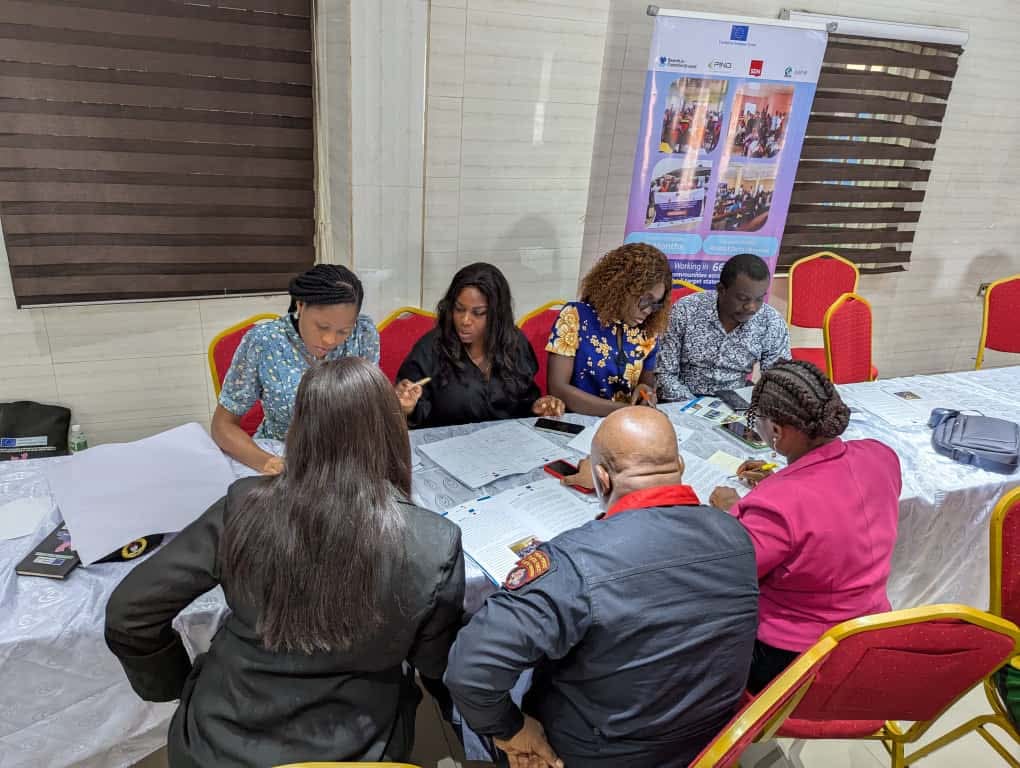
The meeting went into plenary session moderated by the Mass Media and Information Management Officer at Search for Common Ground, Nigeria, Mrs Folashade Seye-Ojo, where key actors discussed the report and proffered likely policies to tackle some of the concerns in the Findings
