


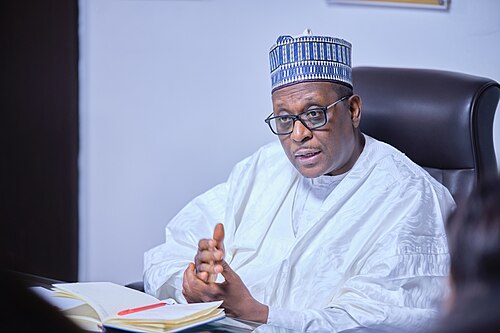
Coordinating Minister of Health and Social Welfare, Muhammad Pate, has urged Nigerians to take collective responsibility for the nation’s health security, warning that complacency could weaken the country’s readiness for future outbreaks.
Speaking in Abuja at the 10th anniversary of the Stella Adadevoh (DRASA) Health Trust, Mr Pate, represented by Nse Akpan, director of port health services, said health reforms must reflect the realities and voices of communities to be effective.
He cautioned against top-down policy approaches, noting that Nigeria’s health strategies would only succeed if they addressed the needs of people at the grassroots.
Read Also: FG Insists CBT Policy Amid Certificate Rejection Abroad
“Policy design in Nigeria will not succeed unless it resonates in the communities, in the marketplace, in the farm, in the school, in churches, in mosques, and in clinics,” he said.
The minister commended DRASA for its role in strengthening Nigeria’s public health system and described the organisation as a model for community-driven action.
He announced that the government, in partnership with DRASA and other stakeholders, plans to expand community health education and train 50,000 health workers to serve in schools and rural areas. The initiative, he said, aims to improve hygiene, infection prevention, and health awareness.
Mr Pate reiterated that public health safety required active citizen participation.
“Health security is everyone’s business. It wasn’t the business of Adadevoh alone; it is the business of us all,” he said.
He paid tribute to the late Dr Stella Adadevoh, who in 2014 identified and quarantined the Ebola patient Patrick Sawyer, preventing a potential national outbreak.
