


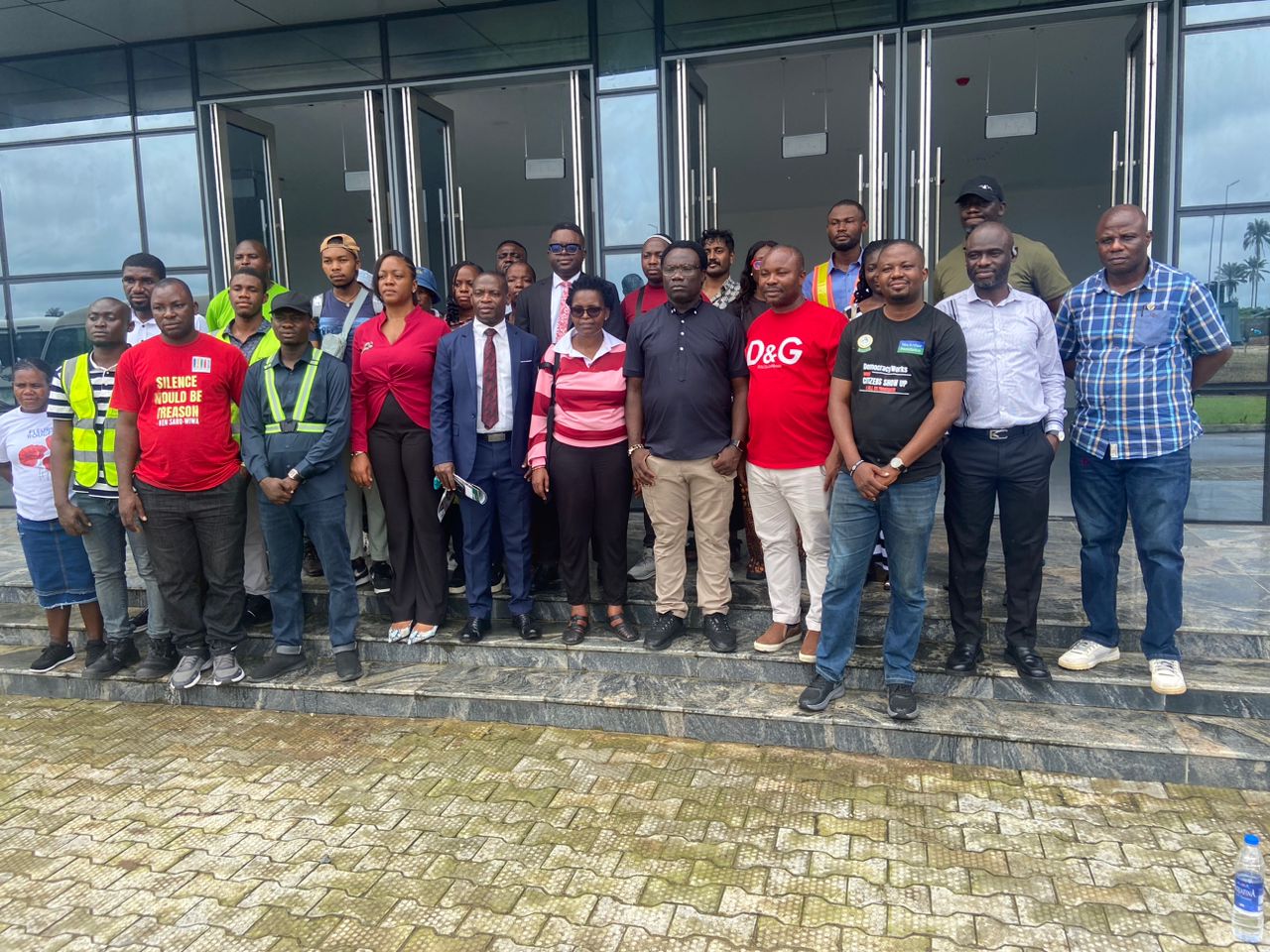
A delegation of environmental activists from South Africa has visited project sites of the Hydrocarbon Pollution Remediation Project (HYPREP) in Ogoniland, Rivers State, to learn from Nigeria’s experience in tackling oil-related environmental degradation.
The team toured selected remediation sites on Tuesday, including water projects, mangrove restoration areas, and the Centre of Excellence in Eleme, Rivers State. They described the Ogoni struggle and cleanup process as a model of community resistance, environmental justice, and people-driven development.
Executive Director of ‘We the People, ’ Mr Ken Henshaw, said he was impressed by the progress made by HYPREP despite its troubled beginnings. He noted that restored lands were gradually coming back to life, with periwinkles and crabs returning to creeks. Beyond the physical restoration, he stressed that the Centre of Excellence was vital for documenting research and providing evidence to hold polluters accountable.
“I feel excited after visiting three project sites of HYPREP because HYPREP has picked up despite its slow and controversial beginnings. I have seen that land has been restored, periwinkles and crabs are returning to places. I’m also excited to be at the Centre of Excellence, hearing the ideas and plans that it is a place where documentation of research and providing the much-needed evidence to hold those responsible for ecological degradation accountable,” he said.
Henshaw reminded participants that the cleanup was not a gift from oil companies or the government but the outcome of decades of Ogoni resistance. He added that building community vigilance was the strongest safeguard against future ecological destruction.
“It is important to say that HYPREP needs to see this cleanup exercise as a struggle won. HYPREP was not created out of the magnanimity of oil companies or the federal government. It was created because the Ogoni people fought. This is resistance,” he noted.
Expanding on the value of the Centre of Excellence, Courage Nsirimovu, Coordinator of the Pilex Centre for Civic Education Initiatives, stressed that it could serve as a critical tool for environmental justice.
Also Read: NGO Warns Fossil Fuels Pose Grave Health Risks, Urges Insurers to Back Renewables
“This place is good news for us. When we had the issue of black soot, and we went to court, the court said we couldn’t link the pollution to the impact on the people. So this is a centre where we can come and do a lot of research,” he said.
Nonhle Mbuthuma of the Amadiba Crisis Committee in South Africa said the visit was both eye-opening and sobering. She drew parallels with Shell’s plans for offshore drilling in South Africa and said the Ogoni experience showed that community resistance and scientific documentation were critical to protecting livelihoods.
“In South Africa also, Shell proposed oil and gas in our coast ocean. That is why we are here to learn from Nigeria how they dealt with all the issues from the environment. What we’ve taken in is that the resistance of the community played a vital role in making sure that all the years of Shell operations, the environment should also be put as a priority because human beings are dependent on the environment,” he said.
Mbuthuma expressed concern that fossil fuel alternatives were often sidelined in Africa, while communities continued to pay the price for extractive projects. He said he would return to South Africa better equipped to challenge oil companies with lessons drawn from Ogoni’s example.
Head of Communications at HYPREP, Mr Enuolare Mba-Nwigoh, who received the delegation, said the visit was an opportunity to showcase progress in Ogoni, particularly the people-centred nature of the remediation programme. He noted that HYPREP is not only addressing pollution but also building frameworks and knowledge legacies that can guide environmental restoration across Africa.
“We’ve taken you to our water project, mangrove project, and Centre of Excellence. We’ve been able to make them see how much effort we are making in Ogoniland in terms of addressing environmental pollution and livelihood restoration. The overriding message we have conveyed is that the HYPREP project is people-centred, and that is what has helped us gain this much success,” he said.
The South African visitors described the tour as a “powerful and profound story of how people unite and fight,” pledging to take the Ogoni example back home to strengthen their advocacy against extractive industries in their communities.
