


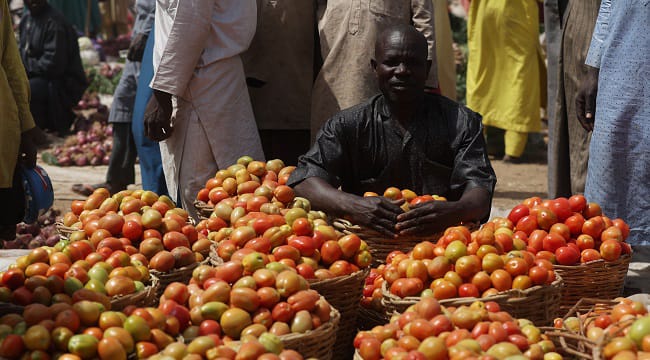
A senior economist, Dr. Paul Alaje, has attributed the recent slowdown in Nigeria’s food inflation to the ongoing harvest season and the relative stability of the naira.
The country’s headline inflation eased for the fifth consecutive month in August 2025, providing a measure of relief for households that have been grappling with high living costs.
According to data released by the National Bureau of Statistics (NBS) on Monday, August 15, 2025, headline inflation moderated to 20.12%, a significant drop from the 21.88% recorded in July.
Food inflation, the largest component of the inflation basket, also declined to 21.87%. While these figures indicate that prices are still increasing on a year-on-year basis, they show a slower pace of price growth compared to the previous months.
The primary reason for the deceleration, as stated by Dr. Alaje, is the harvest season. An increased supply of staples such as rice, maize, millet, and semolina has led to a marginal reduction in their average market prices.
This seasonal dynamic has created a positive shift in market forces. Other analysts also point to the relative stability of the naira against the US dollar, which has helped to ease the costs of imported food items.
However, the moderation is not uniform across the country. Insecurity in key food-producing regions, such as parts of Benue, Plateau, and Edo states, continues to disrupt supply chains and keep prices elevated in many markets.
Also see: NECO Announces 2025 SSCE Results
Similarly, high transportation costs remain a major impediment to food distribution, preventing consumers from enjoying the full benefits of the harvest.
The government’s temporary food import waiver has also been credited with helping to lower prices. Yet, some farmers have expressed concern that these policies, while providing temporary relief, may not be sustainable.
They argue that a long-term solution requires addressing the high costs of agricultural inputs and tackling the pervasive issue of insecurity that prevents many from cultivating their land.
The recent moderation in food inflation is a welcome development, but a lasting solution requires a multi-faceted approach that addresses the systemic issues threatening Nigeria’s food security and economic stability.
