

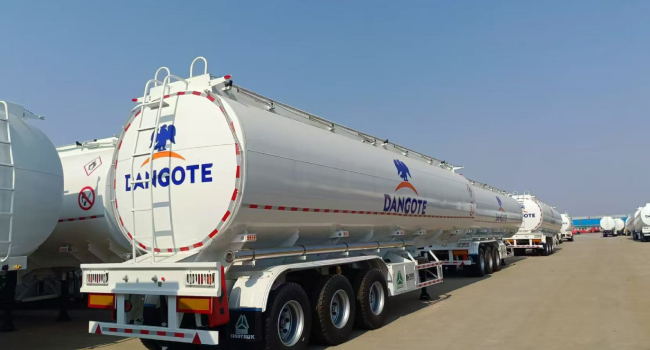
The Dangote Refinery and Petrochemicals has taken a significant step toward improving fuel supply across Nigeria by launching its fleet of Compressed Natural Gas (CNG)-powered trucks today, September 15, 2025.
This initiative focuses on distributing Premium Motor Spirit (PMS), commonly known as petrol, directly to various parts of the country. The move comes as part of broader efforts to address ongoing challenges in the nation’s petroleum sector and ensure more efficient delivery of essential products to consumers.
Earlier this year, in August 2025, the refinery announced the arrival of the initial shipment of its 4,000 CNG trucks. These vehicles are designed to transport refined petroleum products straight from the facility, cutting out unnecessary middlemen and reducing transportation costs.
The original plan was to begin the distribution program on August 15, 2025, but the official launch has now been scheduled for today. This delay allows for final preparations to ensure smooth operations nationwide.
Aliko Dangote, the founder of the refinery, emphasized the importance of this direct approach during a recent meeting on Sunday, September 14, 2025, with representatives from the AfricaRice Centre at his office in Lagos.
He explained that relying on third-party transporters was leading to excessive losses, amounting to about N75 per litre due to intermediary fees. “We cannot afford to lose N75 per litre to middlemen who may not even ensure the fuel reaches ordinary Nigerians,” Dangote stated. He added that the refinery is prioritizing partnerships with reliable distributors to make petroleum products more accessible and affordable for everyone.
By adopting CNG trucks, the refinery aims to lower logistics expenses and minimize environmental harm from fuel transport. The trucks will run on natural gas provided by local collaborator Tetracore Energy Group. This shift is expected to save billions in operational costs, which can then be reinvested into vital infrastructure projects.
For instance, avoiding the Single Point Mooring (SPM) system for loading fuel eliminates an additional N75 per litre in handling charges. If the refinery were to process 40 million litres of PMS and 15 million litres of diesel daily through the SPM, it would face an annual burden of N1.5 trillion—funds that could otherwise support national development.
The Dangote Refinery currently meets 30 to 35 percent of Nigeria’s fuel demand, playing a crucial role in stabilizing supply. However, this launch has sparked some controversy. Last week, on September 8, 2025, the Depot and Petroleum Products Marketers Association of Nigeria (DAPPMAN) voiced concerns over the refinery’s pricing strategies.
Also see: Police Nab 48-Year-Old Suspect For Alleged Child Defilement
They claimed that while international buyers receive competitive rates, local marketers are quoted higher prices, and the refinery is not providing free delivery options. DAPPMAN described these practices as a potential attempt to dominate the downstream market, calling them “unpatriotic” and focused more on business gains than national welfare.
Despite these criticisms, the investment in the CNG truck project underscores a commitment to innovation. The refinery has allocated over N720 billion to acquire and deploy these 4,000 vehicles, marking one of the largest such initiatives in Africa’s energy sector. This effort is projected to benefit more than 42 million micro, small, and medium enterprises (MSMEs) by driving down energy expenses through cheaper and greener distribution methods.
As Nigeria grapples with fuel scarcity and rising costs, today’s launch represents a promising development. It could lead to more consistent petrol availability in cities and rural areas alike, fostering economic growth and reducing reliance on imports.
Industry watchers believe that if successful, this model might inspire similar reforms in other parts of the supply chain. For now, all eyes are on how the CNG trucks perform in their first days of operation, potentially transforming the landscape of fuel delivery in the country.
