


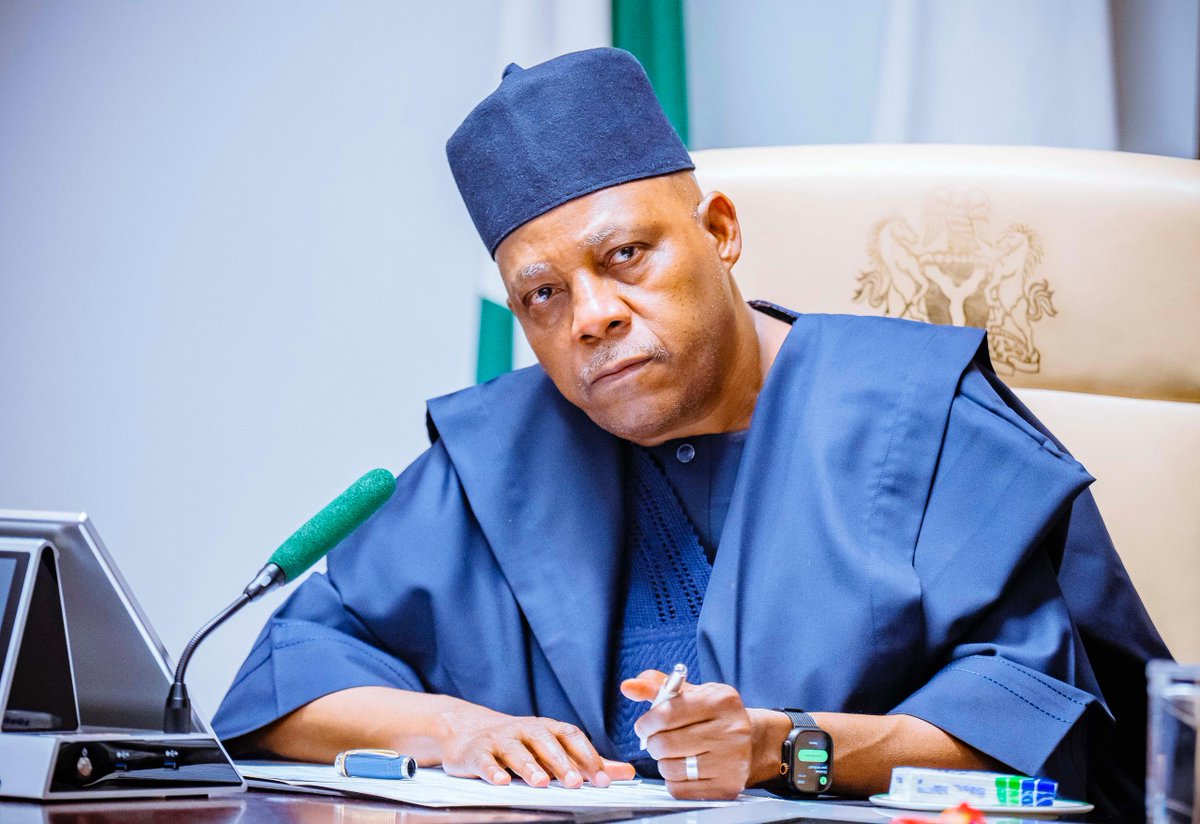
Vice President Kashim Shettima has directed the Presidential Food Systems Coordinating Unit (PFSCU) to accelerate the disbursement of a N250 billion credit facility for smallholder farmers, emphasising that the loans should be provided at a single-digit interest rate.
Stanley Nkwocha, the Senior Special Assistant to the President on Media & Communications, Office of the Vice President, in a statement recently said his principal spoke at the 6th meeting of the PFSCU Steering Committee in the Presidential Villa, Abuja.
Shettima instructed the unit to develop a clear implementation roadmap to ensure the funds reach the intended beneficiaries without delay. He stressed the importance of credit in boosting agricultural productivity.
Shettima also commended President Bola Tinubu for providing the necessary political support for the PFSCU to implement key reforms, including the liberalisation of fertiliser raw materials and the establishment of a Presidential Seed Fund.
Shettima noted that this support has allowed the unit to fast-track its delivery of initiatives that directly benefit farmers and strengthen the nation’s food systems.
During the meeting, Ekiti State Governor, Biodun Oyebanji, called for a robust structure to be put in place to ensure the N250 billion from the Bank of Agriculture reaches the farmers it is intended for. He also pledged his state’s financial support for the PFSCU.
Also see: FCT Minister Wike Seeks UK Medical Care Abroad
Governors Umar Namadi of Jigawa State and Bassey Otu of Cross River State also spoke, with both highlighting the need for subsidies and incentives to support local farmers.
PFSCU Coordinator, Marion Moon, underscored the urgency of addressing food insecurity, noting that 30.8 million Nigerians are currently food insecure.
She highlighted the unit’s recent achievements, including the insurance of 250,000 farmers and the launch of the “Harvesting Hope Caravan” across eight states.
The meeting was attended by various stakeholders, including deputy governors, ministers, and representatives from the private sector and development partners, all of whom recognised agriculture as a shared responsibility critical for sustained progress.
