


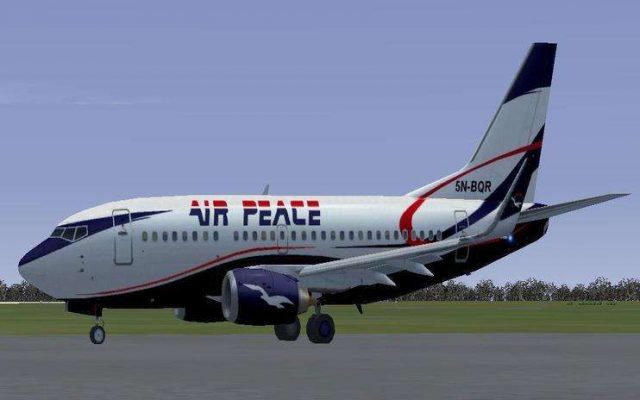
On July 13, 2025, a Boeing 737 aircraft operated by Air Peace Limited encountered a significant safety issue at Port Harcourt International Airport in Rivers State, Nigeria. The plane, which was flying a routine domestic route from Lagos to Port Harcourt carrying 103 passengers and crew members, veered off the runway following what investigators described as an unstable approach during landing.
According to a preliminary report released by the Nigerian Safety Investigation Bureau (NSIB) on Friday, September 12, 2025, the aircraft touched down unusually far along Runway 21—specifically, 2,264 meters from the intended threshold—and ultimately halted 209 meters beyond the runway’s clearway area. Fortunately, no injuries were reported, and everyone on board safely exited the plane without further complications.
The NSIB’s investigation quickly uncovered troubling details regarding the flight crew’s condition. Post-incident toxicological screenings were performed the same day at the Rivers State Hospital Management’s Department of Medical Laboratory in Port Harcourt. These tests indicated that the captain and first officer had traces of ethyl glucuronide in their systems, a biomarker that points to recent alcohol intake. In addition, one cabin crew member tested positive for tetrahydrocannabinol (THC), the primary psychoactive substance found in cannabis.
The bureau emphasized that these findings are under ongoing review as part of broader examinations into human factors and safety protocols.
This runway excursion incident shows the ongoing challenges in Nigeria’s aviation sector, where factors like pilot errors, equipment issues, or environmental conditions have occasionally led to similar near-misses.
Also Read: First Female Area Comptroller Resumes at Port Harcourt I Customs Area Command
The NSIB classified the event as a serious incident, prompting immediate action to prevent future occurrences. In response, the bureau issued targeted safety recommendations to Air Peace Limited. These include enhancing training programs for crew resource management, with a focus on recognizing and responding to unstable approaches by opting for go-arounds when necessary. Additionally, the airline was urged to bolster its pre-flight checks to better monitor crew fitness and ensure compliance with duty requirements.
Mrs. Bimbo Olawumi Oladeji, the NSIB’s Director of Public Affairs and Family Assistance, signed off on the preliminary report, which was shared with media outlets. The document stresses the importance of rigorous substance screening in high-stakes industries like aviation. “Initial tests on the flight crew showed evidence of substances such as alcohol markers, while a cabin member had THC present,” the report noted. “These elements are being analyzed within the context of performance and management practices.”
Air Peace, one of Nigeria’s leading carriers, has not yet issued an official statement on the matter as of this writing. However, the incident serves as a reminder of the stringent regulations enforced by bodies like the NSIB to safeguard air travel across the country. Runway excursions, though not uncommon globally, can stem from various causes including misjudged landings, communication breakdowns, or mechanical faults but the involvement of prohibited substances adds a layer of accountability for airlines and personnel.
With domestic flights connecting key hubs like Lagos and Port Harcourt daily, maintaining the highest levels of crew vigilance remains crucial for public confidence in Nigeria’s skies.
