


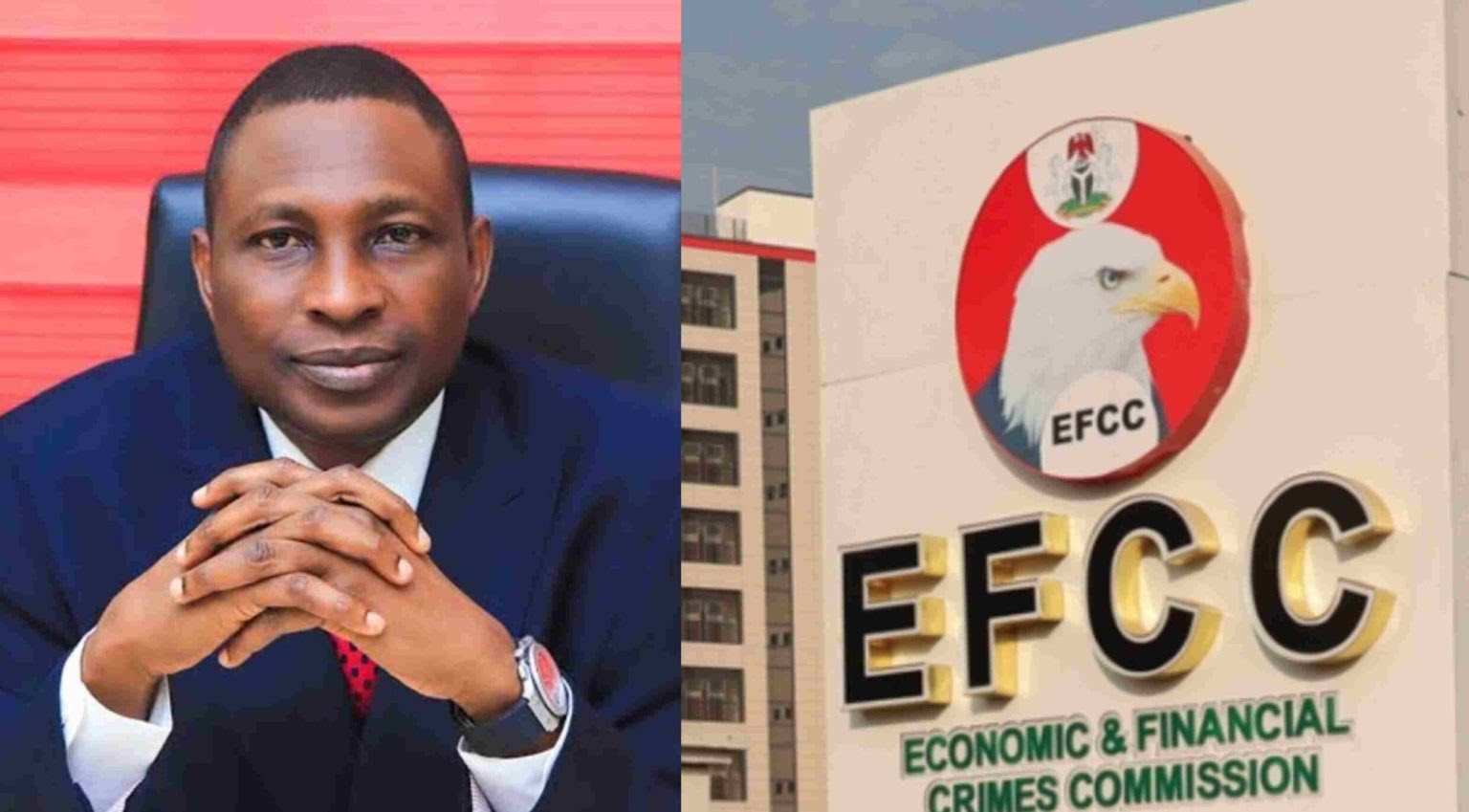
The Chairman of the Economic and Financial Crimes Commission (EFCC), Ola Olukayode, has called on Nigerians to adopt a culture of transparency and accountability to effectively combat corruption in the country.
He spoke at the 12th annual conference of the Association of Communication Scholars and Professionals of Nigeria (ACSPN) in Effurun, Delta, on Thursday, September 4.
Olukayode, represented by Williams Oseghale, an Assistant Commander and Head of Public Affairs for the Benin Zonal Directorate, stated that good governance is attainable if all citizens play their part.
The EFCC boss highlighted that the country’s socio-economic challenges, including unemployment, insecurity, poverty, and other issues, are direct consequences of the mismanagement and embezzlement of public funds by those in positions of trust.
He expressed concern that Nigeria is often perceived as a nation with a deep-rooted culture of corruption and impunity in Africa.
He specifically appealed to media professionals to use their platforms to fight corruption and financial crimes by engaging in investigative journalism to expose fraudsters and public officials who siphon funds.
Olukoyede urged them to emulate the industry’s founding fathers and champion the fight against social injustice, while also refraining from glorifying corruption.
Olukayode reiterated the commission’s commitment to eradicating corruption and commended the ACSPN for the conference’s timely focus on corruption, good governance, and the media.
Also Read: EFCC Urges Lawmakers to Prioritise Accountability in Governance
He encouraged delegates to use the forum to set a positive agenda for media practitioners in the quest to build a better nation.
The conference was sponsored by Tantita Security Services Nigeria Limited (TSSNL), a private pipeline security firm contracted by the federal government.
Earlier, the ACSPN National President, Prof. Rotimi Olatunji, described corruption in Nigeria as multi-faceted, ranging from petty to grand corruption involving high-level politicians and business elites.
He said its corrosive effects hinder economic growth, deter investment, and threaten the attainment of Sustainable Development Goals.
Olatunji urged communication researchers and the media to amplify anti-corruption voices and promote accountability in governance.
Similarly, Prof. Majority Oji, Dean of the Faculty of Communication and Media Studies at Delta State University (DELSU), and Chairman of the Local Organising Committee, encouraged participants to use the forum to create knowledge that can advance the anti-corruption crusade.
The conference was attended by numerous scholars and professionals, including Prof. Nosa Owens-Ibie, Prof. Daniel Awodiya, and Prof. G. G. Darah.
