


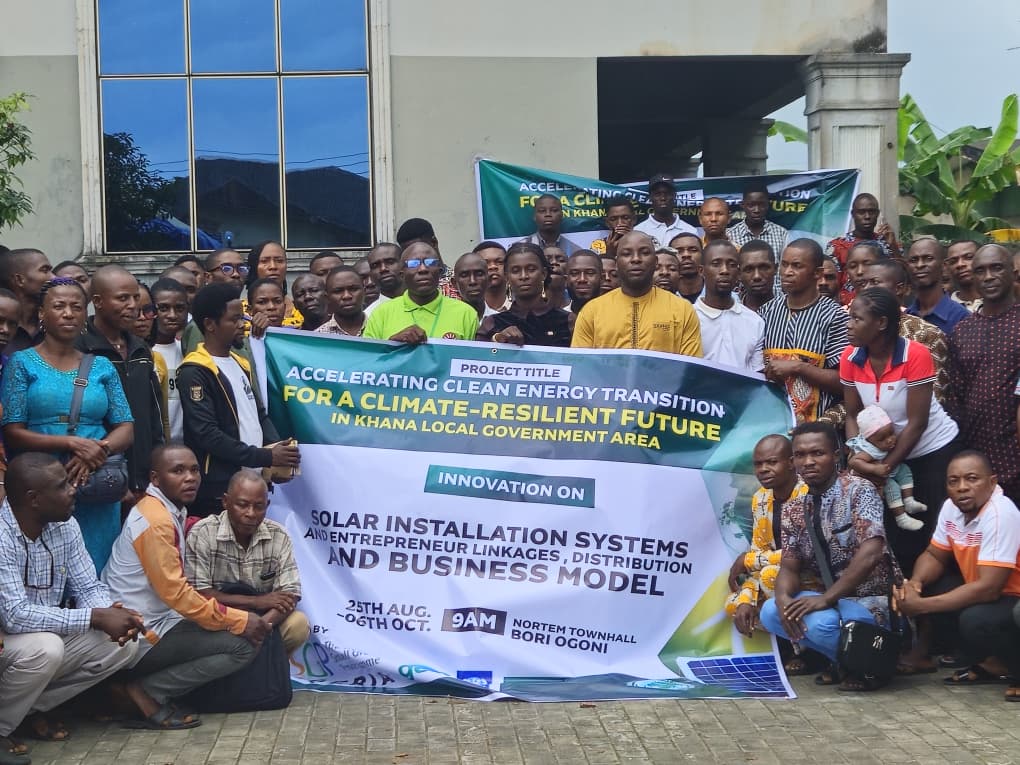
One hundred young people from Khana Local Government Area of Rivers State have commenced technical training on solar installation and maintenance, aimed at promoting renewable energy adoption and tackling unemployment in the region.
The programme, which began on August 21, 2025, is organised by the Lekeh Development Foundation with support from the UNDP Global Environment Facility Small Grants Programme (GEF). It is themed “Accelerating Clean Energy Transition for a Climate Resilient Future in Khana Local Government Area.”
Executive Director of Lekeh Development Foundation, Friday Nbani, said the project was designed to build capacity, create opportunities, and transform communities through clean energy solutions.
“Young people easily adapt to new technology, and they are the future leaders. With high unemployment levels in our communities, this training will empower them with technical skills in solar installation and maintenance, linking them to business opportunities and helping them secure a sustainable livelihood,” he said.
Nbani explained that the project also aims to address environmental challenges caused by carbon emissions in Ogoni. He stressed that renewable energy, particularly solar, offers practical solutions to climate change while reducing reliance on fossil fuels.
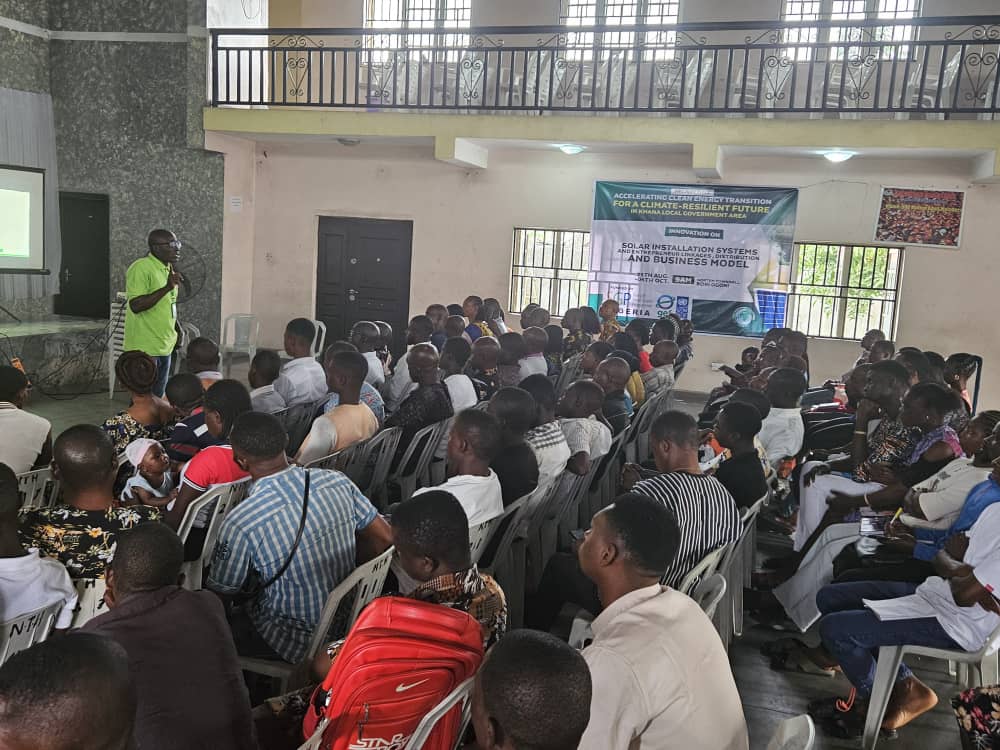
The training, which will run for two to three months, is the pilot phase and will be scaled up to other communities in subsequent batches. Participants will also be grouped into cooperatives to foster entrepreneurship and sustain the initiative.
Also Read: Rivers Civil Service Gets Boost as Coalition Applauds Sole Administrator’s Reforms
In his presentation, Oluseyi Thomas, Business Developer at Asteven Energy Institute, urged the trainees to embrace renewable energy fully. He noted that upon completion, participants would become certified solar engineers capable of servicing households, businesses, and public institutions.
Program Coordinator for Gender and Climate Issues at Lekeh Development Foundation, Melody Barry-Yobo, said the project was targeted at communities suffering from energy poverty. She emphasised that solar energy, given its abundance in the region, remains the most viable alternative to fossil fuels.
Some participants expressed gratitude to the organisers and partners, describing the training as life-changing.
They noted that the skills acquired would enable them to contribute to energy transition efforts while taking advantage of business opportunities in the renewable energy sector.
