


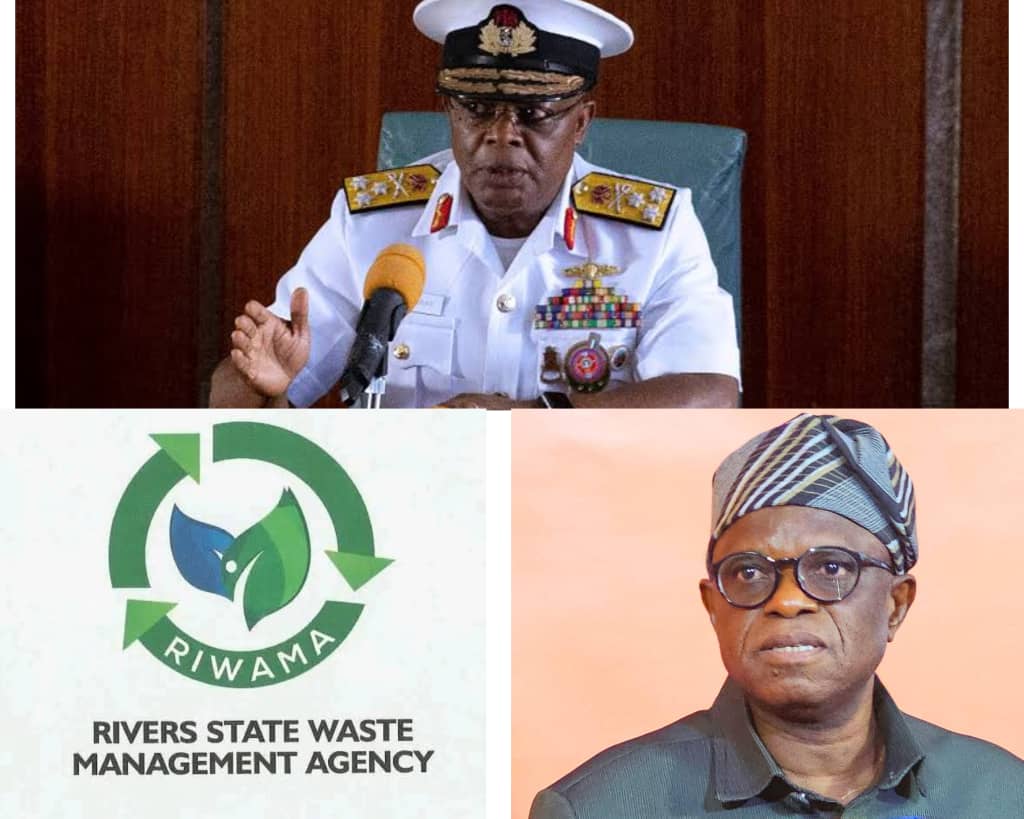
Nearly six months after the declaration of emergency rule in Rivers State, concerns are mounting over the conduct of the Sole Administrator, Vice Admiral Ibok-Ete Ibas (rtd), appointed by President Bola Ahmed Tinubu in March.
The proclamation, which suspended the governor, State House of Assembly and all elected officials except the judiciary, was intended to tackle insecurity and restore peace. However, many residents say it has instead deepened political instability and crippled governance.
A stakeholder in the state, Magnus Ichechi, warned that the prolonged emergency rule is crippling economic activities. “The continuity of emergency rule in Rivers State is crumbling the economy,” he said.
Since assuming office, Vice Admiral Ibas has dissolved key state institutions, including the Rivers State Independent Electoral Commission (RSIEC), the Civil Service Commission, education boards, health agencies, the Internal Revenue Board, and several governing councils of tertiary institutions. These moves have drawn sharp criticism, with many questioning whether they were necessary or politically motivated.
Governor Siminalayi Fubara, sidelined by the proclamation, initially urged supporters to remain calm, believing the intervention would be temporary. A public appearance alongside his predecessor, Nyesom Wike, briefly raised hopes of reconciliation. But instead, Ibas consolidated power, appointing controversial figures and bypassing established procedures.
One of his most disputed actions was the nomination of a Cross River indigene as Chairman of RSIEC, a decision widely condemned as unlawful. He also forwarded the state’s 2025 Appropriation Bill to the National Assembly through the Presidency, sidelining the state legislature.
Also see: Rivers LG Poll : IPAC Boycott, Stakeholders’ Declare Process Flawed
Despite a Supreme Court order restricting access to state funds until a proper budget was passed, Ibas reportedly received and began spending more than ₦166.2 billion in federal allocations, along with ₦264 billion saved from internally generated revenue under Governor Fubara. Allegations of diversion and patronage have since emerged.
The Sole Administrator has further entrenched his authority by appointing local government sole administrators, designating special advisers as de facto commissioners, installing a Secretary to the State Government, swearing in permanent secretaries, and removing the Accountant General. Critics argue these moves amount to unconstitutional overreach.
On August 13, 2025, Ibas approved sweeping appointments to eight parastatal boards and tertiary institutions governing councils, just weeks before the expected end of emergency rule. Civil society groups, Rivers elders, and legal practitioners, including Barr. Chizzy Enyi, have gone to court, warning that he is entrenching partisan structures ahead of the 2027 general elections.
With emergency rule set to expire on September 18, 2025, observers fear Rivers State will emerge weakened, with battered institutions and a fragile economy. Critics warn that undoing the effects of the six-month intervention may take years.
