


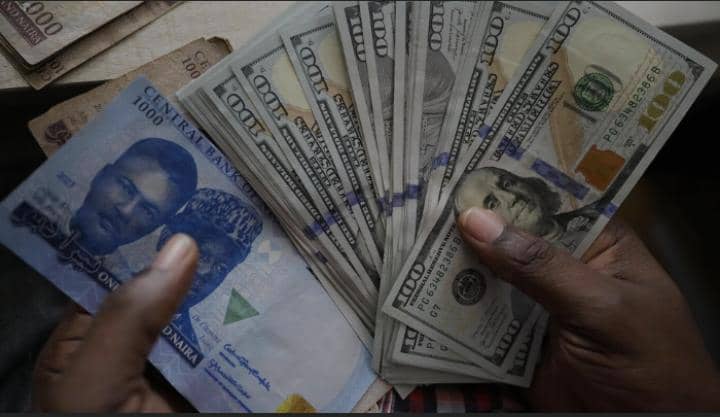
The naira recorded a slight depreciation of 0.3 percent against the US dollar in July, even as Nigeria’s external reserves surged by $2.16 billion, signalling improved foreign exchange (FX) inflows and growing market stability.
According to data from the Central Bank of Nigeria (CBN), the local currency opened the month at N1,529.57/$ and closed at N1,533.55/$ on July 31, representing a loss of N3.98. However, the naira held steady on a day-on-day basis, appreciating marginally by N0.97 or 0.06 percent from the previous day’s rate of N1,534.52/$.
At the parallel market, the naira maintained a flat monthly close at N1,560/$, despite weakening by N10 on Thursday from N1,550/$, representing a 0.6 percent daily dip.
Nigeria’s external reserves rose to $39.35 billion as of July 30, up from $37.19 billion at the start of the month—a 5.8 percent increase. Analysts attribute the uptick to the CBN’s FX reforms, rising diaspora remittances, and renewed foreign portfolio investments, supported by improved crude oil output.
Also Read: BOOT Party Withdraws from Rivers LG Elections
United Capital Research projected a stable FX outlook, with the naira expected to close 2025 within the N1,490–N1,520 band. Similarly, Uche Uwaleke, President of the Capital Market Academics of Nigeria, noted that CBN’s policy actions have narrowed the parallel market premium and contributed to currency stability.
Despite convergence between official and black market rates, Renaissance Capital analysts estimate the naira is still about 26 percent overvalued. However, sustained reforms, rising reserves, and expected inflows—including a $21 billion external loan—are expected to support exchange rate stability in the coming months.
