


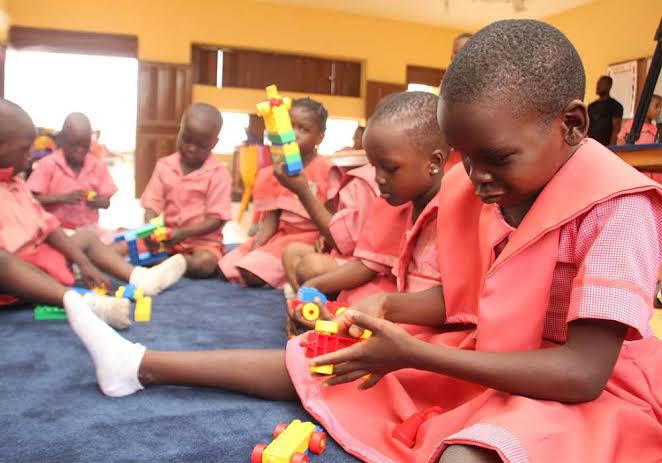
Early childhood education (ECE) is a critical phase of learning that lays the foundation for a child’s future academic success and lifelong learning. It encompasses the education and care of children from birth to around eight years old, a period of rapid growth and development. During this time, children develop essential skills, knowledge, and values that shape their cognitive, social, emotional, and physical abilities.
Early childhood education is more than just childcare; it’s a structured program designed to foster learning and development in young children. ECE programs typically include activities that promote literacy, numeracy, problem-solving, and social skills. These programs can be delivered in various settings, including preschools, daycare centres, and home-based care.
According to Ugochi Andrew, a tutor with 3 years of experience working with kids,
“It doesn’t matter how old the child is, you can even start teaching them from the womb, and this is because a child’s brain is elastic; it can feed on a lot of things and retain them. So, whatever you want to inculcate in a child, it’s better you start at a tender age.”
Early childhood education offers numerous benefits, including:
- Improved cognitive development: ECE programs can help children develop essential cognitive skills, such as literacy and numeracy, which are critical for future academic success.
. Better social skills: ECE programs promote social skills, such as cooperation, communication, and empathy, which are essential for building strong relationships.
- Increased creativity: ECE programs encourage creativity, imagination, and problem-solving, which are critical for innovation and future success.
- Long-term benefits: Investing in ECE can have long-term benefits for individuals and society, including improved educational outcomes, reduced crime rates, and increased economic productivity.
One of the significant benefits of early childhood education is the identification of potential developmental delays.
Ugochi Andrew notes that “early childhood education will help parents to recognise any lapses the child might have; it could be speech delay or whatever, so it’s more like identifying their path early.”
Early childhood education also helps parents and tutors discover the learning styles of children.
Also Read: AI & Blockchain Roles Dominate Port Harcourt Job Listings
Gift Meshack adds that “early childhood education helps parents or tutors to recognise the aspect of learning the child loves. “There are children who love verbal learning, and there are still some who love writing. So, when you identify their weaknesses and strengths, it becomes easiest to build them for the future.”
Parents play a critical role in early childhood education. They can support their child’s learning by:
- Providing a nurturing environment: Parents can create a nurturing environment that promotes learning and development.
- Encouraging curiosity: Parents can encourage their child’s curiosity and love of learning.
- Supporting ECE programs: Parents can support ECE programs and work with teachers to ensure their child receives the best possible education.
The future of education is rapidly evolving, with new technologies and approaches being developed to support young children’s learning. According to Dr. Jane Smith, a renowned early childhood education expert, “The future of early childhood education is exciting, with new technologies and approaches being developed to support young children’s learning. However, we must prioritise the needs of young children and ensure that ECE programs are high-quality, accessible, and equitable for all.”
Early childhood education has a lasting impact on future academic success and lifelong learning. By providing young children with a solid foundation in learning, ECE programs set them up for success in school and beyond. As Dr. Maria Rodriguez, a leading expert in ECE, notes, “Early childhood education is the foundation upon which future learning is built. It provides children with the skills, knowledge, and values they need to succeed in school and in life”.
