



With Nigeria’s agricultural sector facing mounting pressure from climate change, soil degradation, insecurity, and poor farmer support, stakeholders at a national conference have called for urgent reforms anchored on agroecological principles to ensure food sovereignty and sustainable food systems.
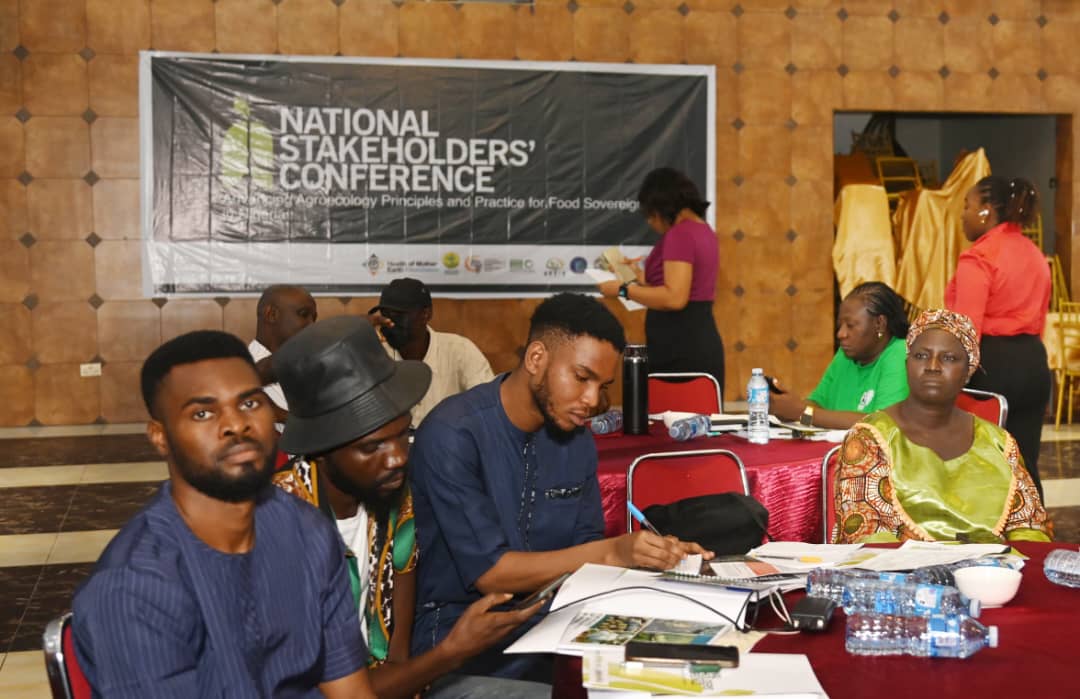
Themed “Advancing Agroecology Principles and Practice for Food Sovereignty in Nigeria”, the conference brought together over 70 participants, including farmers, academics, civil society organisations (CSOs), youth and women groups, researchers, policymakers, and the media.
The gathering provided a platform for dialogue, strategic planning, and knowledge-sharing aimed at transforming Nigeria’s agricultural systems through agroecology and organic practices.
Agroecology, according to participants, presents a holistic approach to tackling Nigeria’s food crisis by promoting ecological balance, biodiversity, farmer empowerment, and community control over food systems.
Agroecological practices can increase food sovereignty by giving communities control over seeds and food systems, moving beyond food security to guarantee the right to choose what and how they eat.
These practices offer healthier, culturally appropriate diets; enhance soil health through better microbial activity; mitigate climate change; and empower local communities, especially women and youth.
Success stories from across Africa were highlighted, including: Ghana Use of drought-resistant orange-fleshed sweet potatoes improved food security and nutrition.
Kenya: PELUM Network’s promotion of African leafy vegetables revived traditional farming, enhanced livelihoods, and boosted crop production.
Malawi: The Never Ending Food initiative used permaculture-based agroecology to improve year-round food availability and rehabilitate degraded land.
Nigeria: Be the Help Foundation’s agroforestry project demonstrated how agroecology can foster both economic empowerment and environmental sustainability.
Participants flagged major obstacles to agroecology and food sovereignty in Nigeria, including: Limited public awareness and technical knowledge, insecure land tenure and land grabs.
Poor extension services and restricted access to credit, and heavy reliance on synthetic agrochemicals. Spread of genetically modified organisms (GMOs), which they said undermines farmers’ autonomy, degrades soil, and promotes corporate dependency.
The conference concluded with strong declarations to Champion agroecological practices in farming communities nationwide. Prioritise food sovereignty over mere food security in policy design and execution.
Advocate for context-specific research and farmer-led innovation, protect farmers’ rights to land, water, traditional seeds, and resources, strengthen local food systems and preserve indigenous knowledge.
Push for government investment in agroecological research and extension services, and improve communication and collaboration among all stakeholders. Follow up with the Federal Ministry of Agriculture and Food Security on plans to mainstream agroecology in Nigeria’s updated Nationally Determined Contributions (NDC 3.0).
Also Read: Why Nigeria’s Push for More States Falls Short
The conference participants issued the following urgent calls: Government at all levels should recognise agroecology as a national strategy for food sovereignty and create supportive policies.
Citizens should engage in subsistence farming, support local food systems, and advocate for healthy food policies. Ban GMOs and redirect investments into agroecological research and practice.
Promote structured youth training programmes to sustain intergenerational knowledge transfer. Integrate agroecology into academic curricula and prioritise it in national agricultural research.
Establish national seed banks to preserve indigenous varieties and support farmer autonomy. Address insecurity and ensure equitable land access, especially for women and young people.
Develop a national standard for organic and agroecological farming, train and deploy extension workers specialised in agroecology. Create favourable markets for agroecological produce.
The conference communique was endorsed by 20 organisations, including:
Organic and Agroecological Initiative (ORAIN), Federation of Agricultural Commodity Associations of Nigeria (FACAN), Raw Materials Research and Development Council (RMRDC), Be The Help Foundation.
Urban-Rural Environmental Defenders (U-RED), Environmental Rights Action (ERA), Corporate Accountability and Public Participation Africa (CAPPA), Youth in Agroecology and Restoration Network (YARN), Health of Mother Earth Foundation (HOMEF) and others representing farmers, women, youth, and environmental advocates across the country.
The stakeholders reaffirmed their collective commitment to agroecology as a pathway to a just, resilient, and sovereign food system in Nigeria.
