


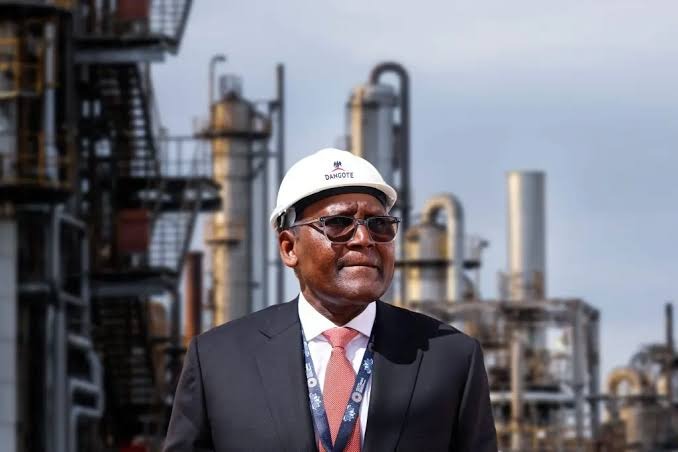
Africa’s richest man, Aliko Dangote, is calling for a bold expansion of Nigeria’s “Nigeria First” policy to include a ban on the importation of refined petroleum products like petrol and diesel. Speaking at a major industry conference in Abuja, Dangote warned that the influx of cheap and often substandard fuel is undercutting local production, discouraging investment, and flooding the country with toxic blends banned in Europe and North America. But his proposal has sparked strong opposition from petroleum marketers and energy experts, who fear that such a move would hand him monopoly control in an already fragile market.
Dangote’s request, rooted in the government’s new procurement directive that forbids public agencies from importing locally available goods, aims to protect his $20 billion refinery from what he described as “dumping.” According to him, subsidised Russian fuel and other discounted imports are making it impossible for local refineries to compete on pricing, forcing them to operate at a loss. In his words, “Petrol and diesel are sold for about a dollar net of taxes globally, but in Nigeria, it’s about 60 cents, even cheaper than Saudi Arabia. That’s due to dumping.” He insists this trend must be curbed to ensure long-term viability for local producers.
While asserting that the call is not about monopolising the industry, Dangote said local investors like himself are often demonised while others with the capacity to invest prefer to take their money abroad. To demonstrate his refinery’s readiness, he revealed that Nigeria has already become a net exporter of refined petroleum products, exporting 1.35 billion litres of petrol to international markets in just 50 days.
However, stakeholders across the downstream sector aren’t buying it. Independent marketers and retailers are pushing back, warning that banning imports would be catastrophic for competition and fuel supply. Chinedu Ukadike, spokesperson for the Independent Petroleum Marketers Association of Nigeria, warned that limiting supply to one refinery would fuel inflation and restrict access to affordable energy. He argued that allowing continued imports would keep Dangote competitive and encourage efficiency.
Also Read: Fubara Extols Wike’s Honorary Degree from UNIPORT
Billy Gillis Harry, president of the Petroleum Products Retail Outlet Owners Association, was even more direct: “Nigeria runs a free economy. Importation isn’t killing the market, it’s stabilising it.” He insisted that banning refined fuel imports would concentrate too much power in one hand and jeopardise the country’s energy diversity. For him, bans should target items like toothpicks and local foodstuffs, not essential energy products.
Legal and economic concerns were also raised by Professor Dayo Ayoade, an energy law expert at the University of Lagos. He warned that such a ban could violate international trade rules and raise red flags over energy security. “We cannot rely on one private refinery. It’s not good for competition or national security,” he noted, urging the government to promote refinery development rather than restrict imports prematurely.
Interestingly, while Dangote called for the withdrawal of dormant refinery licences, a point IPMAN agreed with, the broader consensus among critics is clear: Nigeria’s petroleum sector is not ready for such a sweeping import ban. Without more functional refineries and a diversified supply base, stakeholders fear the move would concentrate market power, limit supply options, and ultimately hurt the very consumers the policy is supposed to protect.
As the debate deepens, the Federal Government is caught in the middle of a critical balancing act, encouraging local investment without choking market competition, and asserting economic independence without isolating Nigeria from the global energy landscape.
