


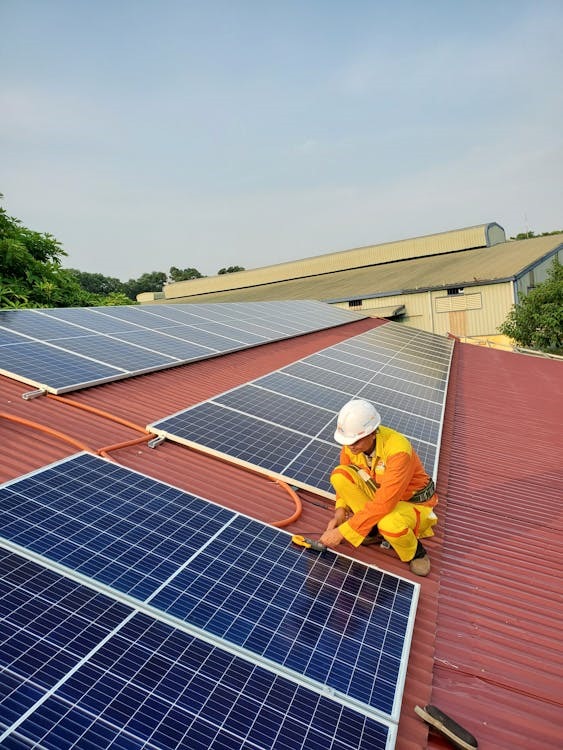
Nigeria’s proposed ban on the importation of solar panels, aimed at promoting domestic manufacturing and technological independence, is drawing criticism from renewable energy experts and civil society actors who fear the decision could undermine national clean energy goals and worsen access to electricity for millions.
The policy, announced on March 26 by the Minister of Innovation, Science, and Technology, Uche Nnaji, is rooted in Executive Order No. 5, which seeks to boost local production and reduce dependence on imported technologies.
According to the minister, Nigeria has the capacity, through private solar firms and government agencies such as the National Agency for Science and Engineering Infrastructure (NASENI), to meet growing energy demands.
But many industry players disagree.
They argue that the local solar panel manufacturing capacity is not yet robust enough to meet national demand, especially considering Nigeria’s current energy access crisis.
Ogunlade Olamide Martins, Associate Director at the Pan-African NGO Corporate Accountability and Public Participation Africa (CAPPA), stated that the country’s largest known solar assembly plant in Lagos only produces about 72,000 panels annually, with a generation capacity of just 100 megawatts.
Also see: Wike Accused of Nepotism in Land Allocation to Son
That figure, he says, is a drop in the ocean compared to the needs of over 83 million Nigerians who still lack access to reliable electricity. “Relying solely on local facilities, which are still developing, would put enormous strain on the system,” Martins noted.
By the end of 2024, Nigeria’s installed solar energy capacity was estimated at 385.7 megawatts peak (MWp), while the government targets 500 MW by the end of 2025. Though new solar manufacturing projects are in development, stakeholders argue that production levels are still too low to justify a complete importation ban at this time.
The proposed restriction is expected to drive up the cost of solar products. Felicia Dairo, a project manager at the Centre for Journalism Innovation and Development, warns that restricting supply will naturally result in price hikes.
“Affordability is already a major barrier for many households and small businesses. If prices climb any higher due to scarcity, it may push people back to using generators, diesel, and petrol, which will ultimately increase pollution and strain household finances,” she said.
The risk of reversing recent progress in Nigeria’s renewable energy sector is a concern echoed by many. Samuel Okeriuwa, a renewable energy expert with over three decades of experience in solar technology, believes that without careful planning and support for local producers, the ban could end up doing more harm than good.
“Suddenly banning imports without empowering our engineers and manufacturers is counterproductive. We need to first build capacity, then phase in restrictions gradually,” he said.
In addition to concerns over capacity and cost, stakeholders are questioning the government’s consultation process. Many say the proposal lacks adequate input from renewable energy developers, civil society, economists, and engineers.
Deborah Fadeyi, founder of Energy Intelligence, pointed out that most mini-grid developers, solar system installers, and independent power providers currently rely heavily on imported panels to meet project timelines and efficiency standards.
She believes a blanket ban, especially one implemented hastily, would slow down rural electrification efforts and damage investor confidence.
“We need a phased, evidence-based approach,” Fadeyi said. “Let’s develop our local capacity while still maintaining access to quality imported equipment. Once we’ve built up strong domestic production lines with tested standards, then we can consider limiting imports.”
The Centre for the Promotion of Private Enterprise (CPPE), an economic think tank, has also urged the government to reconsider its approach. In a recent policy advisory, CPPE stressed that industrial protectionism should not come at the cost of access to clean energy, especially when Nigeria’s electricity consumption per capita remains among the lowest in the region.
While the government’s goal of fostering indigenous production and innovation is commendable, experts say it must be balanced against the practical realities of Nigeria’s energy landscape. The country remains heavily reliant on fossil fuels, and any slowdown in renewable adoption could undermine broader environmental and economic goals.
Instead of an outright ban, stakeholders recommend a range of alternatives:
- Tariff adjustments or quotas that gradually reduce imports.
- Government-backed incentives for local manufacturers and installers.
- Stronger quality control to prevent the influx of substandard panels.
- Funding and access to credit for small and medium solar enterprises.
As the government continues to review the proposal, many hope that it will engage more meaningfully with industry experts and civil society to avoid repeating the hasty rollout of previous policies, such as the sudden fuel subsidy removal in May 2023 that triggered economic hardship across the country.
For now, Nigeria stands at a crucial crossroads. How it balances industrial ambition with the urgent need for clean, affordable energy will shape its path toward sustainable development in the years to come.
