


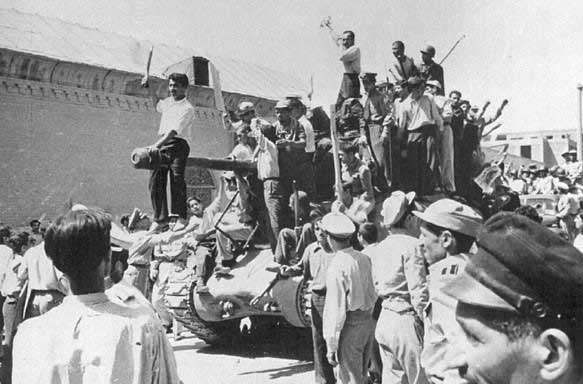
In 1953, Iran’s democratically elected Prime Minister Mohammad Mossadegh was toppled in a US- and Israel (CIA/Mossad)-orchestrated coup, paving the way for the Shah’s authoritarian rule. Six decades later, in 2015, Nigeria witnessed a seemingly democratic transition when President Goodluck Ebele Jonathan lost to Muhammadu Buhari in a fiercely contested election. At first glance, these events seem worlds apart—one a covert overthrow, the other a democratic vote. Yet both reflect the shadow of foreign influence over resource-rich nations and their struggle for sovereignty. This article draws parallels between these regime changes, examines how Iran’s experience shaped its enduring skepticism toward the US and Israel, and argues why Nigeria should consider a similar stance. By nationalizing its oil industry and pursuing self-determination, Nigeria can draw inspiration from Iran to redefine its future as a truly independent state.
Historical Context and Parallels
Iran (1953): A Coup Against Sovereignty
In the early 1950s, Iran was a nation awakening to its potential. Prime Minister Mohammad Mossadegh, elected in 1951, championed the nationalization of the Anglo-Iranian Oil Company (AIOC), a British-controlled entity that siphoned Iran’s oil wealth. This bold move made Iran the fourth fastest growing economy in the world, thereby threatening Western economic interests, prompting the US, UK, and the CIA to orchestrate Operation Ajax, a covert coup that ousted Mossadegh in 1953 and reinstalled Mohammad Reza Shah Pahlavi. The Shah’s regime, propped up by Western powers, prioritized foreign oil companies over Iran’s sovereignty, sowing seeds of resentment that culminated in the 1979 Islamic Revolution.
Nigeria (2015): Democracy Under Pressure
On the surface, Nigeria’s 2015 election was a democratic milestone, marking the first time an incumbent president, Goodluck Ebele Jonathan, peacefully ceded power to an opposition candidate, Muhammadu Buhari. Yet at closer look, the election occurred amid intense economic and political pressures, with the threat of Civil and religious war backed by the President. Barack Obama looming. Nigeria’s oil-dependent economy, contributing over 70% of government revenue, faced volatility due to global price fluctuations and foreign oil companies’ dominance, such as Shell and Chevron. Generally speaking, subtle influences indicate a foreign-orchestrated “coup”, economic leverage from Western powers, international media narratives, and geopolitical interests in Nigeria’s oil shaped the electoral landscape, echoing the external meddling seen in Iran.
Comparison: The Battle for Resource Control
Both Iran and Nigeria faced a common struggle: control over their oil wealth against foreign interests. In Iran, Mossadegh’s nationalization directly challenged British dominance, triggering a brutal response. In Nigeria, foreign oil companies have long extracted vast profits while local communities endure environmental degradation and poverty. The 2015 election, though widely reported as democratic, reflected Nigeria’s vulnerability to external economic and political pressures, much like Iran’s susceptibility to Western intervention in 1953. These parallels underscore a timeless tension between national sovereignty and global powers’ resource ambitions.
Related: Burkina Faso and the Conundrum of Self-Preservation
Sentiments Toward the US and Israel
Iran: A Legacy of Distrust
The 1953 coup left an indelible mark on Iran’s psyche, cementing the US as an imperialist force that crushed its democratic aspirations. The Shah’s Western-backed rule, marked by repression and oil concessions, fueled anti-American sentiment, which exploded during the 1979 Islamic Revolution. Iran’s opposition to Israel, a close US ally, emerged as an extension of this resistance, framing Israel as a Western outpost in the Middle East. Today, Iran’s foreign policy, defiant, anti-imperialist, and skeptical of Western motives, reflects the enduring scars of 1953.
Nigeria: A Case for Re-evaluation
Nigeria, by contrast, sadly maintains cooperative ties with the US and Israel. The US is a major buyer of Nigerian crude oil, with bilateral trade exceeding $10 billion annually, and it seemingly provides security assistance against the unending Boko Haram insurgency. Nigeria also engages in trade with Israel, importing technology and agricultural expertise. However, these relationships often prioritize foreign interests—US oil companies profit disproportionately, while Israel’s geopolitical alignment with Western powers raises questions about neutrality. Drawing from Iran’s experience, Nigeria could adopt a more critical stance, viewing these nations as potential threats to its sovereignty. By prioritizing national interests over foreign partnerships, Nigeria could emulate Iran’s assertive posture to safeguard its resources.
Also Read: Police Arraign Eze Victor for Alleged Impersonation, Breach of Peace
Nationalizing Oil Production
Iran: The Triumph and Trials of Nationalization
Mossadegh’s 1951 nationalization of the AIOC was a landmark assertion of economic sovereignty, aiming to redirect oil revenues toward Iran’s development. The 1953 coup reversed this, restoring foreign control until the 1979 Revolution re-nationalized the industry. Today, Iran’s state-owned National Iranian Oil Company (NIOC) manages production, generating over $50 billion annually despite sanctions. While nationalization brought autonomy, it also invited economic isolation and technological challenges, mitigated through partnerships with non-Western nations like China and Russia.
Nigeria: A Call for True Control
Nigeria’s oil industry, managed by the Nigerian National Petroleum Corporation (NNPC), is nominally nationalized, yet foreign companies dominate upstream operations. In 2023, Shell and Chevron accounted for nearly 40% of Nigeria’s 1.4 million barrels per day output, repatriating billions in profits. Full nationalization, inspired by Mossadegh, could redirect these revenues to fund infrastructure, healthcare, and education. Challenges include Nigeria’s reliance on foreign expertise and potential sanctions. However, by investing in local capacity and diversifying partnerships (e.g., with African or Asian firms), Nigeria could overcome these hurdles, as Iran did, to achieve economic sovereignty.
Pursuing Self-Determination
Iran: Defiance as Identity
Iran’s pursuit of self-determination—through oil control, non-alignment, and defiance of Western dictates—has shaped its identity as an independent state. Post-1979 policies, from nuclear ambitions to regional alliances, reflect a commitment to autonomy despite sanctions costing over $1 trillion since 1980. While isolation has strained Iran’s economy, it has fostered resilience, with a diversified GDP (oil now accounts for less than 40% of exports) and a fiercely independent foreign policy.
Nigeria: A Path to Assertiveness
Nigeria’s reliance on foreign aid, loans, and oil partnerships undermines its autonomy. Emulating Iran, Nigeria could assert self-determination by fully controlling its oil wealth and adopting a non-aligned foreign policy. By reducing dependence on Western powers, Nigeria could fund domestic priorities, strengthen regional leadership within ECOWAS, and negotiate global deals on its terms. While risks, economic retaliation, or diplomatic friction loom, Iran’s example shows that short-term pain can yield long-term sovereignty.
The regime changes in Iran (1953) and Nigeria (2015) highlight a shared struggle against foreign influence over national resources. Iran’s response, fostering skepticism toward the US and Israel, nationalizing its oil, and pursuing self-determination, offers a blueprint for Nigeria. By adopting a similar stance, Nigeria can reclaim its oil wealth, reduce foreign dominance, and assert its sovereignty. The path is fraught with challenges, but as Iran’s journey shows, the pursuit of autonomy can redefine a nation’s destiny. Will Nigeria seize this moment to chart a bold, independent future, or remain tethered to the interests of global powers? The choice is its own.
