


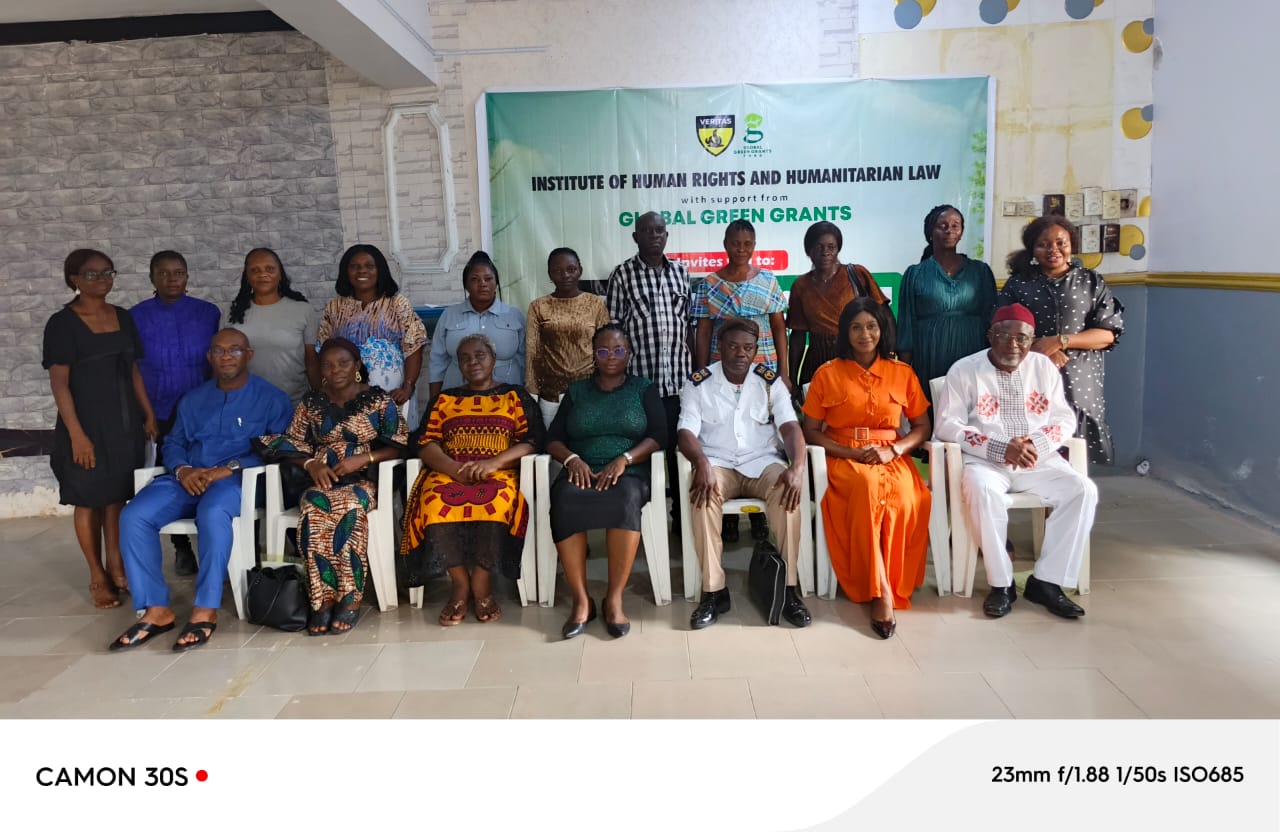
The Institute of Human Rights and Humanitarian Law (IHRHL) has called for the inclusion of vulnerable groups particularly women, girls, and persons with disabilities (PWDs) in decision-making processes relating to Nigeria’s national climate action plan at the local government level in Rivers State.
The call was made during a one-day capacity-building write-shop held in Port Harcourt, focused on “Localizing the Gender Action Plan on Climate Change for Local Government Officials, Community Stakeholders in Rivers State.” The event was organized by IHRHL with support from the Global Greengrant Fund.
Executive Director of IHRHL, Anyakwe Mgbechi, stressed the urgency of integrating gender-sensitive policies into climate initiatives across all 23 local government areas in the state. “Climate change affects everyone but has a disproportionate impact on women, girls, and people with disabilities.
Excluding these groups from decision-making is counterproductive. We must empower local communities with the tools and knowledge to address these challenges head-on.” She noted that IHRHL, in partnership with the Global Greengrant Fund, is working to establish climate change desks in all local government areas and adapt the national action plan to meet local realities.
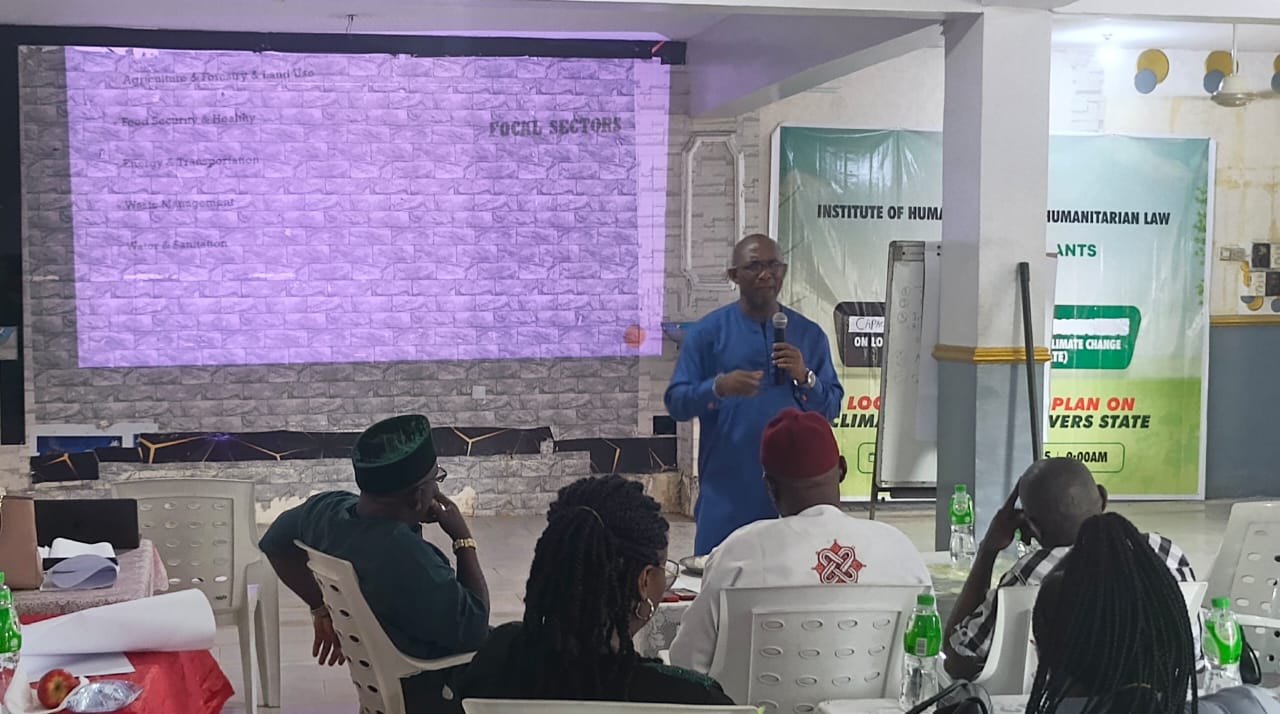
“This project aims to equip local government stakeholders with the understanding that gender-inclusive policies are not only fair but essential to effective climate action,” she added. Dr. Kelechi Ameachi, a climate consultant and advocate, presented a paper on “Localizing the National Action Plan on Climate Change: Strategies, Recommendations, and Opportunities.”
Also Read: Fubara Reaffirms Commitment to Rule of Law, Inclusive, Transparent Governance
He highlighted the absence of gender-specific climate policies at the local government level. “None of the 23 LGAs in Rivers State currently have a gender action plan. It is essential to incorporate indigenous knowledge systems into modern frameworks. Traditional practices like rotational farming and mixed cropping offer sustainable solutions.”
Ameachi also pointed to cultural challenges that could hinder gender integration and called for collaborative approaches to develop inclusive and equitable climate policies. Also speaking at the event, Amucheazi Ifeyinwa, Deputy Director of the National Orientation Agency in Rivers State, emphasized that without gender inclusivity, the purpose of any climate change action plan is defeated.
“Excluding women and vulnerable groups from the conversation means undermining the very essence of sustainable development. Human rights are universal, and women’s rights must be protected in all environmental policies.” Barrister Uche Uriri, Permanent Secretary of the Rivers State Ministry of Women Affairs, echoed the need for grassroots mobilization.
“Education is key. Without properly educating rural communities, achieving any sustainable climate plan is impossible. From receding water bodies to increasing floods, the effects of climate change are already being felt, particularly in our villages.” Chief Harrison Tasie, the Paramount Ruler of Omu-Obizu Digeni in Ibaa Clan, Emohua LGA, urged the government to initiate more awareness campaigns at the local level.
“Those in rural areas are most vulnerable. Local government councils must lead in educating people about the dangers of climate change and the steps they can take to adapt and mitigate its effects.” The workshop concluded with a renewed call for inclusive policy frameworks and a commitment by participants to become local champions of climate resilience and gender equity in their communities.
