


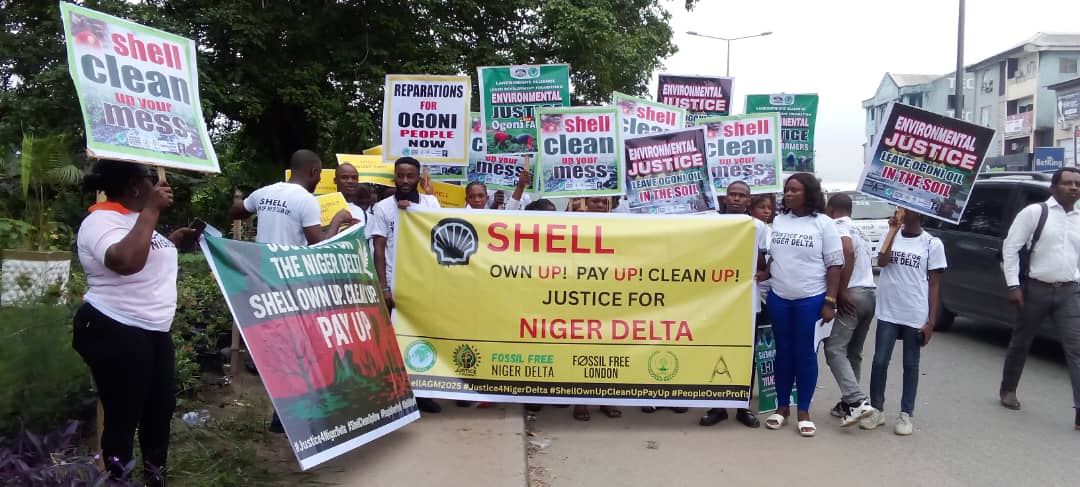
Environmental activists have called on oil giant Shell Plc to take full responsibility for decades of pollution in the Niger Delta, following the sale of its Nigerian subsidiary, Shell Petroleum Development Company (SPDC), to the Renaissance Group.
The demand was made during a peaceful demonstration on Monday organized by the Lekeh Development Foundation in partnership with Kebetkache Women Development & Resource Center.
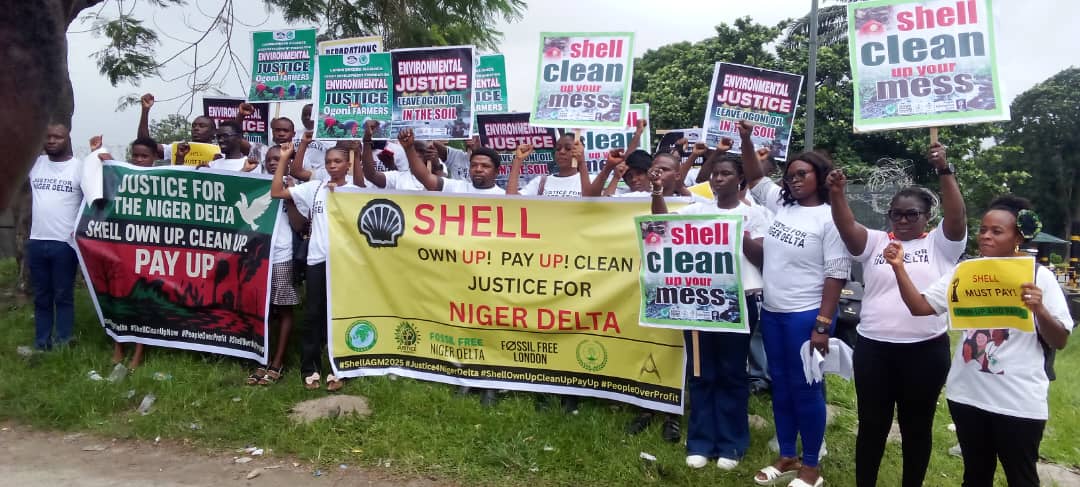
The protest, held in Port Harcourt to coincide with Shell’s 2025 Annual General Meeting (AGM), saw demonstrators carrying placards with messages such as “Justice for Niger Delta,” “Shell, Clean Up and Pay Up,” and “People Over Profit.”
The protesters marched from Aba Road to the Shell RA entrance, demanding environmental justice and accountability. Speaking at the event, Melody Barry-Yobo, Program Coordinator for Climate and Gender Issues at Lekeh Development Foundation, condemned Shell’s divestment without addressing its environmental legacy.
“Shell’s sale of SPDC without a clear and funded plan for cleaning up decades of pollution is ridiculous, shocking, and a gross act of unaccountability,” she said. “For over 60 years, Shell’s operations have destroyed livelihoods, endangered health, and left a trail of poverty in the Niger Delta.”
Barry-Yobo stressed that the people of the region, along with international allies, will continue to demand justice and redress.
“While Shell shareholders gather in comfort at the 2025 AGM, we remind you that your profits are soaked in the tears and suffering of our people. Your pipelines leak poison into our homes and rivers. Your flares choke our skies. Your silence and denial have become complicity in injustice.
Also Read: Kebetkache Backs Ogoni Community Against Firm as Oil Spill Displaces Families
“We are not passive victims we are survivors and defenders of our land, and we are demanding urgent redress.”
Idongesit Smart, Program Officer at Kebetkache Women Development & Resource Center, who represented the Executive Director, Emem Okon, echoed the demand, stating that Shell cannot escape its legal and moral obligations by transferring liabilities to Renaissance.
“Shell may claim that the liabilities have been passed on, but under Nigerian, English, and international law, historic pollution responsibility still lies with Shell,” Smart said. Concerns have also been raised about Renaissance’s capacity to manage the assets and clean up the environmental damage.
“The Nigerian Upstream Petroleum Regulatory Commission (NUPRC) initially rejected Shell’s divestment plan in 2024, citing Renaissance’s lack of technical and financial capability. Although the Nigerian presidency later approved the sale, a lawsuit challenging the license transfer is currently underway, with a hearing set for May 26, 2025.”
Citing a study by the Bayelsa State Oil and Environmental Commission, she noted that cleanup in just one of the nine affected Niger Delta states could cost at least $12 billion. “Shell is also facing multiple lawsuits in Nigeria and abroad, including claims from the Ogale, Bille, and Bodo communities seeking compensation for environmental degradation.
“Blood tests from women in Otuabagi revealed hydrocarbon levels 8,000 times above WHO limits,” said Smart. “Shell cannot divest and leave behind this toxic legacy.” International experts has also lend their voices In solidarity; Nick Hildyard, Director of UK-based The Corner House, questioned Shell’s assurance that Renaissance can handle the cleanup.
“Shell reportedly acknowledged difficulties convincing Nigerian authorities about Renaissance’s ability. Now, they expect us to trust that cleanup will happen?” Ana Xambre Pereira of Both ENDS (Netherlands) added, “This is not a responsible divestment. Shell is simply offloading toxic assets while continuing offshore operations.”
Professor Mbalisi Onyeka, of the Environmental Education Unit, University of Port Harcourt, also criticized the lack of transparency and technical capacity of Renaissance to remediate the environmental damage.
The environmental groups presented the following demands at the AGM:
Clean Up Now: Immediate implementation of an environmental remediation plan with a timeline. Transparent, community-led environmental assessments, full support and funding for the Ogoni clean-up, extended to other communities.
Pay Up: Fair compensation for all affected individuals and communities, reparations for ecological loss, health impacts, and destroyed livelihoods. Creation of a community-managed reparations fund.
Own Up: Public acknowledgment of the full extent of harm, shareholders to be informed of Shell’s ongoing obligations.
End to legal tactics aimed at avoiding accountability.
End Exploitation: Stop new oil and gas exploration in frontline communities, invest in renewable energy for impacted regions. Respect Free, Prior, and Informed Consent (FPIC) in all future dealings.
The coalition insist that it is not just about environmental damage it’s about justice, accountability, and the right of communities to live in a healthy environment.
