

The world-beating rally in Nigerian stocks may not be over yet.
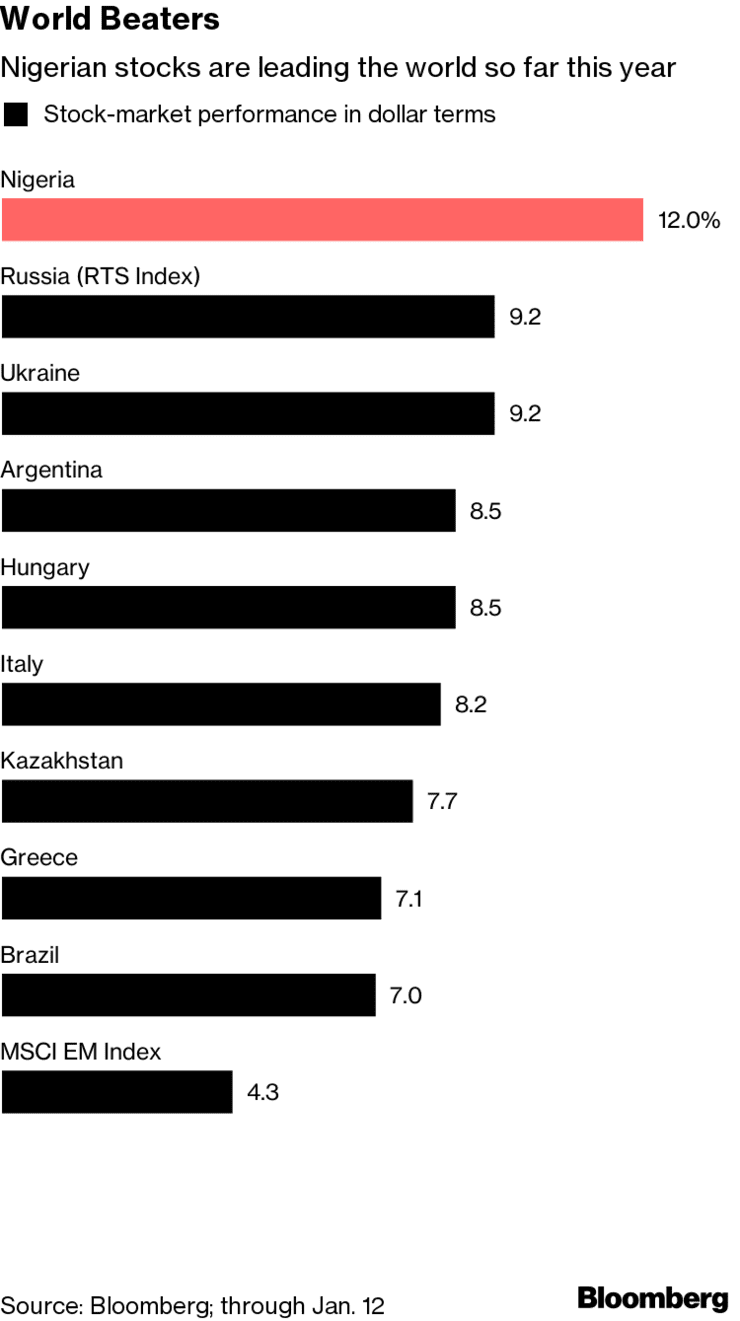
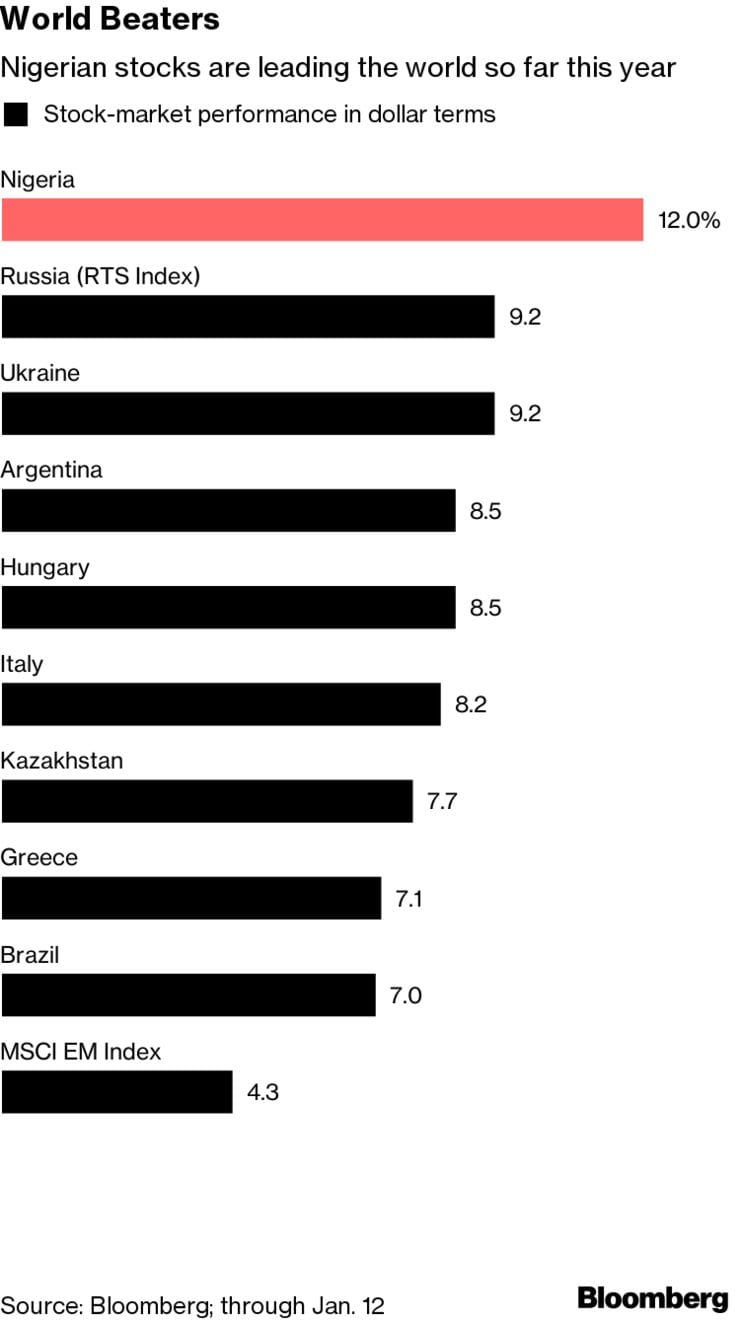
The main equity index in Africa’s biggest economy has surged 12 percent this year in dollar terms, the most among 96 major bourses tracked by Bloomberg, pushing it to the highest level since 2008. Dangote Cement Plc, controlled by Africa’s richest man, Aliko Dangote, and the largest company on the exchange, has climbed to a record high.
The advance will probably be sustained thanks to rising prices for oil, Nigeria’s main export, and as investors look to increase their holdings of what remain among the cheapest stocks in Africa, according to the asset management arm of South African lender FirstRand Ltd.
“For investors wanting more exposure to consumers in Africa and Nigeria, in particular, the outlook is good,” said Paul Clark, a money manager in Johannesburg at Ashburton Investments, which owns Nigerian stocks including Seplat Petroleum Development Co. “The banking sector is probably the most attractive at the moment, especially the tier-2 lenders.”
Here are three more charts assessing what may lie ahead:
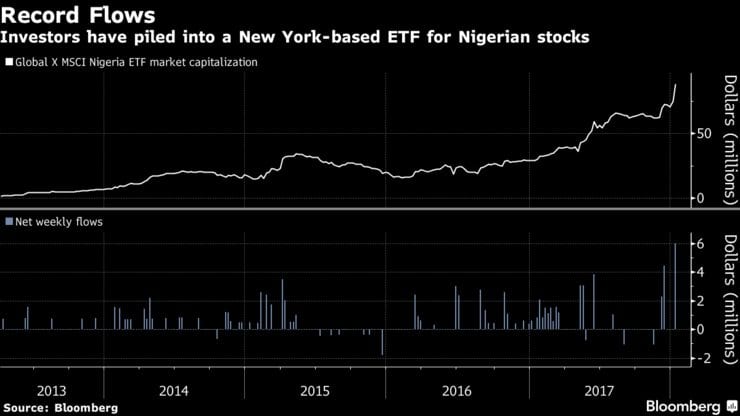
Foreign investors have been crucial in driving the market higher. The New York-based Global X MSCI Nigeria ETF attracted record weekly net inflows last week. That helped to increase the exchange-traded fund’s market capitalization to almost $90 million, double the level in May last year.
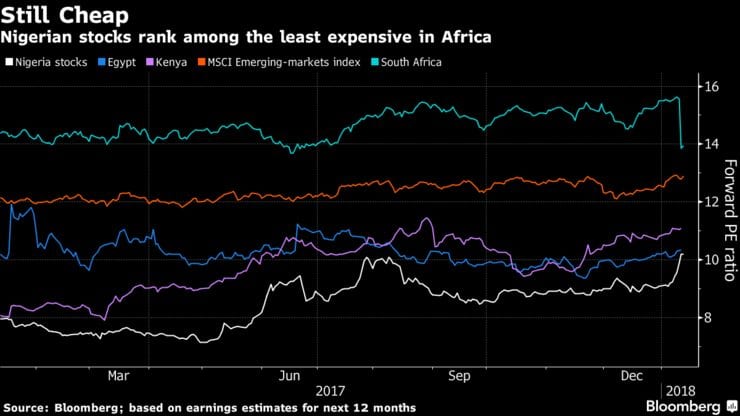
Even after the gains, Nigerian valuations are the least expensive among the major African equity indexes. Nigerian stocks trade at a forward price-to-earnings ratio of 10.1, while South Africa’s are at 14 and the MSCI Emerging Market Index is at 13.
That suggests there’s further upside, according to Cape Town-based fund Allan Gray. While foreign investors turned negative on Nigeria after following the 2014 oil crash and subsequent recession, the economy picked up last year and growth is forecast by the International Monetary Fund to accelerate to 2.1 percent in 2019.
“For long-term investors, Nigerian equities were a screaming bargain,” said Nick Ndiritu, co-manager of Allan Gray’s $389 million Africa equity fund, which doesn’t include South Africa. “Investor sentiment has turned more bullish on Nigeria and a re-rating of the Nigerian stock market is now under way.”
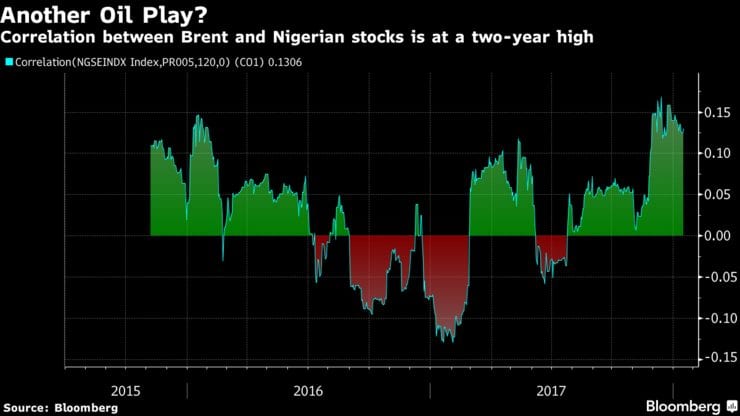
Still, there are some warning signs. The 120-day correlation between Nigerian stocks and Brent crude is now around the highest in two years. If oil prices reverse their 45 percent climb since June, Nigerian assets could take a hit.
That’s one reason HSBC Holdings Plc has a negative outlook on the stocks. The U.K. bank also says Nigeria will have to free its currency further. While the central bank eased some capital controls last year and opened a trading window for foreign portfolio investors, it continues to operate several exchange rates.
“Nigeria’s multiple exchange rate system is likely to remain a key drag, keeping long-term investors on the side lines,” HSBC analysts David Faulkner, John Lomax and Kishore Muktinutalapati said in a note on Jan.
Curled from Bloomberg.
