


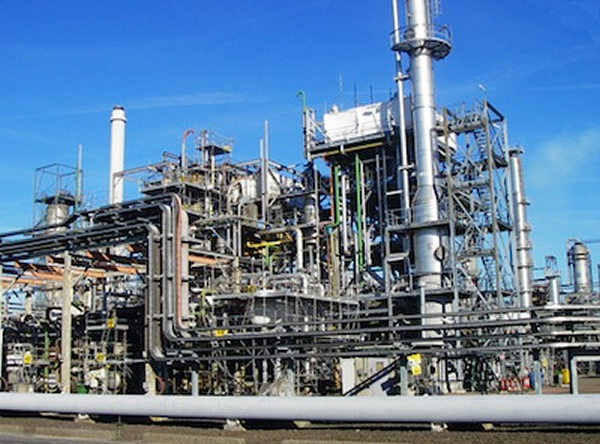
The Port Harcourt Refinery continues to operate far below capacity despite multiple rehabilitation efforts costing billions of dollars, raising questions over transparency and effectiveness in the management of Nigeria’s key energy infrastructure.
The Nigerian National Petroleum Company Limited (NNPCL) had earlier announced significant progress in the rehabilitation of the facility, claiming that commercial production had commenced following successful test runs. However, recent findings suggest that these claims are largely overstated.
The refinery, which comprises two plants – the old refinery built in the 1960s with a 60,000 barrels per day (bpd) capacity, and a newer unit commissioned in 1988 with a 150,000 bpd capacity – has long suffered from underinvestment, outdated technology and poor management.
While the NNPCL stated in November 2024 that the old refinery had resumed operations at 70% capacity with plans to ramp up to 90%, insiders report that only the Crude Distillation Unit (CDU), also known as the Topping Unit, is operational and is functioning intermittently at just 60% capacity, refining merely 6,500 barrels per day.
Also Read: Port Harcourt Refinery, Other Commissioning Was Just ‘Charade’ Says Energy Expert
Other critical components, such as the Platformer unit and gas plant, remain broken and non-functional.
The old refinery has been non-operational since 1988, shortly after the new refinery was commissioned. Despite multiple funding rounds for its rehabilitation from 1993 to 2021, the facility has failed to return to full productivity.
A fresh $1.5 billion rehabilitation contract was awarded in 2021 to Italian firm Maire Tecnimont, but three years later, the project remains mired in delays.
Also Read: Ag. Director of Audit Warns NYSC Members in Rivers Against Cutting Corners
Government claims that the old refinery has resumed operations at 70 per cent are misleading. Instead, years of neglect, inadequate planning, and government insincerity have condemned the refinery to a fate of stagnation.
Energy expert Azubuike Azubuike attributed the refinery’s woes to deep-seated corruption, a lack of political will, and inefficient operations.
“There’s no clear coordination between regulatory agencies such as the NMDPRA and the NUPRC,” he noted. “Our refineries are riddled with losses and obsolete infrastructure, making local fuel production uneconomical.”
Azubuike the was the former Chairman, PENGASSAN Port Harcourt Zone, further stated that the only operational refinery currently producing Premium Motor Spirit (PMS) in Nigeria is the Dangote Refinery, calling it vital to closing the gap between local demand and domestic production.
“Dangote’s facility is modern and efficient. It is Nigeria’s best hope for reducing reliance on fuel imports,” he said.
Nigeria’s four major state-owned refineries – Port Harcourt, Warri (125,000 bpd), and Kaduna (110,000 bpd) – have all struggled to resume full operations. The Kaduna refinery, for instance, houses two CDUs with a combined capacity of 110,000 bpd, yet remains idle.
As stakeholders continue to debate the future of Nigeria’s refining sector, calls are growing for clearer incentives for local refineries and a refocused national refining strategy modelled after successful public-private partnerships such as the NLNG.
