


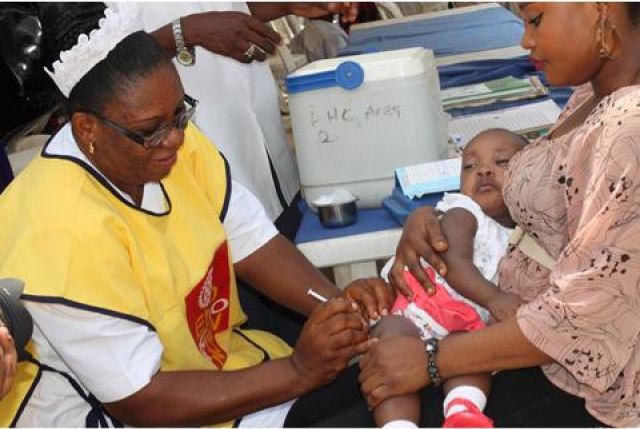
Nigeria’s renewed push to strengthen routine immunisation has led to the delivery of more than 174 million vaccine doses across the country within the past year, according to the National Primary Health Care Development Agency.
The agency noted that the ongoing campaign has significantly improved the use of Primary Healthcare Centres nationwide, as more Nigerians now access essential health services closer to their communities.
Speaking during an interview at the National Traditional and Religious Leaders Summit on Health, the agency’s Executive Secretary, Muyi Aina, said the immunisation effort has expanded vaccine coverage and helped rebuild public trust in government-owned health facilities.
He explained that the initiative, which includes routine immunisation and targeted campaigns against polio and other preventable diseases, is part of broader healthcare reforms introduced by the Federal Ministry of Health and Social Welfare to improve primary healthcare services.
Also Read: http://HYPREP Trains Additional 500 Youths in Civil Security Training
Over the past 18 months, about 4,000 Primary Healthcare Centres have undergone upgrades, with 2,332 fully renovated and equipped to deliver services such as maternal and newborn care, immunisation, diagnostics, and health education.
To support vaccine storage and distribution, especially in remote areas, the Federal Government has installed more than 10,000 solar-powered refrigerators across health facilities. In addition, over 500 centres have received medical equipment, hospital beds, laboratory tools, essential medicines, and family planning supplies.
On workforce development, Aina revealed that 78,000 health workers have been trained so far out of a planned 120,000, with states also recruiting community health personnel to ensure continuous service delivery.
Despite the progress, he admitted that uptake of the pentavalent vaccine remains inconsistent in some locations, stressing the importance of traditional and religious leaders in addressing vaccine hesitancy and encouraging community participation.
He added that a digital performance management system is being introduced to monitor healthcare services and improve accountability, as patient visits to PHCs rose from 34 million in early 2024 to 47 million by the third quarter of 2025.
