


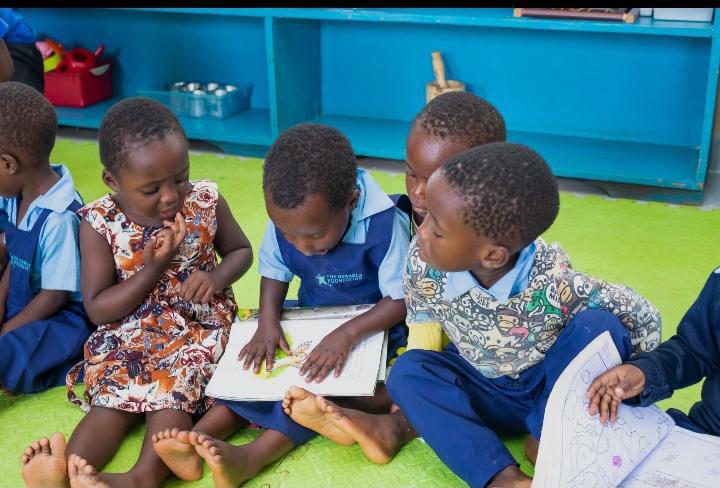
In a forward-thinking approach to early childhood development, the Rivers State Ministry of Education has officially launched a comprehensive program promoting play-based learning across all early childhood education centers in Abua/Odual Local Government Area. This initiative recognizes the profound impact of play on a child’s cognitive, social, emotional, and physical development, moving beyond traditional rote learning methods.
The program aims to create engaging, stimulating, and joyful learning environments where young children can explore, discover, and build foundational skills through guided play activities. It signifies a paradigm shift in early education, aligning with global best practices and ensuring a stronger start for the state’s youngest learners.
Read more: RIRS To Strengthen MDA Synergy Under New Tax Reform
The play-based learning curriculum introduces a variety of interactive activities, including storytelling, creative arts, outdoor exploration, and group games, all carefully designed to foster critical thinking, problem-solving, and communication skills. Teachers in Abua/Odual are undergoing intensive training to implement this new pedagogy, learning how to facilitate play that is purposeful and aligned with developmental milestones. The centers are also being equipped with age-appropriate learning materials and safe play areas.
During the program’s inauguration, Mrs. Stella Imeh, an early childhood educator, expressed her enthusiasm: “Children learn best when they are having fun. This approach will make a huge difference in how quickly they grasp concepts and develop social skills.” Mr. Godspower Oko, a parent, noted, “My little one used to cry about going to school, but now she’s excited! She tells me about all the games she played while learning.” This change has been a welcome relief to many parents. Chief Ogboka Amadi, a community elder, highlighted the cultural significance. “Our children always learned through play and stories. This program brings back that natural way of learning with modern structure.”
“It makes learning feel less like a chore and more like an adventure,” commented little Nkechi, a pre-schooler, through her parent. The Ministry is also collaborating with local toy manufacturers to develop culturally relevant learning materials, ensuring that the program is both effective and rooted in the children’s cultural context. Regular assessments will be conducted to monitor the program’s effectiveness and gather feedback from educators and parents, ensuring continuous improvement.
