


The ongoing political turmoil in Rivers State has escalated into a major national concern, threatening governance, stability, and development in one of Nigeria’s most economically vital regions.
At the heart of the crisis lies a bitter power struggle between Governor Siminalayi Fubara and his predecessor, Nyesom Wike, now the Minister of the Federal Capital Territory. What began as a disagreement over political control has morphed into repeated attempts to impeach the governor, legislative defections, and interventions that have so far failed to restore lasting peace.
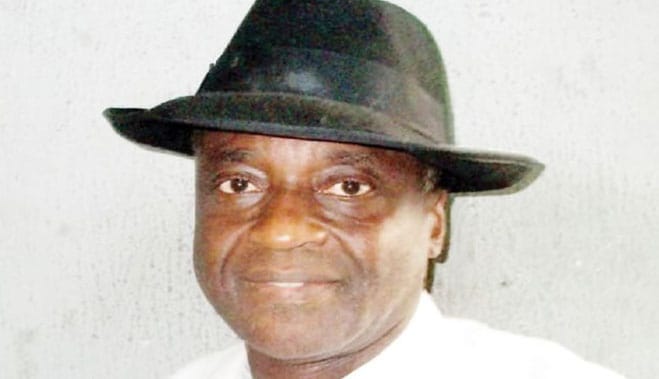
Fafaa Dan-Princewill, a former gubernatorial aspirant in the state, recently offered a candid assessment of the situation. He described the conflict as fundamentally a proxy war driven by the FCT Minister’s insistence on maintaining dominance.
According to Dan-Princewill, the core issue stems from Wike not getting his way in state affairs, which has prevented any meaningful resolution and kept Rivers in perpetual instability. He argued that the absence of peace is directly tied to this dynamic, rather than any inherent flaw in the governor’s leadership or policy decisions.
The Rivers State House of Assembly, largely aligned with Wike’s interests, has shifted significantly toward the All Progressives Congress (APC). Many lawmakers have publicly supported positions that critics view as extensions of instructions from Abuja.
This realignment has intensified the standoff, with the assembly pushing for actions that have disrupted the governor’s early initiatives. Dan-Princewill lamented how promising programs, including efforts to decentralize governance and bring attention to long-neglected areas, have suffered setbacks amid the chaos. He emphasized that the people of Rivers deserve good governance, peace, and stability above partisan loyalties, noting that the crisis transcends traditional party lines such as APC, PDP, or Labour Party.
A particularly alarming dimension involves national security implications. The strategic importance of Rivers, with its offshore assets and proximity to critical waterways, makes prolonged unrest risky. Dan-Princewill referenced recent incidents, including missile activities linked to distant regions, to underscore the need for calm in the state to safeguard broader national interests.
Many observers see the conflict as deeply intertwined with preparations for the 2027 general elections, particularly the presidential race. The battle for control in Rivers is widely interpreted as a positioning exercise, with influence over the state’s political machinery seen as a key asset.
Given that the FCT Minister serves at the president’s pleasure and remains a central figure in the dispute, Dan-Princewill asserted that President Bola Ahmed Tinubu cannot remain detached. He has intervened in the past—once leading to a temporary de-escalation through court withdrawals and meetings—but those efforts proved incomplete and sometimes counterproductive. A more comprehensive presidential role is essential, he insisted, to address all underlying factors rather than applying partial fixes.
On potential paths forward, Dan-Princewill rejected extreme suggestions such as the governor resigning to avoid impeachment or the declaration of another state of emergency. He argued that the governor bears limited blame, having shown willingness to compromise on certain issues while exercising legitimate executive discretion.
Also see: Fubara Revamps Amadi-Ama Centre, Boosts Rural Healthcare
The current flashpoint revolves around disagreement over a supplementary budget, which the assembly demands but the governor deems unnecessary. In his view, this alone does not justify impeachment proceedings, as such decisions fall squarely within the governor’s constitutional powers. He advised patience, suggesting that rushing impeachment on such grounds lacks merit and could be revisited later if warranted.
The crisis, Dan-Princewill concluded, deviates from the character of Rivers people, who are not known for endless personal vendettas. Instead, it reflects external pressures and ambitions that have imposed unnecessary hardship on the state. Recent developments indicate some movement toward dialogue, with peace committees engaging both sides and certain lawmakers reconsidering their positions. Yet the underlying tensions persist, fueled by ambitions tied to future elections.
Ultimately, the resolution hinges on prioritizing the welfare of Rivers residents over individual power plays. Until all parties—especially those wielding influence from outside the state—commit to genuine reconciliation, the instability will continue to erode progress, delay development, and undermine the state’s rightful place in Nigeria’s federation. The people of Rivers deserve an end to this chapter, allowing focus to return to governance that benefits everyone rather than serving narrow interests.
