


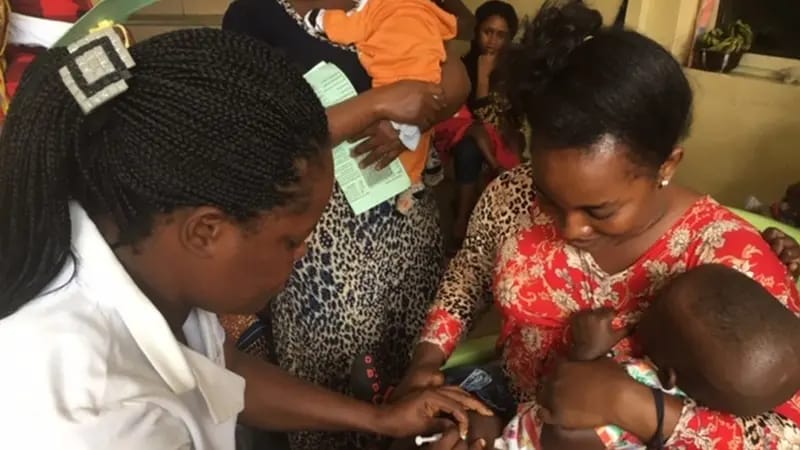
As the Federal Government officially kicks off Phase 2 of the 2025/2026 Integrated Measles-Rubella (MR) Vaccination Campaign across Southern Nigeria, a concerning silence has enveloped Rivers State. While neighboring states like Akwa Ibom, Edo, and Delta have activated high-gear mobilization efforts as of Friday, January 9, 2026, the Rivers State Primary Health Care Management Board (RSPHCMB) has yet to announce a definitive start date or rollout plan for its residents.
The national campaign, described by the National Primary Health Care Development Agency (NPHCDA) as the largest in Africa’s history, aims to protect 106 million children from the dual threat of measles and the rubella virus. In Lagos, the state government has already mobilized 10.5 million doses, with vaccinations scheduled to begin on January 20. Similarly, the Edo State Government has targeted 2.2 million children, and Delta State has issued a “Special Announcement” signaling readiness.
In contrast, the health landscape in Port Harcourt remains stagnant. Aside from a preliminary “sensitization roadwalk” conducted in late 2025, there is currently no evidence of the fixed-post or house-to-house “sweep teams” that are active in other regions. This lack of urgency is particularly alarming given that Rivers State has historically struggled with vaccine-preventable disease outbreaks due to what the Nigerian Medical Association (NMA) describes as high levels of “apathy towards immunization.”
The apparent delay in Rivers State necessitates a rigorous analysis of the administrative and social assumptions that may be hindering this life-saving intervention.
There is a prevailing assumption that because Rivers State has a robust urban health network, “routine immunization” is enough to cover the gap. However, a counterpoint must be raised: data from the NPHCDA shows that “zero-dose” children—those who have never received a single vaccine—are often clustered in the riverine and hard-to-reach rural areas of Rivers. Without a targeted, time-bound “campaign” similar to those in Edo and Lagos, these children will remain invisible to the health system.
Read more: I Am Disappointed In Rivers State – Tacha
It is often assumed that “no news is good news.” The truth, however, is that rubella is often under-reported in Nigeria because its symptoms mimic mild measles. The failure to introduce the combined MR vaccine now means that pregnant women in Rivers State remain at high risk of Congenital Rubella Syndrome (CRS), which can lead to babies being born with permanent deafness or blindness. To prioritize truth over diplomatic agreement: the Rivers State government’s silence is a gamble with the sensory health of the next generation.
From an administrative perspective, the state might argue that political distractions or budgetary delays have slowed the logistics of vaccine distribution. While these may be real challenges, an alternative perspective suggests that health should be decoupled from politics. If Akwa Ibom can integrate these vaccines into their routine schedule during a similar political climate, why can’t Rivers?
The truth is that measles remains one of the leading causes of child mortality in Nigeria. Between 2020 and 2022, Rivers State recorded over 760 cases—a number experts believe is a massive undercount. Every day the RSPHCMB delays the rollout is another day the state’s “herd immunity” remains compromised.
As other Southern governors flag off their campaigns, the parents of Rivers State are left asking a critical question: why is our children’s safety less of a priority than that of our neighbors?
