


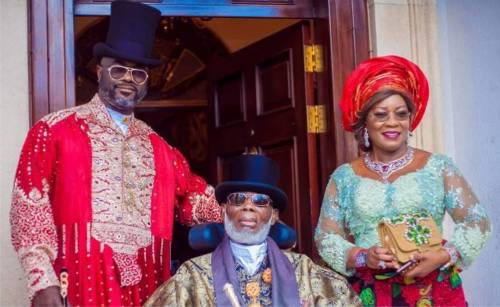
The historical city of Abonnema was a theater of cultural brilliance and emotional reconciliation on last weekend as the Oruwari Briggs War Canoe House hosted the 5th annual O.B. Lulu-Briggs Day. The event, which has grown into a cornerstone of the Kalabari festive calendar, served as both a memorial for the late oil magnate High Chief (Dr.) O.B. Lulu-Briggs and a platform for a significant shift in the region’s socio-political landscape.
The highlight of the day was an expansive cultural competition that saw thirteen troupes from across Rivers State vie for a ₦1 million grand prize. With Nollywood icon Hilda Dokubo leading the panel of judges, the competition moved beyond mere entertainment, showcasing the intricate “Owigiri” and traditional dances that define the Niger Delta heritage. Beyond the top prize, Chief Dumo Lulu-Briggs ensured that the second and third-place winners received ₦500,000 and ₦300,000, respectively, while every participating troupe was granted a ₦200,000 appearance fee—a move that local observers noted was a direct continuation of his father’s “Opuda” legacy of silent philanthropy.
Also Read: Free Nigeria- Burnaboy
During his address, Chief Dumo Lulu-Briggs provided a rare glimpse into the private directives that guided the late High Chief’s final days. He revealed that a 90-year-old associate of his father had conveyed a specific wish: that the High Chief’s transition should mark the end of the forty-year internal divide that had fractured Abonnema. While the atmosphere on Friday was one of profound jubilation, the narrative of “unity” was not without its complexities. For decades, these quarter-based divisions had stalled communal development, and the sight of rival factions sitting together was described by Chief Dumo as a fulfillment of a spiritual mandate.
However, the rapid restoration of harmony after four decades of friction invites a closer examination of the underlying communal dynamics. While the festivities provided a visible symbol of peace, some regional analysts suggest that a one-day cultural event, regardless of its scale, may not fully address the historical grievances that fueled the forty-year rift. The assumption that financial philanthropy and cultural competitions can bridge deep-seated political differences is a reasoning that will be tested as the state approaches the high-stakes political cycles of 2026.
An alternative perspective held by some traditionalists in the Kalabari Kingdom concerns the monetization of heritage. While the million-naira prizes undoubtedly energized the participants and elevated the entertainment value, there is an ongoing debate regarding whether such high-stakes financial incentives might eventually overshadow the spiritual and ancestral essence of these traditional dances. Nevertheless, the reality on the ground in Abonnema was undeniably positive. The event successfully merged the late High Chief’s commitment to “service to God” with a modern approach to community engagement, proving that his legacy remains a potent force for gathering the people of Rivers State.
As the celebration concluded with prayers for the upcoming year, the prevailing sentiment was that the “Opuda” legacy had achieved its most difficult feat yet: bringing a fractured kingdom back to a single table. For the people of Abonnema, the 2025 remembrance was more than a tribute; it was a demonstration of the power of entertainment to act as a catalyst for regional stability.
