


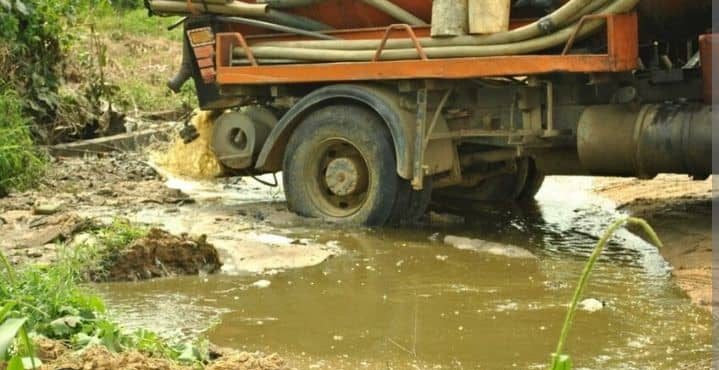
Environmental experts have been urged to bring their expertise to bear in sewage control and sewerage management in Rivers State to prevent environmental hazards.
A safety and environmental expert, Dr Francise Egobueze, made the call in Port Harcourt during an event to sensitise the public on the need to manage the sewage and sewerage to prevent pollution.
Dr Egobueze described sewage as domestic and industrial wastewater that has organic matter, and sewerage as the infrastructure associated with sewage conveyance and treatment.
He said Rivers State is prone to sewage pollution because of industrial growth, inadequate facilities and oil and gas exploration.
“Across Nigeria rapid urbanisation, population expansion, and industrial growth have created a gap between wastewater generation and treatment capacity, he said.
Dr Egobueze decried poor enforcement of environmental laws as the factors militating against sewage management in the state.
Dr Egobueze enumerated the hazards of neglecting environmental standards in sewage regulation to include degradation of the mangrove ecosystem and fishery, and an increase in gastrointestinal diseases.
Also Read: Amaewhule Inaugurates Projects as Abua/Odual LG Marks 100 Days in Office
“What are the consequences? High-level contamination of shallow wells and boreholes. There is also a decline of aesthetic and recreational water quality, an increase in greenhouse emissions from unmanaged sewage, ” he stated.
Dr Egobueze suggested an integrated water and sewage regulatory programme as a strategy to save the state from environmental crisis.
“We must have a centralized waste water treatment. In Port Harcourt, we need new gravity sewers in high-density areas.
Faecal sludge management should be imbued. How many people know we can have depositories for faecal sludge?
Then, industrial and institutional wastewater compliance. Are we compliant? Of course, special attention should be paid to the abbatoirs they are major challenges,” he noted.
The safety and environment professional advocated for public and private partnerships to prevent sewage pollution in the state.
