


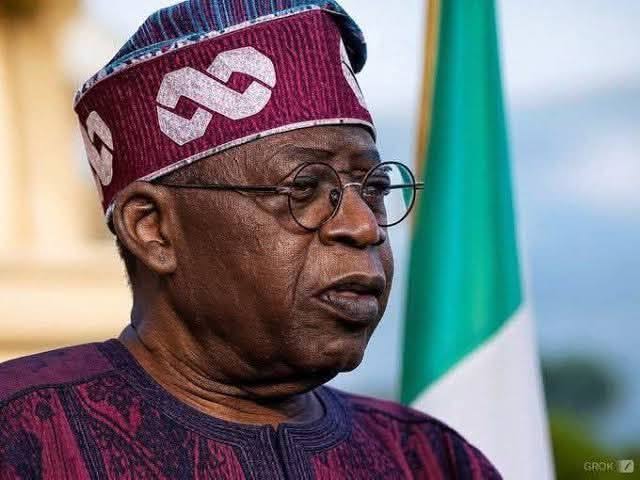
President Bola Tinubu assumed office in May 2023 with promises of renewed hope for Nigerians weary from years of economic strain. Yet, in just over two years, his administration has developed a pattern of introducing bold policies, only to suspend or reverse them within weeks or months following intense public opposition.
Critics point to these rapid retreats as evidence of inadequate planning and limited consultation. Supporters counter that the willingness to adjust demonstrates responsiveness to citizens. Whatever the interpretation, the list of suspended measures continues to grow. Here are seven prominent examples that stirred widespread objection and led to swift government reconsideration.
- Financial Reporting Council Annual Dues on Public Interest Entities
Signed into law in September 2023, the Financial Reporting Council (Amendment) Act expanded the definition of public interest entities and required them to pay annual regulatory dues of 0.02 to 0.05 percent of turnover with no upper ceiling. Private-sector groups warned that the open-ended levy would cripple businesses already struggling in a tough economy. In June 2025, after sustained pressure and a technical review by the Ministry of Industry, Trade and Investment, the government announced a temporary suspension to allow time for possible legislative changes and create breathing space for affected companies. - Expatriate Employment Levy
Launched in February 2024, the levy imposed $15,000 annually on expatriate directors and $10,000 on other expatriate staff. Officials presented it as a tool to prioritize Nigerian talent, narrow wage gaps, and boost local skills. Business organizations quickly condemned the measure as a deterrent to foreign investment and a blow to economic efficiency. Less than three weeks later, on 8 March 2024, the policy faced suspension. - 0.5% Cybersecurity Levy
Introduced in May 2024 under amendments to the 2015 Cybercrime Act, the levy required banks to deduct 0.5 percent from electronic transactions and channel the funds to the National Cybersecurity Fund. Nigerians viewed it as another painful tax during a period of soaring living costs. Within days, President Tinubu directed the Central Bank of Nigeria to halt implementation pending further review. - Minimum Age of 18 for Tertiary Institution Admission
In July 2024, the government reaffirmed 18 as the minimum age for university, polytechnic, and college admission, citing alignment with the timing of senior secondary examinations. Education stakeholders, teachers’ unions, and parent bodies described the rule as regressive. One year later, in July 2025, the age limit dropped to 16. - Removal of Mathematics as Admission Requirement for Arts and Humanities
Announced in October 2025, the policy aimed to widen access to higher education by making O-Level Mathematics credit optional for arts and humanities programmes, potentially adding 250,000 to 300,000 admission slots yearly. Educationists attacked the decision as a threat to academic standards and an invitation to student complacency. The government soon restored Mathematics as a core requirement for O-Level examinations and clarified that the brief relaxation applied only to specific programme criteria. - Presidential Pardon for Maryam Sanda and Certain Convicted Offenders
In October 2025, President Tinubu granted prerogative of mercy to Maryam Sanda, earlier convicted of killing her husband, alongside dozens of others including individuals jailed for drug offences. Opposition parties and public figures decried the move as encouragement of impunity and damage to the fight against crime. Following the outcry, the president revoked Sanda’s pardon, reduced her sentence to 12 years, and removed names of those convicted of serious crimes such as drug trafficking, kidnapping, and arms dealing from the pardon list. - 15% Import Duty on Petrol and Diesel
Approved in October 2025 and scheduled to begin on 21 November, the tariff sought to protect local refineries by making imported fuel more expensive. Analysts projected pump-price increases of ₦150 per litre or higher, placing fresh burdens on consumers. After widespread protests, President Tinubu suspended the duty, emphasizing the need to strengthen local refining capacity and avoid supply disruptions.
It bears mentioning that analysts remain divided on what these reversals reveal about governance quality.
Sustainable development advocate Raheem Rasheed argues that frequent suspensions without detailed justification signal shallow policy preparation and undermine public trust. He stresses that new measures gain legitimacy only when previous ones demonstrate clear results.
Also see: When Authority Collides: Why the Wike–Naval Officer Incident Matters
In contrast, Kwara State College of Education lecturer Akeem Ameen views the adjustments as proof that the administration listens. He explains that policymakers often act with good intentions, but superior arguments from the public can prompt sensible course correction, showing that government leaders remain attentive to citizens.
Public policy commentator Basheer Olarewaju offers a balanced assessment. He acknowledges that repeated U-turns suggest initial shortcomings in thoroughness, yet he praises the readiness to pivot when citizens push back, describing it as an important feature of responsive democracy.
Two and a half years into the Tinubu presidency, the cycle of announcement, backlash, and suspension has become a defining trait of economic and social policymaking. Whether this pattern reflects adaptability or inadequate groundwork, Nigerians continue to watch closely as each new proposal emerges.
