


Developing countries continue to face numerous food-related challenges, particularly in their struggle to meet the rising demand for adequate nutrition. In many parts of the world, malnutrition and poor feeding habits remain serious concerns, prompting the need for innovative ways to supplement staple foods. Access to proper and balanced nutrition should be seen as a fundamental human right, as the absence of it often leads to poor health and, in severe cases, death.
Although popular staples such as rice, maize, and beans are widely consumed, there is still a pressing need to enrich diets with other lesser-known but highly nutritious foods. One such underutilized food is the African oil bean seed, a natural treasure rich in essential nutrients and health benefits that has remained largely untapped.
The African oil bean, scientifically known as Pentaclethra macrophylla, is a tropical tree crop belonging to the leguminosae family and the mimosoideae sub-family. Across Nigeria, it is called ukpaka or ugba by the Igbo, Apara by the Yoruba, and Ukana by the Efik. The tree grows up to about 21 meters in height and 6 meters in girth, with low branches and wide buttresses. Its crown is open, allowing sunlight to penetrate easily, while its bark appears reddish-brown or gray with flaky patches. The leaves, which are 20 to 45 centimeters long, are glabrous and covered with rusty hairs. When cut, the trunk releases a reddish-orange fluid, a notable characteristic of the tree.
Also Read: RSUTH Hosts olorectal Cancer Awareness and Survival
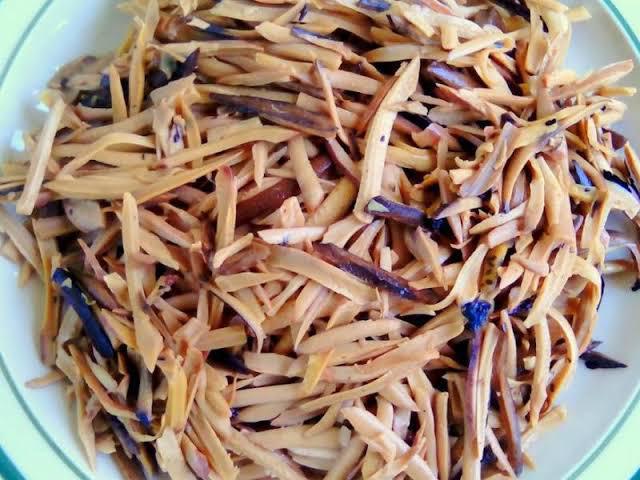
The most useful part of the tree is its seed, which is enclosed in a flat, hard, woody pod measuring about 35 to 45 centimeters in length and 5 to 10 centimeters in width. Each pod contains between five and eight glossy brown seeds that scatter naturally when the pod bursts open. Before consumption, the seeds—commonly known as ukpaka or ugba—must undergo a fermentation process to eliminate toxins and make them safe and palatable.
Every part of the African oil bean tree, including its seeds, leaves, bark, stems, and roots, holds significant nutritional, medicinal, and economic value. Studies show that the seeds may help reduce the risk of cancer. In one comparative study in Nigeria, patients who consumed ukpaka recorded lower cancer risks compared to those who did not. Consuming fermented African oil bean seeds, therefore, contributes to better health and helps reduce the growth of cancerous cells.
Beyond its medicinal value, the plant also has dermatological and culinary uses. Due to its anti-inflammatory properties, ointments made from its bark and seeds are used in treating skin irritations, insect bites, wounds, and minor cuts. In the kitchen, fermented seeds are used in preparing popular delicacies such as ugba and okporoko, abacha (African salad), nkwobi, porridge, and vegetable yams. The ashes from its pods can serve as a local form of cooking salt, while the seeds can also be ground into flour for making bread and other baked foods.
Additionally, decoctions made from the leaves, bark, and stems of the African oil bean tree are used in treating gastrointestinal problems such as diarrhea. With all these benefits, it is clear that the African oil bean seed is one of Africa’s most valuable yet underexploited natural foods. Promoting its cultivation, processing, and wider consumption could play a vital role in improving food security, nutrition, and overall health in developing nations.
