


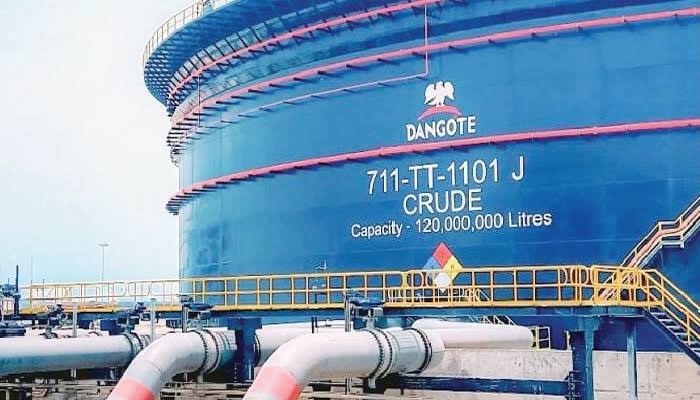
On September 3, 2024, Dangote Refinery roared to life in the Lekki Free Trade Zone, launching petrol production at a capacity of 650,000 barrels per day. This moment sparked Nigeria’s journey toward fuel self-sufficiency, a bold step for a nation long dependent on imported fuel despite its crude wealth.
By mid-September, petrol test runs wrapped up, and on September 15, the Nigerian National Petroleum Company Limited loaded its first batches, fueling homes, businesses, and industries nationwide. Diesel and jet fuel production followed, powering Nigeria’s transportation and aviation sectors.
As the year progressed, the refinery’s story expanded. In November 2024, its petrochemical complex began operations, producing polypropylene and base oils to support industries like plastics and agro-processing. By December, petrol exports reached Cameroon, Ghana, Angola, and South Africa, extending Nigeria’s influence across the continent. Operations approached full capacity, processing a mix of local and imported crude grades with technical precision, cementing Nigeria’s role in Africa’s energy market.
Challenges emerged in early 2025, adding depth to the narrative. In February, refinery management highlighted pushback from oil sector players hesitant to prioritize local refining. Limited domestic crude supplies led to purchases of foreign grades, such as Algeria’s Saharan Blend. Legal disputes arose, but a court ruling in March cleared objections from Nigerian National Petroleum Company Limited, easing tensions. Regulatory hurdles over import licenses continued, shaping the refinery’s strategic path.
By June 2025, the refinery’s ambitions soared. Plans for an initial public offering took shape, targeting a 2026 listing to fund growth. Between June and July, one million metric tons of petrol were exported, establishing Nigeria as a net fuel exporter. Capacity upgrades by late July boosted output to 700,000 barrels per day, a milestone in operational scale. These achievements reshaped regional trade, positioning Nigeria as a key fuel supplier in West and Central Africa.
The story evolved in July with strategic shifts. The refinery withdrew lawsuits against Nigerian National Petroleum Company Limited and Nigerian Midstream and Downstream Petroleum Regulatory Authority over competitor import licenses. Reports of fuel diversion schemes prompted the suspension of discount programs. In early August, David Bird assumed the role of chief executive officer, bringing new leadership to navigate the next phase.
August saw market adjustments. Ex-depot petrol prices dropped to 820 naira per liter, and direct deliveries to retailers streamlined distribution. Plans to process fully Nigerian crude by year-end aimed to reduce import reliance. The refinery’s influence grew, strengthening Nigeria’s role as a regional fuel hub.
In September 2025, a technical setback tested resilience. On August 29, a gasoline unit shut down due to catalyst leaks, pausing production until early November. Repairs, spanning two to three months, required careful planning to maintain supply chains. Amid this, the first gasoline cargo reached the United States, marking a global milestone.
Also see: NOA Calls for Collective Action to Prevent Suicide, End Stigma
Labor disputes added complexity. On September 8, the National Union of Petroleum and Natural Gas Workers launched an indefinite strike, citing unionization rights and imported compressed natural gas trucks. The Petroleum and Natural Gas Senior Staff Association joined, challenging workforce policies.
Federal government mediation sought resolution, but disputes over imported trucks bypassing local transporters persisted. The Independent Petroleum Marketers Association of Nigeria supported the refinery, rejecting strike calls from its western zone. The Petroleum Products Retail Outlets Owners Association raised concerns over distribution models, highlighting ongoing friction.
The refinery’s impact remains profound, generating 570,000 jobs and adding $15 billion annually to Nigeria’s economy. Importer price cuts below refinery levels intensify competition, while regulatory efforts focus on securing crude supplies. As Dangote Refinery navigates production challenges, labor disputes, and market dynamics, its journey continues to redefine Nigeria’s energy landscape, a saga of ambition and adaptation.
