


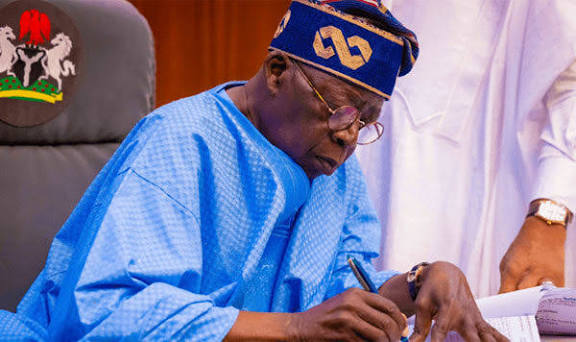
The Nigerian government under President Bola Tinubu has taken a firm step to regulate the booming cryptocurrency sector by instructing the Central Bank of Nigeria (CBN) and other financial authorities to closely monitor digital currency activities.
This directive aims to address the surge in Nigerians using cryptocurrencies and stablecoins for payments outside the conventional banking framework. The announcement came during a major industry event, highlighting concerns about the rapid digital financial shift and its potential risks to the economy.
Speaking at the 18th Annual Banking and Finance Conference organized by the Chartered Institute of Bankers of Nigeria (CIBN) in Abuja on Tuesday, September 9, 2025, Wale Edun, the Minister of Finance and Coordinating Minister of the Economy, relayed President Tinubu’s instructions.
Edun pointed out the ongoing digital revolution in payments, noting that many individuals are bypassing traditional banks in favor of stablecoins and other digital currencies. “There is a digital revolution,” Edun stated. “Many people now make payments without using the banking system. They’ve turned to stablecoins and digital currencies. To this end, I have directed capital market and banking authorities to get hold of this narrative and track it while it is still evolving.”
This move reflects the government’s intent to control the latitude of evolving financial trends, ensuring that regulators can oversee transactions to prevent tax evasion. Nigeria, with its large youth population and high mobile penetration, has seen explosive growth in crypto adoption.
According to reports, the country ranks among the top globally for cryptocurrency usage, driven by factors like inflation, naira volatility, and the need for faster cross-border transfers. However, this growth has raised alarms about unregulated flows that could undermine national financial stability.
The conference also shed light on positive developments in the banking sector. Prof. Pius Olanrewaju, President and Chairman of the CIBN Council, praised the progress since 2024, when 16 major banks successfully raised more than N2.5 trillion in new capital to bolster their operations.
This influx has strengthened balance sheets and supported economic activities. Additionally, net domestic credit extended to the private sector has climbed to over N82 trillion this year, fueling business expansion and job opportunities across various industries.
Central Bank Governor Olayemi Cardoso provided encouraging updates on diaspora remittances, a vital source of foreign exchange for Nigeria. He explained that when the current initiatives started, monthly remittances stood at $250 million. The initial target was $500 million, but the figure has already reached $600 million.
Looking ahead, Cardoso projected that by next year, remittances could hit $1 billion per month, thanks to improved policies and digital channels. This growth underscores the role of technology in enhancing financial inflows, but it also amplifies the need for robust oversight in areas like cryptocurrencies, which are increasingly used for such transfers.
The directive comes amid heightened scrutiny of global crypto platforms operating in Nigeria. In February 2025, the federal government launched a high-profile lawsuit against Binance Holdings Limited, one of the world’s largest cryptocurrency exchanges.
Filed under case number FHC/ABJ/CS/1444/2024 at the Federal High Court in Abuja, the suit accuses Binance of causing significant economic harm through unauthorized activities. The government is demanding $79.51 billion in damages, along with ₦231 million, for losses tied to the company’s operations without proper registration or compliance.
Further complicating matters, the Federal Inland Revenue Service (FIRS) has separately pursued Binance for $2.001 billion in unpaid income taxes for the years 2022 and 2023. Binance executives Tigran Gambaryan and Nadeem Anjarwalla face additional charges, including tax evasion, money laundering, and violations of foreign exchange regulations.
Also see: Opobo/Nkoro Chairman Proclaims 8th Legislative
These cases, heard before Justice Emeka Nwite, allege that the company concealed its substantial business presence in Nigeria while facilitating billions in transactions. Penalties could include hefty fines, interest calculated at the CBN’s lending rate, and other sanctions if the taxes remain unsettled.
This regulatory push signals a broader strategy by the Tinubu administration to control innovation in the digital economy. By empowering the CBN to track crypto transactions, authorities hope to integrate these assets into the formal financial system, potentially boosting tax revenues.
Experts suggest that while this could enhance transparency, it might also challenge crypto enthusiasts who value decentralization. As Nigeria navigates this landscape, the focus remains on fostering a secure environment that supports economic growth without stifling technological progress.
The developments at the CIBN conference have sparked discussions among policymakers, bankers, and fintech stakeholders about the future of digital finance in Africa’s largest economy. With projections for continued crypto expansion, the government’s proactive stance could set a precedent for other nations grappling with similar issues.
