


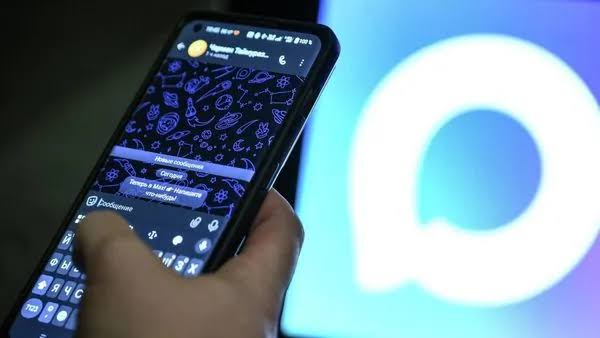
Reports indicate that Marina, a 45-year-old freelance copywriter, has depended on WhatsApp for both her professional and personal communications for many years. However, last month, everything changed when a call to a colleague failed to connect properly.
They attempted to use Telegram, another messaging application that is popular in Russia, but that also proved unsuccessful.
She is among the millions of Russians who are facing new limitations imposed in mid-August by Roskomnadzor, the country’s media regulator, on calls made through these two widely used platforms.
This development coincides with the introduction of a new ‘national messenger’ app called Max, developed by a Russian company that is closely monitored by the Kremlin.
The estimated monthly user counts for WhatsApp and Telegram are 97 million and 90 million, respectively, in a nation with a population of 143 million.
From family chats to tenant groups, a significant portion of daily life is conducted through these apps. WhatsApp, owned by Meta, which is classified as an extremist organization in Russia, is particularly favored by older individuals due to its user-friendly registration and interface.
In certain regions of Russia, especially in remote and poorly connected areas in the Far East, WhatsApp serves a purpose beyond just chatting with friends and colleagues. With mobile browsing often being painfully slow, people utilize the app to manage local affairs, order taxis, purchase alcohol, and disseminate news.
Both applications provide end-to-end encryption, ensuring that no third party, including the owners, can access messages or listen to calls.
Officials have stated that the apps have refused to comply with the law requiring them to store Russian users’ data within the country, and they have alleged that scammers take advantage of messaging platforms. However, figures from the Central Bank indicate that the majority of scams still occur over traditional mobile networks.
Telecommunications experts and many Russians perceive the crackdown as an effort by the government to monitor who individuals communicate with and possibly what they discuss.
Also see: Satya Nadella Commemorates Microsoft’s Optical Computing Achievement
’Authorities do not want us, the average citizens, to maintain any form of relationships, connections, friendships.’
She requested that we alter her name, expressing concern that engaging with foreign media could pose risks.
A government-sanctioned super-app. The newly launched Max app is being heavily advertised by celebrities and influencers, and as of 1 September, all devices sold in Russia are required to have Max pre-installed.
It was introduced by VK, which operates the nation’s largest social networking site of the same name. This Facebook-like platform is overseen by the oil-and-gas conglomerate Gazprom and one of Vladimir Putin’s closest associates, billionaire Yuri Kovalchuk.
Max is poised to evolve into a super-app, consolidating various functionalities, including digital government services and banking.
