


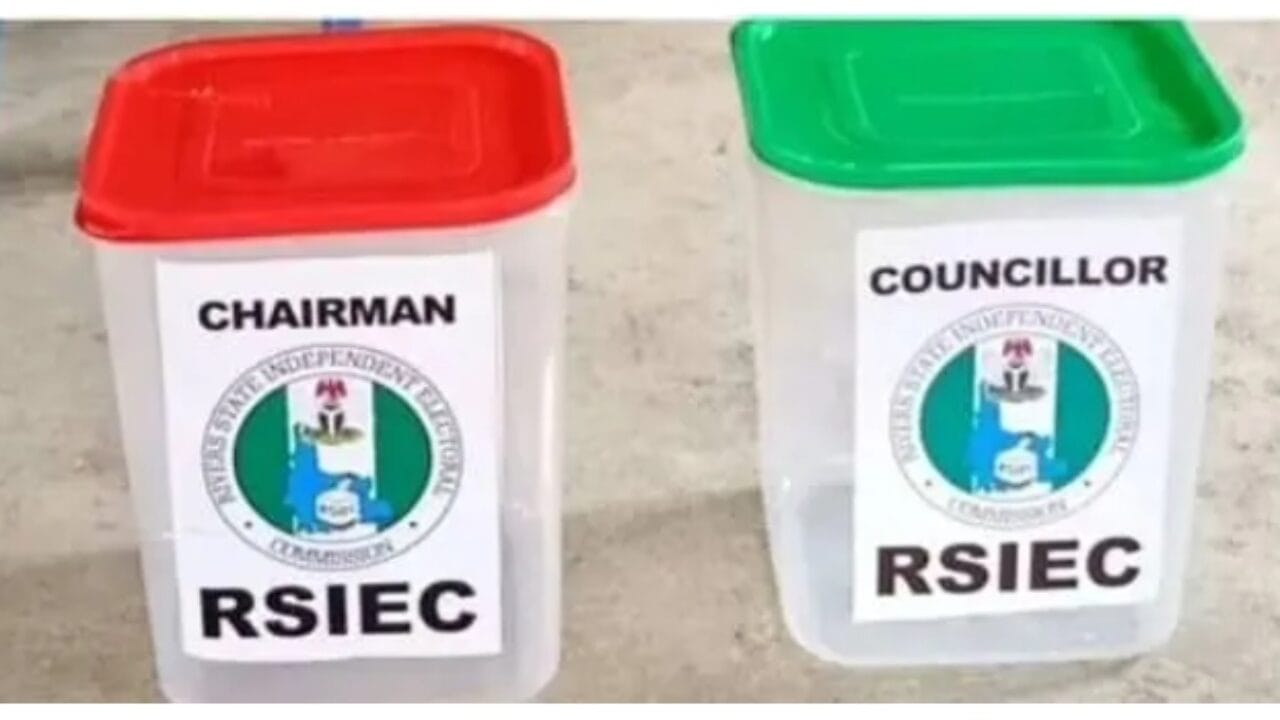
It is not news that political intrigue has always defined Nigerian governance, the recent local government election in Rivers State stands as a grotesque caricature of what elective democracy should represent. On August 30, 2025, voters or rather, the scant few who bothered to show up were purportedly called to elect chairpersons and councilors across 23 local government areas (LGAs).
The results? The All Progressives Congress (APC) claimed victory in 20 LGAs, while the People’s Democratic Party (PDP), the party of the state’s suspended governor, scraped by with just three: Port Harcourt, Obio Akpor, and Ogba/Egbema/Ndoni. This outcome isn’t just surprising; it’s an outright absurdity, a scripted drama that mocks the very essence of free and fair elections.
To grasp the full travesty, one must rewind to the chain of events that led here. Rivers State, long a PDP bastion, elected Siminalayi Fubara as governor in 2023 under the party’s banner. Yet, his tenure quickly devolved into a bitter feud with his predecessor, Nyesom Wike, now the Minister of the Federal Capital Territory and a key figure in the APC-led federal government.
This rivalry escalated into a full-blown crisis, culminating in President Bola Tinubu’s declaration of a state of emergency in March 2025. Fubara, his deputy, and the state legislature were suspended for six months, with Vice Admiral (Retd.) Ibok-Ete Ibas appointed as sole administrator. The move was ostensibly to stabilize the state amid violence and infrastructure damage, but skeptics and there are many saw it as a federal power grab to wrest control from a PDP stronghold.
This backdrop set the stage for the August election, itself a rerun after the Supreme Court nullified the October 2024 polls. In that earlier vote, the Action Peoples Party (APP) widely seen as a proxy for Fubara amid his PDP fallout swept 22 of 23 chairmanships.
The court deemed it non-compliant with the Electoral Act, paving the way for this latest farce. Under Ibas’s watch, the Rivers State Independent Electoral Commission (RSIEC) organized the polls, but the process was riddled with red flags from the start. Voting occurred without the Bimodal Voter Accreditation System (BVAS), a tool designed to prevent fraud and ensure voter verification.
Observer groups like Yiaga Africa and the Electoral College of Nigeria decried this omission, questioning the integrity of an election held under emergency rule. How can a process stripped of basic safeguards claim legitimacy?
The voter turnout told its own damning story: abysmally low, with many residents boycotting in protest. Streets in Port Harcourt and beyond remained eerily quiet, as if the populace had collectively decided that participating in this charade was beneath them.
Reports from polling units spoke of delays in material distribution and a general apathy that bordered on resignation. In a state of over 7 million people, with millions registered to vote, the sparse crowds at booths were a silent indictment. This wasn’t democracy in action; it was a hollow ritual performed for the benefit of power brokers in Abuja.
The absurdity peaks when considering the political arithmetic. Rivers has historically been a PDP fortress, yielding governors like Wike and Fubara. Yet, in this election, the APC the federal ruling party dominated, securing not just chairmanships but councillorships in those 20 LGAs.
This shift isn’t organic; it’s engineered. With Fubara sidelined, Wike openly celebrated the results, announcing the governor’s reinstatement on September 18, 2025, as if dangling a carrot after the stick of suspension. His praise for President Tinubu’s role in “ensuring” the election reeks of backroom dealings, where federal might overrides local will.
Social media buzzed with accusations of result manipulation, with users decrying “fake election results” and thumb-printing by officials. One post even hailed Wike as the enduring “political leader” of Rivers, underscoring how personal vendettas trump public choice.
This isn’t mere politics; it’s a travesty that erodes the foundational principles of elective democracy. Local governments are meant to be the grassroots pulse of governance, closest to the people, handling essential services like roads, markets, and primary education.
When elections at this level are hijacked by elite squabbles and federal interventions, it disenfranchises citizens and perpetuates a cycle of distrust. Nigeria’s democracy, already fragile post-1999, suffers another blow. Remember, the Supreme Court’s push for LG autonomy was intended to free these bodies from state governors’ clutches, yet here we see them ensnared by even higher powers.
The non-use of BVAS, the emergency rule overlay, and the suspiciously lopsided results all point to a system where outcomes are predetermined, not earned.
Critics might argue that such irregularities are par for the course in Nigerian elections, citing similar sweeps in states like Anambra or Ogun where ruling parties dominate. But that doesn’t justify it; it highlights a systemic rot. In Rivers, the stakes are higher due to its oil wealth and strategic importance.
The state’s resources fund much of the federation, yet its people are treated as pawns in a game of thrones. Administrator Ibas lauded the polls as a “step towards restoring democracy,” but his words ring hollow amid lawsuits attempting to halt the vote and observer condemnations. If this is restoration, one shudders at what decay looks like.
Also see: APC Secures 20 LGAs, PDP Takes 3 in Rivers Local Government Elections
The broader implications are chilling. If a governor can be suspended, an election nullified, and a new one orchestrated to favor the federal party, what’s to stop this model from spreading? It sets a precedent for authoritarian tinkering under the guise of stability.
True democracy demands transparency, inclusivity, and accountability none of which were evident here. The low turnout isn’t apathy; it’s a protest against a rigged game. As collation wrapped up and certificates were issued on September 1, 2025, Rivers residents were left with chairpersons they didn’t truly choose, perpetuating alienation from power.
In the end, this election exemplifies how Nigeria’s political class prioritizes control over consent. From Fubara’s suspension to the APC’s improbable landslide, every step reeks of manipulation. It’s not just absurd; it’s a betrayal of the democratic ideal that elections reflect the people’s voice.
For Rivers to heal, and for Nigeria to progress, we need reforms: mandatory BVAS use, independent oversight free from federal bias, and penalties for interference. Until then, such farces will continue, turning elective democracy into a tragic joke. The people of Rivers deserve better they deserve a vote that counts, not one that’s counted in advance.
