


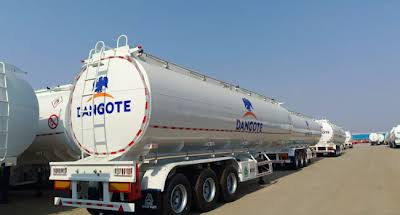
A severe shipping crisis in China has disrupted Dangote Petroleum Refinery’s ambitious plan to roll out 4,000 compressed natural gas (CNG) trucks to support its fuel distribution in Nigeria, with only 450 trucks delivered by mid-August 2025, hampering efforts to meet growing energy demands.
The $20 billion refinery, a flagship project of Africa’s richest man, Aliko Dangote, aimed to transform Nigeria’s energy sector by boosting domestic fuel supply and reducing reliance on imports. The CNG trucks, manufactured by China’s Sinotruk, were meant to ensure efficient distribution of refined products like petrol and diesel across the country.
However, global supply chain disruptions, particularly in China’s Shandong province, have thrown a wrench into these plans. Port congestion, labor shortages, and raw material delays, exacerbated by China’s economic slowdown have bottlenecked production and shipping, leaving Dangote with just 11% of the promised fleet.
For the refinery, this setback complicates operations at a critical time. Nigeria’s fuel scarcity issues persist, and the refinery’s ability to deliver products efficiently is key to easing pump prices and stabilizing supply. “We were counting on those trucks to move products quickly to markets,” said a Dangote spokesperson, who requested anonymity due to ongoing negotiations with suppliers.
Also see: Nigerian Manufacturers Shift to Local Sourcing Amid Economic Turbulence
“This delay forces us to lean heavily on third-party logistics, which spikes costs and slows us down.” The company has scrambled to secure 2,000 additional trucks from local and other international sources, but these efforts have yet to bridge the gap.
The ripple effects are felt nationwide, including in Rivers State, where fuel distribution challenges already strain local businesses and commuters. Gas stations in Port Harcourt often face long queues, and higher logistics costs could further drive up prices for residents. Small-scale traders, like Amina Eze, a fuel retailer in Rivers, worry about the impact. “If supply gets tighter, we’ll have to charge more, and customers are already struggling,” she said.
Analysts see this as a broader warning for Nigeria’s industrial ambitions. Dr. Chijioke Eke, an economist in Lagos, noted, “Reliance on foreign supply chains exposes us to risks beyond our control. Local manufacturing of critical equipment must be prioritized.” The naira’s volatility, with exchange rates fluctuating wildly, adds another layer of complexity, inflating import costs.
Dangote remains optimistic, with plans to ramp up local partnerships and explore alternative suppliers. The refinery is also investing in training drivers and building maintenance hubs to maximize the existing fleet’s efficiency. Still, the shortfall underscores the fragility of global supply chains and Nigeria’s need for self-reliance. As the country awaits more trucks, families and businesses brace for potential delays and higher costs, hoping for swift solutions to keep fuel flowing.
