


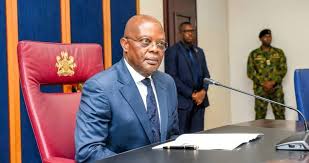
In a region where oil has long dictated the rhythm of life, Vice President Kashim Shettima’s inauguration of Vice Admiral (Rtd) Ibok-Ete Ekwe Ibas as Chairman of the Rivers State Council on Nutrition on August 11, 2025, signals a potential shift in priorities.
Rivers State, the heartbeat of Nigeria’s oil economy, is no stranger to the paradox of resource wealth coexisting with widespread poverty and malnutrition.
This health initiative, launched amid biting economic hardships, raises critical questions about the state’s ability to address malnutrition in its underserved communities, the political undertones of such high-profile appointments, and the promise of federal-state partnerships in delivering tangible change.
Rivers State, like much of the Niger Delta, is a land of stark contrasts. Its oil fields generate billions in revenue, yet many of its communities grapple with basic needs like clean water, healthcare, and adequate nutrition.
Malnutrition, particularly among children, is a silent crisis in these areas, exacerbated by economic downturns, rising food prices, and the lingering effects of environmental degradation from oil exploration. The establishment of the Rivers State Council on Nutrition, with a retired naval officer at its helm, is a bold acknowledgment that health and human development must take precedence over the region’s oil-centric identity.
Allocating 10.8 percent of the state’s 2025 budget to healthcare, as announced by Ibas, is a promising start. It suggests a commitment to tackling systemic issues like malnutrition, which stunts the potential of future generations and perpetuates cycles of poverty.
However, the initiative’s timing and leadership invite scrutiny. Nigeria’s economic landscape in 2025 is grim, with inflation eroding purchasing power and oil revenues faltering under global market pressures.
For Rivers’ residents, many of whom live in underserved rural and riverine communities, the daily struggle for food security overshadows lofty policy announcements. The appointment of Ibas, a military figure with no public record of expertise in public health or nutrition, raises questions about the motives behind his selection.
In Nigeria’s political culture, high-profile appointments often serve as tools for patronage or consolidating federal influence in strategic states. Rivers, a political battleground with a history of tensions between federal and state authorities, is no stranger to such dynamics.
Also Read: Capitalization: A Misstep on Nigeria’s Path to a $1 Trillion Economy
Is Ibas’s appointment a genuine effort to address malnutrition, or a calculated move to install a loyalist in a key position? The answer may lie in how the council’s initiatives unfold in the coming months.
The effectiveness of this nutrition council will hinge on its ability to translate rhetoric into action, particularly through federal-state partnerships. Nigeria’s federal structure often breeds inefficiencies, with overlapping mandates and bureaucratic bottlenecks hampering progress.
The involvement of the Vice President’s office, through Shettima’s inauguration and the participation of Mrs. Uju Rochas-Anwukah, a senior health aide, suggests a top-down approach to tackling malnutrition. Yet, the real test lies in coordination with local stakeholders like community leaders, health workers, and civil society organizations who understand the unique challenges of Rivers’ diverse population.
For instance, the state’s riverine communities, often cut off from mainland infrastructure, face acute food insecurity due to limited access to markets and arable land. A one-size-fits-all policy risks bypassing these groups, leaving the council’s efforts as mere window-dressing.
Moreover, the council’s focus on mainstreaming nutrition across sectors—through dedicated departments and budget lines in relevant ministries—is a step toward systemic change. Public-private partnerships, as highlighted by Ibas, could further amplify impact by leveraging private sector expertise and resources to revitalize health facilities.
However, these partnerships must be transparent and accountable to avoid the pitfalls of cronyism that have plagued similar initiatives in Nigeria. The council’s success will depend on its ability to prioritize underserved communities, where malnutrition is most acute, over urban centers that already benefit from better infrastructure.
The broader context of economic hardship cannot be ignored. Rivers State, like Nigeria as a whole, faces a cost-of-living crisis that makes nutritious food a luxury for many. Federal policies, such as subsidy removals and currency devaluation, have hit oil-dependent regions hard, driving up food prices and deepening inequality.
Also Read: http://Nigeria’s FDI Collapse Signals a Wake-Up Call for Sustainable Growth
The nutrition council must therefore go beyond health interventions to address structural issues like agricultural productivity and market access. Supporting local farmers, improving rural infrastructure, and subsidizing nutritious foods could make a tangible difference. Without these, the council risks being a well-intentioned but disconnected initiative, unable to reach the most vulnerable.
Politically, the initiative could serve as a litmus test for federal-state relations in Rivers. The state’s sole administrator model, with Ibas at the helm following the suspension of Governor Siminalayi Fubara, reflects ongoing federal efforts to stabilize a volatile region.
Nutrition, as a politically neutral issue, offers a rare opportunity for collaboration between Abuja and Port Harcourt. Yet, the council’s credibility will depend on its independence from political maneuvering. If it becomes a platform for federal overreach or local elite capture, it risks alienating the very communities it aims to serve.
In conclusion, the Rivers State Council on Nutrition is a timely intervention in a region where health has long been overshadowed by oil wealth. Its success, however, is not guaranteed. It demands strategic focus on underserved communities, robust federal-state partnerships, and a commitment to transparency.
While Ibas’s appointment raises questions about political motivations, it also offers a chance to redefine leadership in Rivers by prioritizing human development over resource extraction. Amid economic hardships, this initiative could be a beacon of hope if it delivers. For now, Rivers’ people wait, hungry not just for food, but for proof that their leaders can rise above politics to nourish their future.
