


An Environmental Advocates has described air pollution as a “silent killer” and urged the government to take urgent action using available data to conduct awareness campaigns, develop new policies, and enforce existing environmental regulations across Rivers State and the wider Niger Delta region.
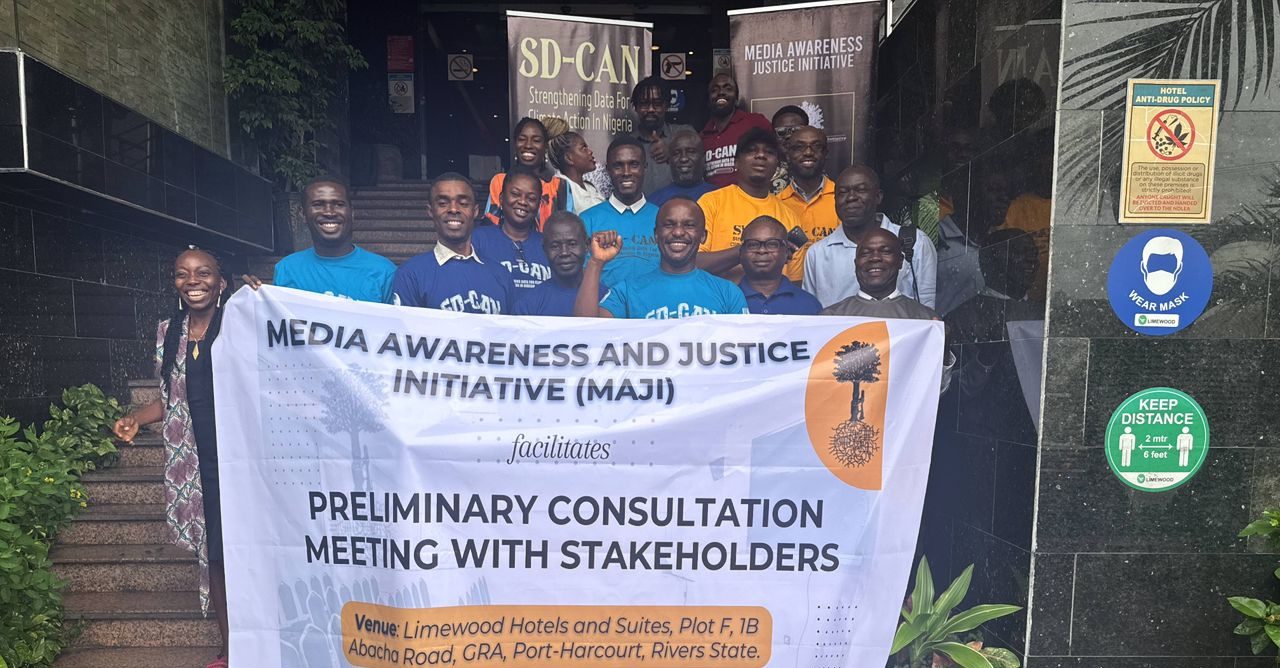
The call was made at a preliminary stakeholders’ consultation forum organized by the Media Awareness and Justice Initiative (MAJI) with support from the United Nations Democracy Fund (UNDEF). Themed: Strengthening Data for Climate Action (SD-CAN) in Nigeria, brought together representatives from civil society organisations, the media, community leaders, and government agencies.
Speaking at the event, Executive Director of MAJI, Okoro Onyekachi, stressed that air pollution in the region driven by industrial emissions, gas flaring, artisanal crude refining, and vehicular emissions has become a major public health concern.
“Everyone living in Rivers State and the Niger Delta is breathing polluted air, and this has become hazardous to our health. In urban areas like Port Harcourt, increased vehicular movement and fossil fuel-based machinery use have worsened air quality. In fact, everyone living in Port Harcourt should be worried because we are all passive smokers due to the toxic air we inhale daily.”
Onyekachi explained that MAJI is working to collect environmental data from both rural and urban areas to develop a baseline report that will guide environmental governance and advocacy efforts.
“We are gathering as much data as we can to create a comprehensive baseline document. This will help track environmental changes, guide stakeholder engagement, and inform capacity-building initiatives.
“Our goal is to improve environmental governance across the Niger Delta and the country at large,” he added.
“I will advise the government to use the available data to carry out campaigns develop policies and enforce already existing policies. The government should carry out their own responsibilities by ensuring that where they find gap station should block them and protect the lives and Livelihood of citizens they have sworn to protect.”
He called on the health sector to engage more actively with industries and companies contributing to environmental pollution and challenged the government to fulfil its responsibility by enforcing policies, closing regulatory gaps, and protecting the health and livelihood of its citizens.
Also speaking at the forum, Stephen Obodoekwe, a participant, emphasized the underreported dangers of poor air quality.
“Air pollution is a silent killer. While we often discuss land and water pollution, air quality is rarely addressed yet it affects every part of the body internally.
“We may have moved past the era of visible black soot, but the toxic air remains. People do not realise how deeply the damage runs,” Obodoekwe said.
He commended MAJI for spotlighting air pollution in the Niger Delta and for initiating data-driven climate action.
The forum concluded with a renewed commitment by stakeholders to collaborate in improving environmental awareness, advancing climate justice, and supporting data-based policies for a healthier and more sustainable future in the Niger Delta.
