


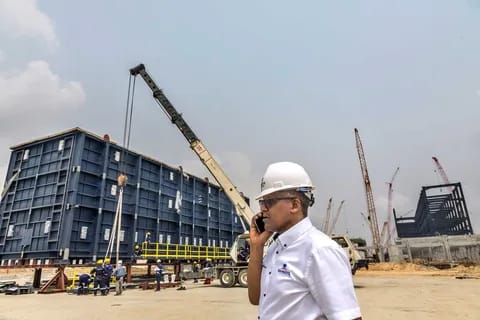
The Dangote Petroleum Refinery has officially announced plans to boost its processing capacity to 700,000 barrels per day by the fourth quarter of 2025, according to verified company documents and public statements.
During a press briefing at the Lagos facility on July 15, Alhaji Aliko Dangote provided specific details about the expansion: “The technical modifications we’re implementing will add 50,000 barrels to our daily processing capacity. These necessary upgrades are why we haven’t yet reached our initial full capacity.” Multiple journalists in attendance captured these remarks on record.
Operational reports from the refinery, verified against Department of Petroleum Resources monitoring data, reveal important details about current performance. The critical Residue Fluid Catalytic Cracking unit, which converts heavy crude into gasoline and diesel, is currently operating at 85 percent capacity, while some secondary processing units have exceeded their designed efficiency levels.
Also see: Gunmen Kill Vice Chairman of Obelle Council of Chiefs in Rivers State
The refinery’s feedstock strategy has drawn particular attention. Shipping manifests show the facility imported 19 million barrels of U.S. crude between June and July 2025. A Dangote Group press release confirmed these imports now supply 55 percent of the refinery’s needs, describing this as a temporary measure to ensure stable operations while domestic supply chains are optimized. The company maintains its commitment to transition fully to Nigerian crude by late 2025.
Reflecting on the $20 billion project’s challenges, Dangote offered candid remarks during the tour: “If I had known how difficult this would be, I might have thought twice before starting.” However, he emphasised the refinery’s strategic importance for Nigeria and Africa, stating it proves the continent can achieve energy independence despite significant obstacles.
Energy analysts monitoring the project note that the expanded capacity would cement the facility’s position as Africa’s largest single-train refinery. Market observers confirm the refinery has already begun exporting diesel and aviation fuel to neighboring West African countries, marking an important shift in regional energy dynamics.
