


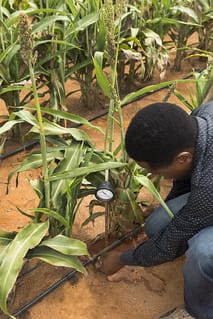
Faced with worsening floods, unpredictable rainfall, and soil degradation, farmers in Rivers State are turning to artificial intelligence to safeguard their crops and livelihoods.

Agricultural expert Precious Oviawe is leading the charge, demonstrating how smart technology can work hand-in-hand with traditional farming methods to combat climate change.
Oviawe’s groundbreaking research reveals how AI tools are transforming agriculture in the Niger Delta. Advanced disease detection systems now help identify crop infections before they spread, while smart soil sensors provide real-time analysis of nutrients.
Perhaps most crucially, hyperlocal weather forecasting models enable farmers to anticipate and prepare for extreme weather events.
The timing couldn’t be more critical. Last year’s devastating floods destroyed thousands of farms across Rivers State, wiping out entire seasons of cassava, yam, and oil palm crops. “Climate change is no longer a distant threat – it’s hitting our farmers hard right now,” Oviawe explains. “But these technologies offer a fighting chance to adapt and protect our food supply.”
Also see: Ogoni Liberation Initiative Issues Final Warning To NPDCL
Yet significant hurdles remain. Many rural farmers lack access to smartphones and internet connectivity needed to utilise these innovations. Oviawe stresses that overcoming this digital divide requires concerted government action, including subsidised technology programs, comprehensive farmer training initiatives, and expanded rural internet infrastructure.
Beyond the tech solutions, Oviawe emphasises the enduring value of traditional knowledge. He has personally trained dozens of local farmers in organic techniques and climate adaptation methods, blending centuries-old wisdom with cutting-edge science. “The real solution lies in this combination,” he notes. “Our ancestors’ farming knowledge, enhanced by modern technology, creates a powerful defence against climate threats.”
As climate pressures intensify, Rivers State’s agricultural community is emerging as an unexpected hub of innovation. Their experience offers valuable lessons for other vulnerable regions across Nigeria, proving that the future of farming may depend on this careful balance between tradition and technology.
