


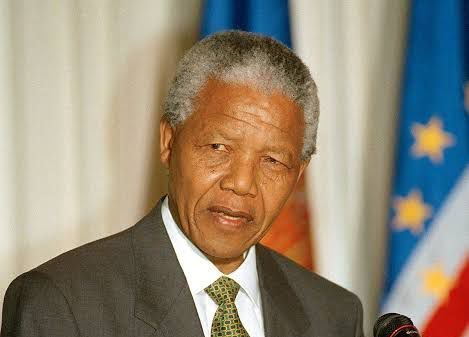
In his quote, ‘I learned that courage was not the absence of fear, but the triumph over it’ men have proved to be courageous in various spheres of their endeavours.
In politics, the likes of George Washington, Winston Churchill, would not be forgotten, in science and technology, Mark Zukerberg, Michael Faraday, Albert Einstein, Galileo Galilei, Michael Faraday, Albert Einstein, have proved their mettle, in entertainment Michael Jackson, Elvis Priestly, Fela Kuti have distinguished themselves, while in advocacy the man Nelson Mandela has stood out by demonstrating what courage entails.
Born in Mvezo village, South Africa, on July 18 1918, to Gadla Henry Mandela and Nongaphi Nosekeni as Rolihlahla Mandela. The native name Rolihlahla means ‘pulling the branch of a tree’ depicts the courage he grew with.
Witnessing the inhumane treatment his people were subjected to, Mandela joined the black liberation group African National Congress, ANC, in 1944 and became the youth wing leader of the movement.
In his bid to liberate the black South Africans from racial segregation, the young Mandela founded the first black law firm with Oliver Tambo in 1952, since he was a lawyer but did not practice much, for he was imprisoned in 1964 for life with seven others after passing through adversities in the hands of the white oppressors during apartheid era.
Having spent twenty-seven years in incarceration, Nelson Mandela regained freedom on 11th February 1990 as a result of a series of interventions and negotiations from African leaders, human rights organisations, and faith-based organisations.
This incident followed his election as the first black South African President on April 27 1994, putting an end to the struggles against racial discrimination in the enclave.
Also see: Osimhen has arrived in Turkey as Galatasaray reached agreement
He immediately set up a Truth and Reconciliation Commission to investigate human rights violations during apartheid and to heal the wounds of the past by compensation in the efforts to unite the fragmented nation, which earned him the Nobel Peace Prize in 1993.
No wonder, the United Nations came up with an award, the Nelson Mandela Prize, established for those who emulated Mandela in his course of defending humanity.
Against this backdrop, the United Nations has designated every 18th July to honour, appreciate, and remember the former prisoner of conscience and international peacemaker in our hearts.
Leaders across the globe are called to imbibe the great qualities of the legend. African leaders present and in the future are expected to exhibit selfless service, just as the elder statesman.
Our leaders in the black continent should learn humility from Nelson Mandela, who had all the opportunities and full support to go for a second term in office but declined, a chance many of the leaders in other African nations desired and would have seized without a second thought.
Madiba’s sacrificial lifestyle is an attribute that should not only be praised but lived out by all and sundry. If Nigerians appreciated sacrifice, the nation would realise the dreams of its founding fathers.
The first South African black president made reconciliation his watch word in his quote, ‘resentment is like drinking poison and hoping that it will kill your enemies’ he goes further to say, ‘reconciliation does not mean forgetting or trying to bury the pain of conflict, but that reconciliation means working together to correct the legacy of past injustice’.
These sayings are food for thought for us in Nigeria to always eschew bitterness and cohabitate peacefully with people from different tribes, ethnic groups, and religious beliefs.
Mandela went ahead to empower the vulnerable, alleviating poverty in South Africa, which he did by judiciously utilising the available resources at his disposal.
This is the primary duty of any leader in Africa: making and implementing policies to create wealth and drive out ignorance and not to loot the treasury for himself and his cohorts, thereby impoverishing the people, as evident in developing nations.
No doubt, Nelson Rolihlahla Mandela is dead, but his legacy will transcend from generation to generation, setting a lofty standard for humanity.
In his lifetime, he proved that it is possible for any individual to influence their sphere of existence positively with their gift.
In the commemoration of Nelson Mandela Day, the United Nations and the Nelson Mandela Foundation asked that people spend sixty-seven minutes of their time helping others in emulation of Nelson Mandela.
Madiba summed it up in his quote, ‘What counts in life is not the mere fact that we have lived. It is what difference we have made to the lives of others that will determine the significance of the life we lead’.
