


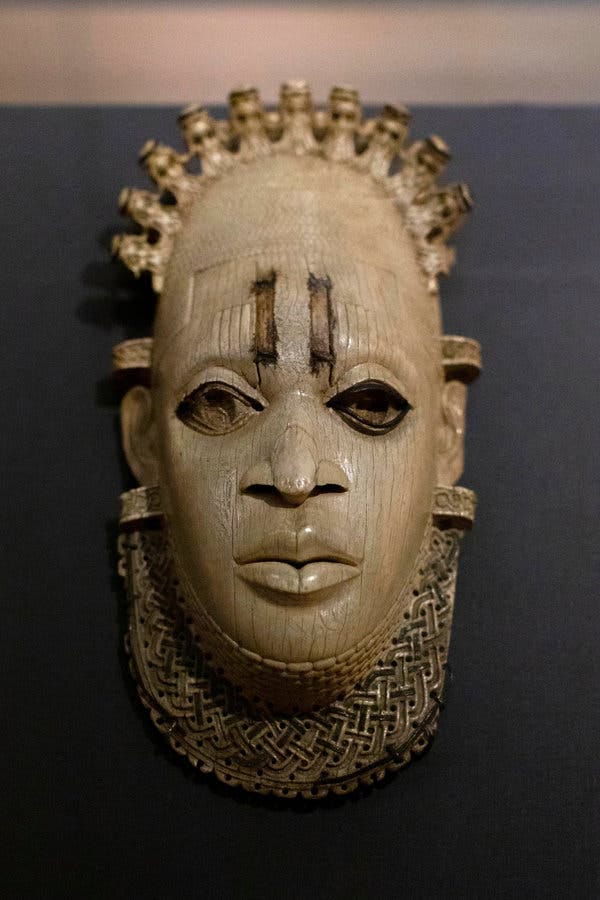
As the long-awaited return of the Benin Bronzes to Nigeria continues, the moment is being celebrated not just as a cultural victory, but as a powerful act of historical justice.
For decades, these priceless artifacts, looted during the 1897 British punitive expedition on the Benin Kingdom, sat in foreign museums, telling fragments of a story far from their true home. Today, their journey back carries deep emotional, cultural and political meaning for Nigerians and Africans at large.
The Benin Bronzes are not merely decorative artworks. They are detailed historical records, crafted centuries ago to document royal lineage, rituals, wars and spiritual beliefs of the Edo people.
Cast using advanced bronze-working techniques long before colonial contact, the artefacts stand as evidence of Africa’s sophisticated artistic and technological heritage. A fact often ignored or downplayed during colonial rule.
Their return signals a growing global reckoning with the past. European museums and institutions, once resistant to restitution demands, are increasingly acknowledging that these works were acquired through violence and exploitation. Germany, the United Kingdom and other countries have begun handing back pieces, recognising Nigeria’s rightful ownership and the moral obligation to correct historical wrongs.
Also see: JOHESU Threatens Fresh Strike Over Unpaid Salary Review
Yet amid the celebrations lies a quieter, troubling reality. While the bronzes are returning, the traditional craft that produced them is struggling to survive. In parts of Edo State, where bronze casting once flourished across generations, fewer young people are taking up the trade. Rising material costs, lack of funding, and limited institutional support have placed the ancient art form at risk of fading away.
Cultural experts warn that returning artifacts without investing in the living traditions behind them creates an incomplete victory. Museums can preserve objects, but they cannot replace the skills, stories and spiritual knowledge passed down by master craftsmen. Without renewed support, training programs and incentives, Nigeria risks celebrating the past while losing the present.
The return of the Benin Bronzes has reopened important conversations about heritage, ownership and identity. It has also challenged Nigeria to look inward to protect not only artifacts, but the communities and traditions that gave them life. For many, this moment is an opportunity to re-educate younger generations, strengthen cultural tourism, and reposition Nigeria as a global custodian of African history.
