


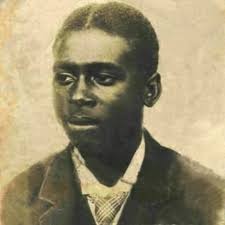
In the quiet corners of history, some pioneers do not announce themselves with trumpets. They work patiently, faithfully, trusting that time will eventually tell their story. Jonathan Adagogo Green belongs to that rare class of builders. Long before photography became fashionable in Nigeria, before images flooded newspapers, billboards, and mobile phones, Green was already holding a camera steady, documenting a people learning to see themselves through a new lens.
Born in Bonny in the late nineteenth century, Jonathan Adagogo Green emerged at a moment when Nigeria was still being defined by external narratives. Portraits of Africans were often filtered through colonial curiosity, staged to serve someone else’s imagination. Green quietly disrupted that order. He did not photograph Nigerians as specimens or curiosities. He photographed them as human beings with dignity, style, confidence, and presence. In doing so, he changed the visual language of a nation before the nation even knew it needed change.
Read more:PETROAN Expresses Optimism Over Crude Oil Projections in Nigeria’s 2026 Budget
Green’s work was not loud, but it was deliberate. Each photograph carried intention. His subjects looked directly into the camera, unafraid, self aware, composed. These were traders, chiefs, families, young men in pressed suits, women adorned in traditional attire. They were not asking for permission to exist. They were asserting it. At a time when identity was being contested in courtrooms, churches, and colonial offices, Green made a strong editorial decision. Nigerians deserved to be seen on their own terms.
There is something deeply moving about that choice. Photography is not just about light and shadow. It is about power. Who is allowed to look, and who is allowed to be seen with respect. Jonathan Adagogo Green understood this instinctively. His camera became both a mirror and a declaration. It said, we are here. We are complex. We are modern and traditional at once. We belong to history, not just to footnotes.
As a human interest storyteller, one cannot ignore the courage required to pioneer a profession that did not yet exist locally. Green had no established industry to lean on. No national archive waiting to preserve his negatives. No applause waiting at the end of the day. What he had was vision, discipline, and belief in the future value of his work. That belief is the kind that separates hobby from legacy.
His photographs now serve as cultural anchors. They allow us to revisit a Nigeria that was elegant, ambitious, and evolving. They remind us that progress did not begin with independence or digital media. Progress began when individuals decided to take responsibility for telling their own stories. Green was one of the earliest to do this visually, and he did it with remarkable clarity.
Beyond technique, his greatest gift was empathy. You can feel it in the way his subjects occupy space. They are not reduced or diminished. They are centered. This is what makes his work timeless. Technology has advanced, cameras have changed, but the soul of meaningful photography remains the same. Respect your subject. Understand your moment. Preserve truth with care.
In today’s fast moving media landscape, where content is produced at scale and attention spans are short, Jonathan Adagogo Green’s legacy offers a strategic lesson. Impact is not always immediate. Sometimes the most valuable work compounds quietly over decades. His images have outlived him because they were rooted in authenticity, not trend.
For young Nigerian creatives, journalists, and documentarians, Green’s life sends a clear message. You do not need permission to begin. You do not need validation from outside to document what matters at home. What you need is conviction, patience, and a deep respect for the people whose stories you tell.
Remembering Jonathan Adagogo Green is not just about honoring the first Nigerian photographer. It is about recognizing the power of representation. It is about understanding that history is shaped by those who choose to observe carefully and record faithfully. His camera did more than capture faces. It captured a future.
Today, as Nigeria continues to define itself in images shared across the world, we stand on foundations laid by pioneers like Green. He showed us that seeing ourselves clearly is an act of courage. And once a people learn to see themselves with dignity, nothing can take that vision away.
