


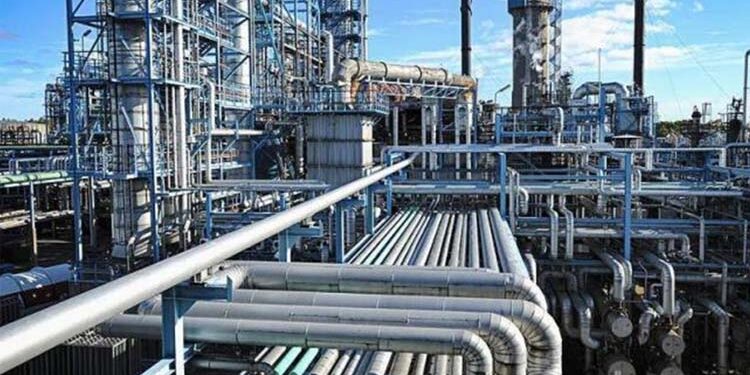
Nigeria is consolidating its position at the centre of West Africa’s downstream oil transformation as new and expanding refining capacity reshapes fuel supply patterns across the region.
The most significant catalyst has been the 650,000 barrels-per-day Dangote refinery, whose growing output has sharply reduced Nigeria’s reliance on imported refined products and altered long-standing regional trade flows. Since petrol production commenced in late 2024, Nigeria’s net petrol imports have declined steeply, falling to historically low levels by September 2025.
At the same time, the country has emerged as a consistent exporter of middle distillates such as diesel and jet fuel, signalling a major turnaround for Africa’s largest oil producer.
This shift has had wider regional implications. West Africa’s combined demand for imported petrol and aviation fuel has weakened markedly as Nigerian supply increasingly meets domestic needs and feeds neighbouring markets. The trend has reduced the region’s dependence on European traders who traditionally dominated refined product supply.
Also Read: Local Refining Slashes Petrol Import Bill
However, Nigeria’s progress has been uneven. While the privately owned Dangote facility has demonstrated resilience despite maintenance disruptions, state-owned assets operated by the Nigerian National Petroleum Company Limited (NNPC) have struggled.
Restart efforts at the Port Harcourt and Warri refineries have been short-lived, underscoring the technical and financial challenges of reviving long-idled plants.
Elsewhere in West Africa, countries such as Angola and Ghana are advancing smaller-scale refining projects, but most remain limited in capacity or face delays. As a result, Nigeria’s operating and near-term refining capacity is expected to remain pivotal to the region’s downstream development in 2026.
With few large projects likely to reach completion in the near term, Nigeria’s refining expansion is set to continue defining West Africa’s evolving fuel market landscape.
