


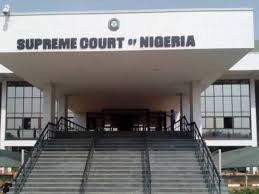
The Supreme Court has upheld President Bola Tinubu’s constitutional right to declare a state of emergency in any state to prevent a collapse of law and order. In a ruling with a 6–1 majority issued on Monday, the court confirmed that the President may temporarily suspend elected officials during such a period.
Justice Mohammed Idris, who provided the main judgment, clarified that Section 305 of the 1999 Constitution authorizes the President to implement extraordinary measures aimed at restoring stability once a state of emergency is declared.
He pointed out that the constitution does not specify the precise nature of these measures, granting the President discretion to act as deemed necessary.
This ruling came in response to a lawsuit filed by the Attorneys-General of several states governed by the Peoples Democratic Party (PDP), which contested President Tinubu’s emergency declaration in Rivers State.
Also Read: http://Nollywood Actress Accuses Pastor of Betrayal, Attempts Suicide
The states involved in the legal action included Adamawa, Enugu, Osun, Oyo, Bauchi, Akwa Ibom, Plateau, Delta, Taraba, Zamfara, and Bayelsa.
The plaintiffs sought clarification on whether the President could legally suspend governors, deputies, or state assemblies under the framework of emergency powers.
Justice Idris supported preliminary objections put forth by the Attorney-General of the Federation and the National Assembly, ruling that the plaintiffs did not demonstrate a valid cause of action to invoke the Supreme Court’s original jurisdiction.
The lawsuit was dismissed due to lack of jurisdiction, but Idris also rejected the substantive claims on their merits.
Conversely, in a dissenting opinion, Justice Obande Ogbuinya concurred that while the President has the authority to declare a state of emergency, such powers should not extend to the suspension of elected officials, including governors, deputies, and legislators.
