


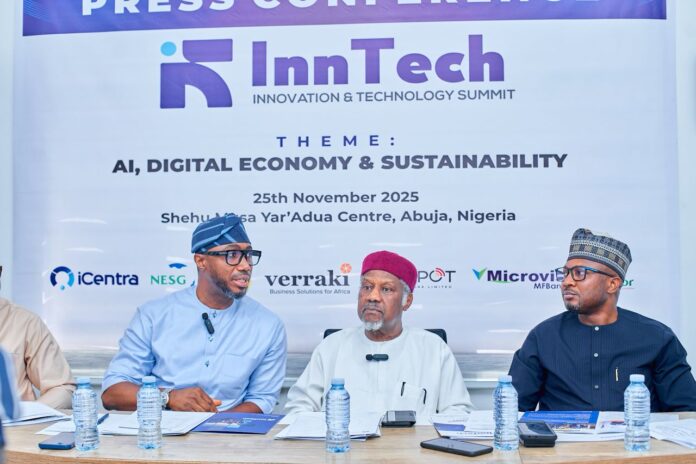
Stakeholders in Nigeria’s ICT sector have called for enhanced digital literacy, better data governance, and robust sustainability frameworks to prepare the nation for rapid AI advancements.
They made these points at the inaugural Innovation and Technology Summit (InnTech Summit 2025), themed “AI, Digital Economy, and Sustainability.” Held Tuesday in Abuja, the event drew innovators, policymakers, entrepreneurs, and youth, emphasizing the need to shape Africa’s digital future.
Summit convener and CEO of iCentra, Taopheek Babayeju, said the event aims to address often-overlooked sustainability issues of emerging technologies. In his keynote, he described Africa as “the world’s fastest-growing digital economy,” noting that despite energy limitations, digital gaps, and climate vulnerabilities, the continent is home to a new generation of innovators transforming markets and governance.
Read also: Nigerian Army Arrests Herdsmen In Borno
Babayeju stressed that innovation should translate into societal benefits, including improved governance, environmental resilience, and better living standards. He urged young Nigerians to seize AI opportunities, highlighting the importance of establishing frameworks to mitigate environmental impacts as technology evolves.
A major highlight was the unveiling of Green Digital Africa, a continental initiative promoting sustainable digital development through cross-sector collaboration.
The Director General of NITDA, Kashifu Inuwa, represented by Dr. Aristotle Onuma, emphasized digital literacy as crucial for AI adoption. He said, “By 2027, 70 percent of Nigerians will possess digital literacy. NITDA is training ‘digital champions’ across 774 local government areas via NYSC, aiming to equip 30 million Nigerians with basic digital skills.” Digital literacy has also been integrated into primary, secondary, and tertiary curricula in partnership with the Ministries of Education, aligning with the Federal Government’s Renewed Hope Agenda.
Dr. Tolulope Pius-Fadipe, Head of R&D at the Nigeria Data Protection Commission, highlighted that AI cannot thrive without strong data governance. She noted that the NDPC’s General Application and Implementation Directive mandates privacy-by-design and Data Privacy Impact Assessments (DPIAs) for organizations implementing AI systems.
