

Government at all levels has been called to establish a disaster risk reduction management agency to address the issue of disasters.
An environmentalist with the Media Awareness and Justice Initiative (MAJI), Mr Ikechukwu Ahaka, who spoke to our correspondent, stated that disaster risk reduction is all about informing the people on the dangers of disaster, while providing measures to tackle the effects.
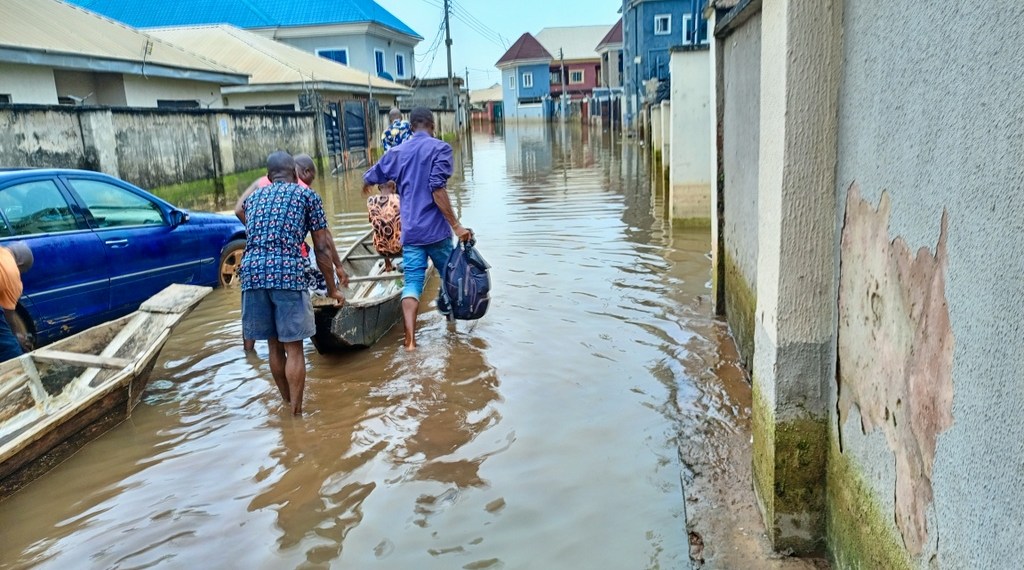
Mr Ahaka listed oil spillage and flooding as the major environmental hazards in the country, which are caused by the activities of man. He enumerated climate change and poor waste disposal improper waste disposal, and building along waterways as the factors responsible for flooding. Mr Ahaka regretted that the nation does not have what it takes to manage a disaster when it strikes.
“Nigeria needs to create an agency that is domestically domiciled in communities that experience these disasters.
I think NEMA has failed in its entirety in terms of trying to manage disasters because at the level of sensitisation, NEMA has contributed little or less to community inhabitants who are actually the bearing part of the disaster.
The government has to domesticate NEMA in such that NEMA would be domiciled in the community.
I am saying categorically that Nigeria is not prepared in any way to address the challenges of flooding in the near future”, he noted.
Also Read: Stakeholders Task Fubara, NDDC on Lead Drainage Desilting To Combat Flooding In Rivers State
Mr Ahaka urged the government to involve all stakeholders to inform the communities on the dangers of disasters and to implement measures to forestall their occurrences.
“We have passed the stage of reactive measures, we need to begin to implement the stage of actionary measures, where we understand that it is especially within the region, and what we do to put in place critical efforts to solve these challenges in case they arrive.
I think Nigeria has to look at improving drainage systems. Drainage systems are key because in most parts of the country, the urban and regional planning agencies identified within local governments are not checking up on the buildings that are being erected in communities and areas which are flood-impacted zones.
Those issues have to be addressed. Secondly, they also need to build more dams, which would contain the torrential water. There is also a need to develop flood management policies because NEMA has failed in these policies geared towards protecting the community from emergencies like this,” he stated.
The environmentalist advised people living in the riverine areas to devise a local monitoring mechanism to ascertain water levels to inform the community of the dangers of flooding.
