


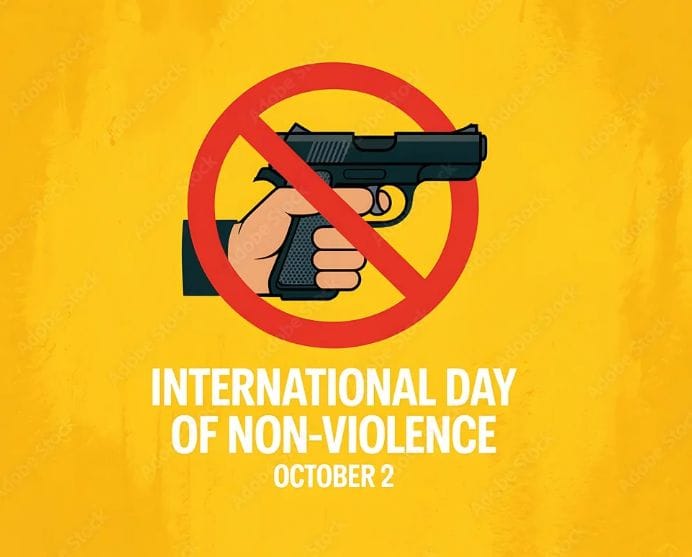
In today’s restive world, stakeholders in Peace and Conflict Resolution have strongly advocated non-violent options in dispute resolution.
They asserted this while reacting to the theme of this year’s International Day of Non-Violence celebration in Port Harcourt.
The United Nations General Assembly proclaimed October 2nd as International Day of Non-violence in 2017 after a resolution to mark the birth anniversary and philosophy of Mahatma Gandhi, a global beacon of peace and non-violence in shaping contemporary society.
With echoes of conflicts and war across the globe, the UN decided to adopt ‘Fostering Global Solidarity through Non-violence’ as the theme for this year’s celebration.
In this regard, the Commandant of the Peace Corps of Nigeria in Rivers State, Mr Michael Obiora, enumerates how global unity can be achieved through a non-violent approach.
“World Peace can be achieved via non-violence by promoting dialogue. Non-violence encourages resolving disputes through negotiation and mutual understanding, ensuring that differences become opportunities for cooperation rather than causes of division”, he stated.
For a fact, there are obstacles to non-violent resolution of conflict, which include poverty, injustice, corruption, and mistrust.
Also Read: Fubara Holds Valedictory Session for Cabinet as Nigeria Marks 65th Independence
However, despite the obstacles, non-violent settlement of disputes remains a better option, as stated by the convener of Rivers Peace Initiative, Mr Obinna Ebogidi.
“Peaceful resolution builds trust and leaves a legacy for generations to come. It preserves lives and communities, sustains development, and promotes unity”, he noted.
Mahatma Gandhi has been described as the epitome of peaceful dialogue in settling conflicts in the world
In view of this, a social commentator, Mr Christain Lekia, advised Nigerians to borrow a leaf from Gandhi, who eschewed all manners of aggression in the struggle for Indian independence.
“For us as a nation, it is important for us not to celebrate symbols of violence. Real changes come through peaceful negotiation and healthy peace-building processes. We need to work in our country and draw great lessons from this man”, he emphasised.
Experts believe that fostering global solidarity through non-violence requires a multifaceted approach that promotes understanding, empathy and peaceful resolution of conflicts.
