


The Federal Government has launched a new agrifood investment plan aimed at promoting climate-smart farming, cutting greenhouse gas emissions, and creating jobs across Nigeria’s agricultural sector.
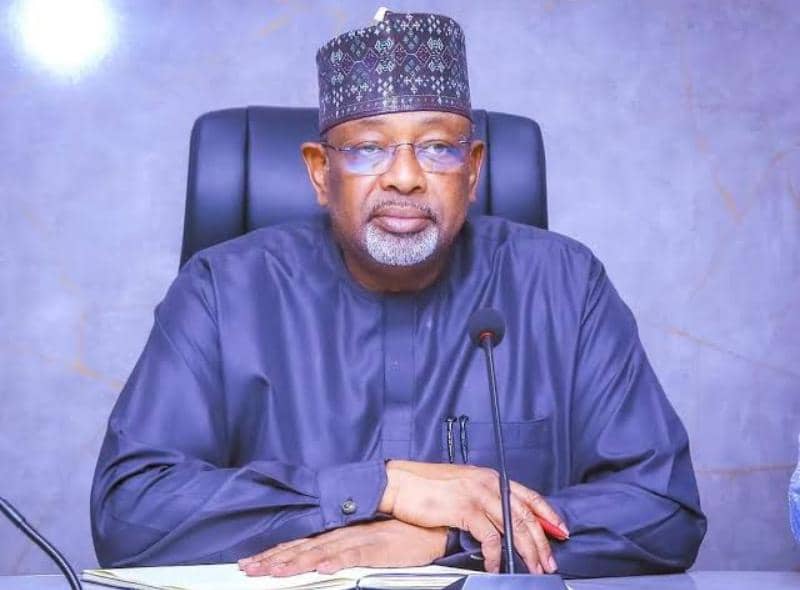
Minister of Agriculture and Food Security, Abubakar Kyari, announced the initiative in a statement on Sunday, describing it as a major step toward building a climate-resilient and nature-positive food system in line with national policies.
Kyari recalled that in 2022, the ministry—then known as the Federal Ministry of Agriculture and Rural Development—entered into a partnership with the Food and Agriculture Organisation (FAO) under the Monitoring and Analysing Food and Agricultural Policies Programme. The collaboration, he said, has enabled extensive policy analysis that has shaped Nigeria’s agricultural strategies.
The minister explained that the National Agrifood Systems Investment Plan will strengthen agricultural investments, increase production, generate employment, reduce poverty, and improve access to healthy diets. At the same time, it will prioritise reducing emissions from food production and encourage reforestation efforts.
According to him, the plan aligns with Nigeria’s forthcoming nationally determined contributions under the Paris Agreement. Its core areas include scaling climate-smart agriculture for crops and horticulture, restoring degraded lands, advancing regenerative agriculture, and empowering smallholder farmers—particularly women and youth.
Kyari added that Nigeria has already integrated adaptation priorities into key sectors such as agriculture, water, health, and infrastructure through the National Adaptation Plan, with emphasis on ecosystem-based solutions and community-led approaches. He further noted that the country is positioning itself under Article 6 of the Paris Agreement to develop carbon trading mechanisms that could attract new investments through climate-smart agriculture, afforestation, and ecosystem restoration.
Also see: FG, Afreximbank, MDGIF Partner to Unlock $500m for Nigeria’s Gas Infrastructure
Ongoing development programmes supporting the sector include the Special Agro-Industrial Processing Zones, Value Chain Development Programme, Livelihood Improvement Family Enterprise in the Niger Delta, the Rural Access and Agricultural Marketing Project, and the National Agricultural Growth Scheme–Agro Pockets.
While acknowledging these efforts, the minister stressed that additional funding remains essential to strengthen climate-resilient crops and sustainable practices. He called on international partners, including FAO, IFAD, and the Global Environment Facility, to expand concessional finance and scale up high-impact programmes for smallholder farmers.
Kyari also commended FAO and IFAD for their technical assistance under the Global Environment Facility’s Food Systems Integrated Programme, describing it as a vital platform for knowledge sharing and innovation.
Agriculture remains Nigeria’s largest employer, providing livelihoods for over 35 percent of the population and contributing about 23 percent to GDP. However, the sector continues to grapple with low yields, poor access to credit, high post-harvest losses, and mounting climate threats.
