


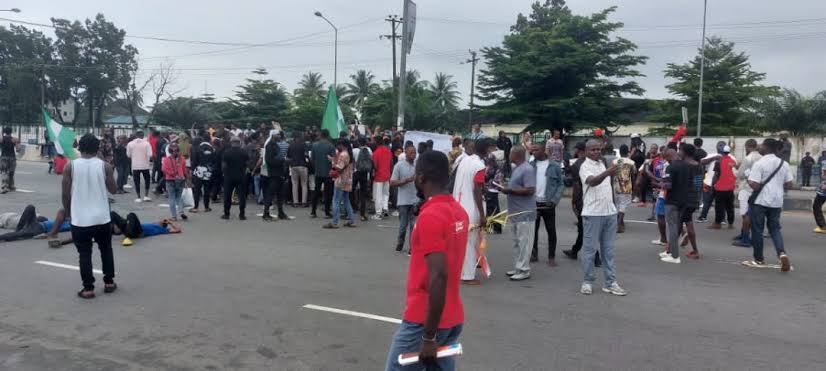
In the quiet streets of Borikiri, Port Harcourt, not far from where the Niger River empties into the Atlantic, young people like Fredrick, a fresh graduate from the University of Port Harcourt dream of building something lasting. Fredrick grew up watching his father trade fish and palm oil across the border to Cameroon, a simple but steady business that fed the family.
Today, with Nigeria’s economy in tatters, Fredrick scrolls through social media instead, joining heated online debates that often turn tribal. He hopes that by echoing the “right” voices, those aligned with powerful politicians he might snag a small contract or appointment from the government.
This isn’t just Fredrick’s story; it’s the tragic reality for millions of Nigerian youths, trapped in a cycle where leadership programs promise empowerment but deliver dependency, all while the nation’s economy shrinks and opportunities to trade with our African neighbors slip away.
Nigeria’s youth leadership initiatives, meant to groom the next generation of leaders, have become little more than empty shells. These programs, often run by government agencies or NGOs, gather young people in fancy conference halls for motivational talks about “leadership” and “nation-building.”
Unfortunately, as one observer notes, they rarely teach practical skills like starting a business, managing finances, or innovating in agriculture. Instead, they dangle the allure of political connections, becoming aides to governors or special assistants in Abuja as the ultimate reward. This approach has failed spectacularly, leaving youths unprepared for real-world challenges and pushing them toward shortcuts like political sycophancy.
Nigeria’s currency, the naira, has weakened dramatically, trading at over 1,600 to the dollar as of September 2025, a far cry from its stronger days. This depreciation makes imports expensive and erodes savings, hitting everyday people hard. In Rivers State, where oil is king, the naira’s slide means higher costs for everything from fuel to farm tools, squeezing small traders who once exported goods to nearby countries like Ghana or Benin Republic.
The economy itself is shrinking in real terms for many, with GDP growth projected at a sluggish 3.4% this year—barely enough to keep up with population growth, leading to declining per capita income. Analysts warn that without bold reforms, 2025 won’t bring relief, as oil revenues dip and inflation bites.
Additionally, doing business with other African countries, a potential lifeline through the African Continental Free Trade Area (AfCFTA) remains a nightmare. Imagine a young entrepreneur in Bonny Island wanting to ship cassava products to South Africa or textiles to Kenya. They face endless border delays, corrupt customs officials, and incompatible currencies that make transactions risky.
Nigeria’s poor infrastructure, like pothole-riddled roads from Port Harcourt to the northern borders, adds to the hassle. Instead of catalyzing growth by tapping into Africa’s $3 trillion market, these barriers stifle intra-African trade, leaving our economy isolated and vulnerable. In Rivers, where cross-border commerce with Equatorial Guinea could boom in fisheries or petrochemicals, youths see these opportunities as pipe dreams, turning inward to survival tactics that do more harm than good.
This economic despair has bred a dangerous trend: many youths now resort to online bigotry as a way to curry favor with the government and earn scraps. Social media platforms, especially X (formerly Twitter), have become battlegrounds where tribal slurs and divisive rhetoric are weaponized for personal gain. Rather than uniting to demand better policies, young people attack critics online, hoping their loyalty catches the eye of politicians doling out patronage jobs or contracts. It’s a low-effort path to “relevance,” but one that poisons society and distracts from real issues like economic revival.
A stark demonstration of this played out recently with the online assault on Uzo Njoku, known as @uzoart on X, a talented Nigerian artist and entrepreneur. It started innocently enough: Uzo shared her frustration about sky-high Airbnb prices in Lagos, highlighting how unaffordable housing is pushing young creatives away. In a country where real estate costs have ballooned amid economic woes, her tweet resonated with many facing similar struggles. But quickly, it spiraled into a tribal war.
Assuming her Igbo heritage, based on her name, hordes of online users many seemingly young and Yoruba-identifying piled on with slurs, threats, and calls for boycotts. One user even threatened her life, while others accused her of “cultural appropriation” for minor things like misspelling Yoruba words in her art promotions. The real trigger? Her comment was seen as an indirect jab at Lagos’ governance under President Tinubu’s allies, turning a economic critique into ethnic fodder.
For a Rivers State reader, this hits close to home. With the tribal tensions that have always been present. Today, it’s digital: a young woman in Eleme might join an online mob attacking “outsiders” blaming them for local woes, all to signal loyalty to a governor or a House Of Reps member.
Also see: Dr. Worlu Swears in Obio/Akpor Vice Chairman, Proclaims Tenth Assembly
She could be exporting mangrove honey to Cameroon, but instead, she’s typing hate for a chance at a youth empowerment stipend. Or recall the 2023 elections, when tribal tensions flared in Port Harcourt, with youths clashing over “who owns the land” rather than debating how to fix the refineries or boost intra-African exports. These anecdotes show how online bigotry isn’t just words—it’s a symptom of failed leadership training that prioritizes division over development.
The tragedy is that Nigeria’s youths, who make up over 60% of the population, could be the engine of growth. If leadership programs shifted focus to vocational training, teaching hard skills in hubs like the one in Aba, or agribusiness in the fertile lands of Obio/Akpor, they could create jobs and strengthen ties with African neighbors.
Imagine Chidi learning to navigate AfCFTA rules, exporting Rivers’ seafood to Togo without the red tape. But as long as programs breed dependency on politics, we’ll see more UzoArt-style attacks: youths lashing out online for government handouts, while the naira weakens further and the economy contracts.
It’s time for a rethink. People must put pressure on the Governments, from Abuja to the states, to invest in real skills: apprenticeships in renewable energy, workshops on cross-border e-commerce, and civic education that promotes unity. Donors and NGOs should demand measurable outcomes, not just photo-ops.
For Rivers youths, this means turning the Niger Delta’s resources into regional trade powerhouses, not conflict zones. Only then can we break the cycle of economic decay and online venom, building a Nigeria where leadership means service, not survival at any cost. Until that happens, stories like Fredrick’s and Uzo’s will multiply, and our continent’s potential will remain untapped.
