


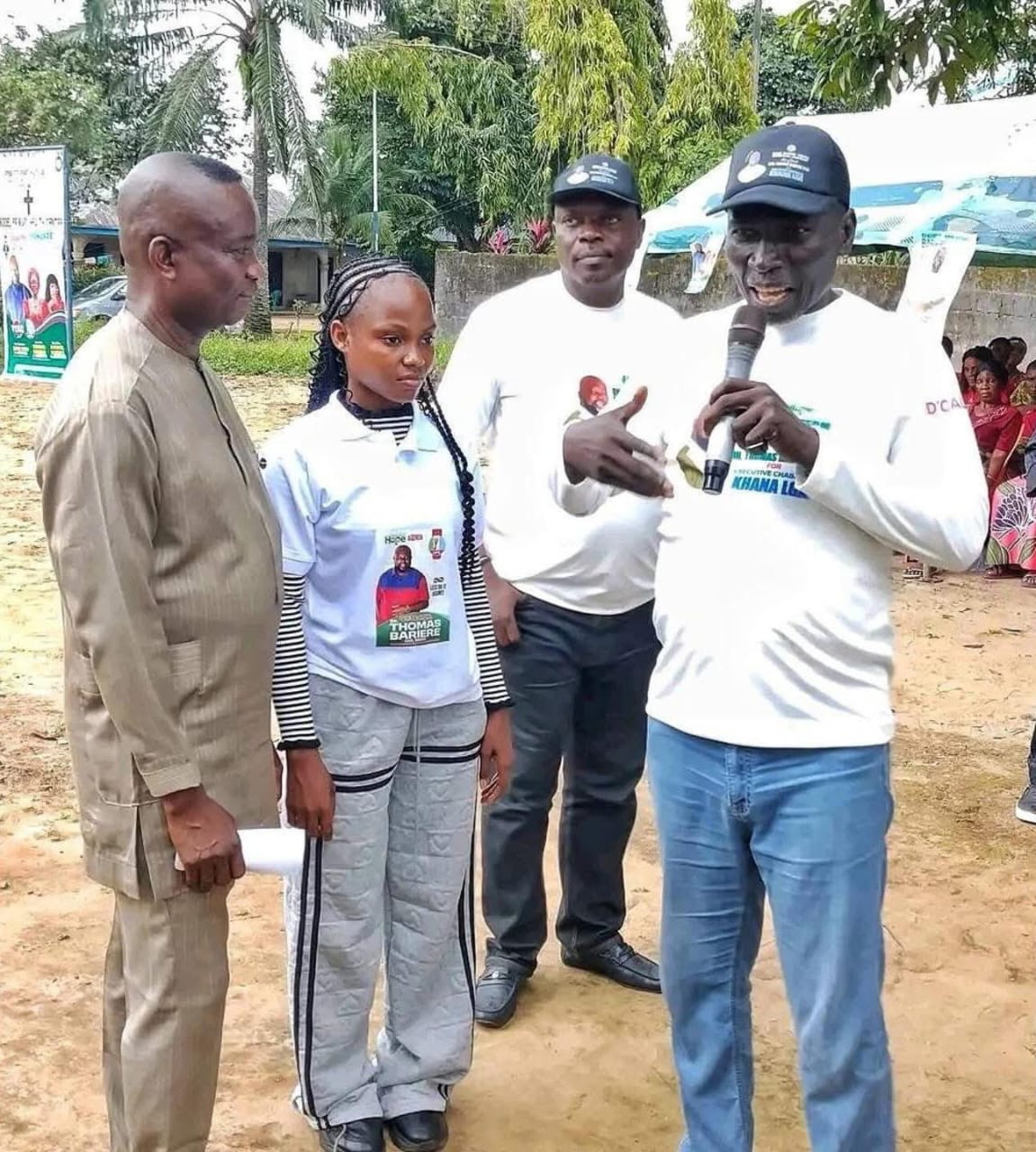
In a political landscape often dominated by seasoned figures, the emergence of 19-year-old Miss Aaue Samuel Olubari as the youngest candidate in the forthcoming Rivers State Local Government Elections is a striking development.
Representing the All Progressives Congress for the councilorship seat in Bangha Ward 7, Khana Local Government Area, Olubari was formally introduced on August 19, 2025, during a ward-to-ward sensitization campaign.
Her youth, paired with the enthusiastic support of party leaders like APC Khana Chairman Hon. Barile Ebenezer, has ignited a firestorm of opinions, reflecting Nigeria’s ongoing debate over youth in politics.
I applaud the spirit of this move. The 2018 Not Too Young to Run Act lowered age barriers, aiming to infuse fresh perspectives into governance. Olubari’s candidacy embodies this vision, potentially making her the youngest councilor in Nigeria’s history if she wins on August 30, 2025.
Her presence challenges the old guard, suggesting that leadership can transcend age when backed by community will. This optimism reflects a growing appetite for youthful representation.
Yet, skepticism abounds, and not without reason. At 19, Olubari’s experience is untested. Critics argue that her youth undermines her credibility and question whether her nomination might be a political stunt rather than a genuine empowerment effort.
Some speculate that she could be a figurehead controlled by others, hinting at possible puppetry. These concerns echo a broader fear that her involvement risks becoming a hollow symbol without substance.
Context matters here. The Rivers State political scene is a battleground, with tensions between Governor Siminalayi Fubara and ex-Governor Nyesom Wike shaping the narrative. Olubari’s APC backing could be a strategic play to mobilize young voters in Khana, where zoning traditions chose her to run.
Also Read: http://The Rivers Local Government Poll Controversy
But is this choice driven by competence or convenience? The question cuts to the core. Without clear evidence of her qualifications, the risk of exploitation looms large.
Ethnocentric undertones also surface, reflecting regional rivalries that could overshadow her campaign. Others plead for her to prioritize education over early political immersion.
My take? Olubari’s candidacy is a double-edged sword. It is a commendable push for youth inclusion, aligning with global trends where younger leaders have thrived. However, without robust support systems, such as mentorship, transparency, and proven capability, it risks becoming a hollow symbol.
The APC must ensure she is more than a poster child, equipping her with the tools to govern effectively if elected.
As the August 30 polls near, this experiment in youth politics will be a litmus test. If Olubari succeeds, it could inspire a generational shift. If she falters, it may reinforce the adage that experience trumps enthusiasm. For now, the chatter mirrors Nigeria’s divided soul on this issue. Let us hope her story becomes one of empowerment, not exploitation.
